32 UX certifications: Interaction Design Foundation courses
After almost 20 years in UX/UI, I wanted some formal qualifications behind me. 32 courses in with the Interaction Design Foundation, covering everything from design thinking and research through to AI, accessibility and mobile UX.
32 UX certifications I’ve earned so far
I’ve been working in UX/UI for almost 15 years and wanted to get some formal qualifications behind me. I found the Interaction Design Foundation (IxDF) courses great for filling in the gaps in my knowledge. They helped balance my practical skills with time-tested design and research theory. True to their name, IxDF focuses on the fundamentals, which means the skills you pick up stay relevant for years. There’s a mix of multiple choice questions, short essays, videos, peer knowledge sharing and optional exercises to help grow your skills and portfolio. For the price and quality, it’s been a great investment and well worth it.
I signed up to study online via the Interaction Design Foundation over several months, aiming to get 1% better for at least 30 minutes each day, working towards completing over 30 UX certifications.
These are the core mental models behind how people think, behave, and interact with systems. They bring together design thinking, human-computer interaction, and UX fundamentals into a shared language for solving problems. Everything else in UX builds on this foundation, from research through to product strategy.
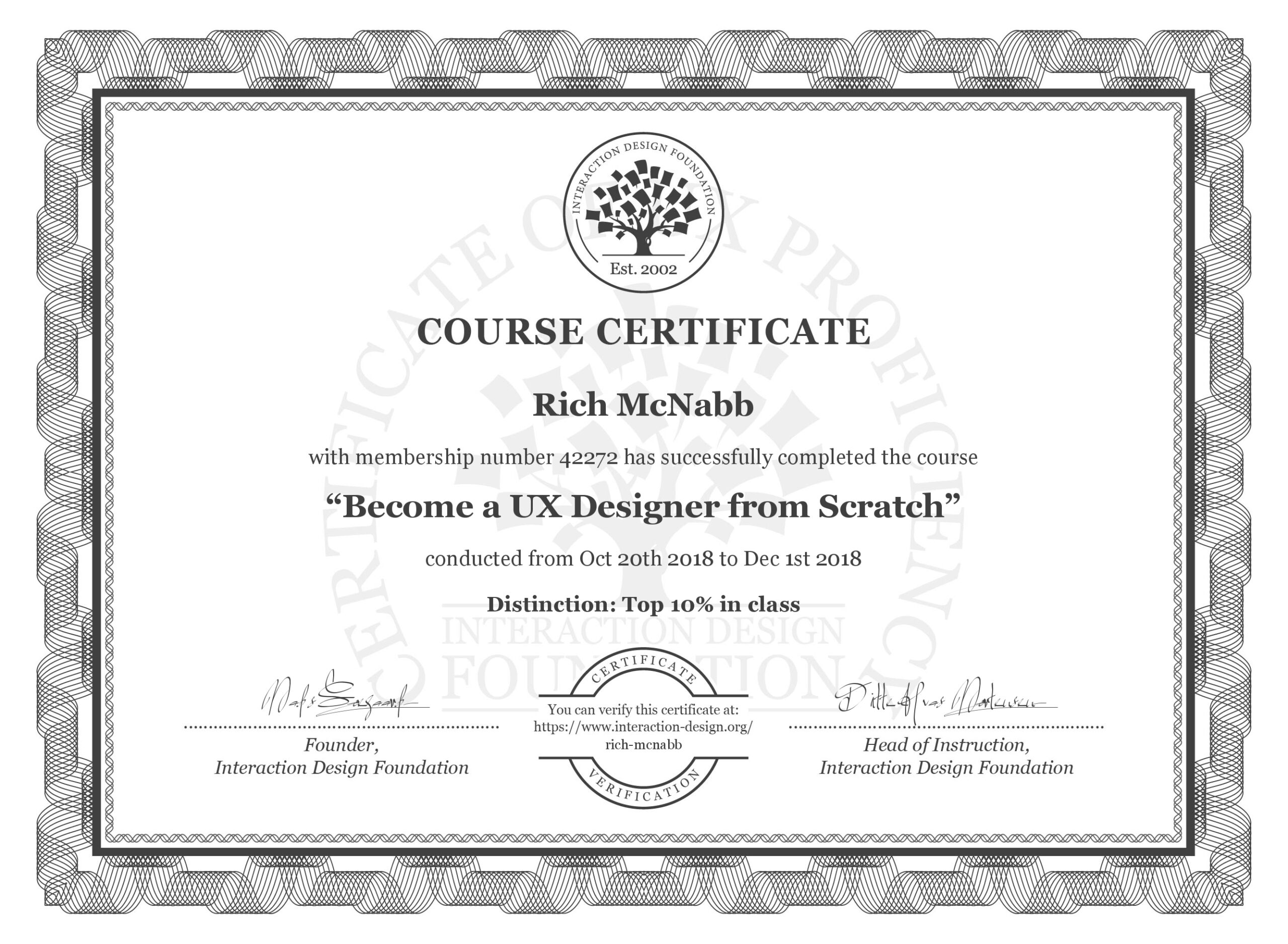
Become a UX Designer from Scratch
This course did an excellent job of filling in some of the gaps in my UX knowledge and provided a solid foundation to build upon.
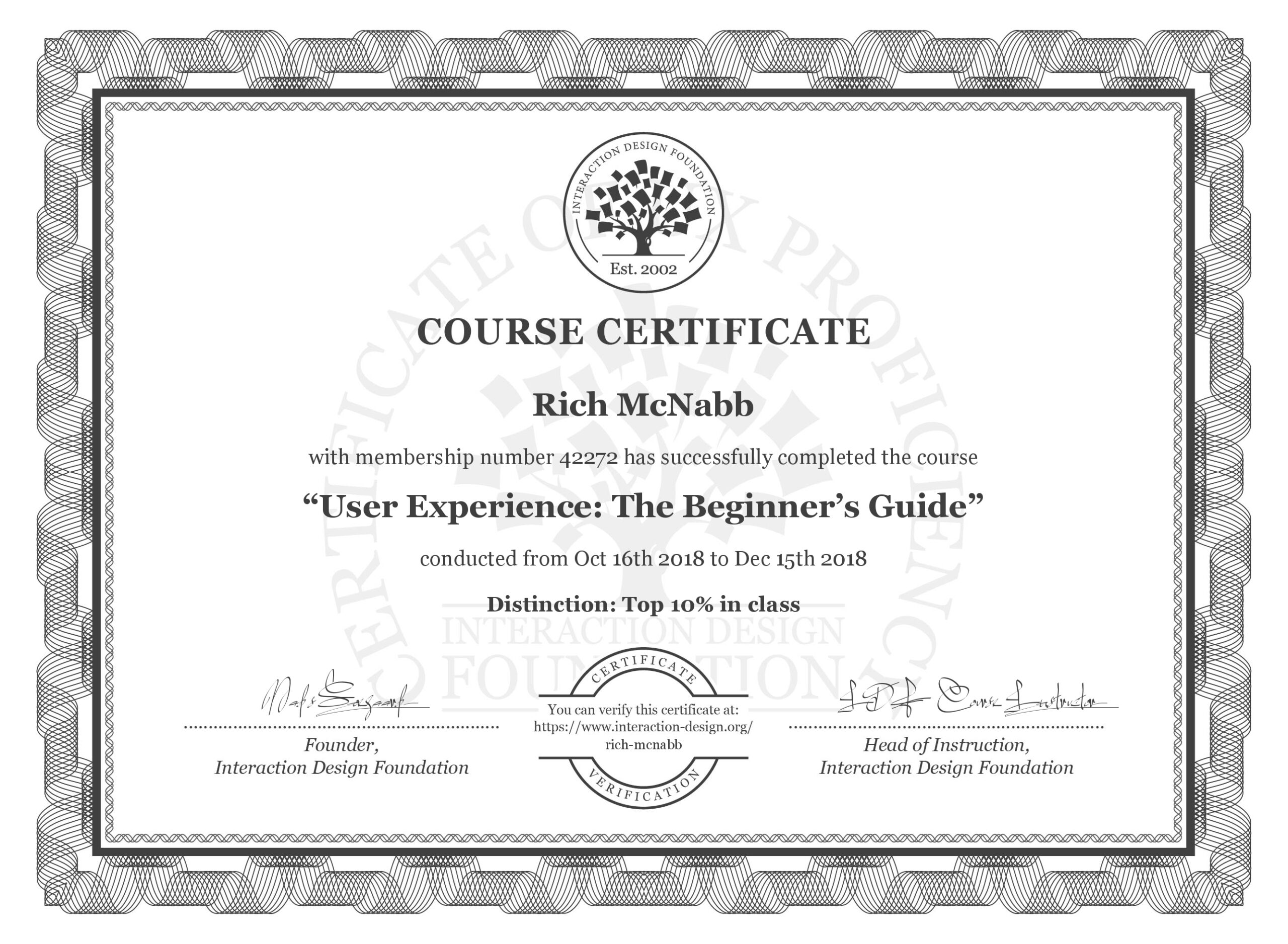
User Experience: The Beginner’s Guide
This is the course that goes before the “Become a UX Designer from Scratch”.
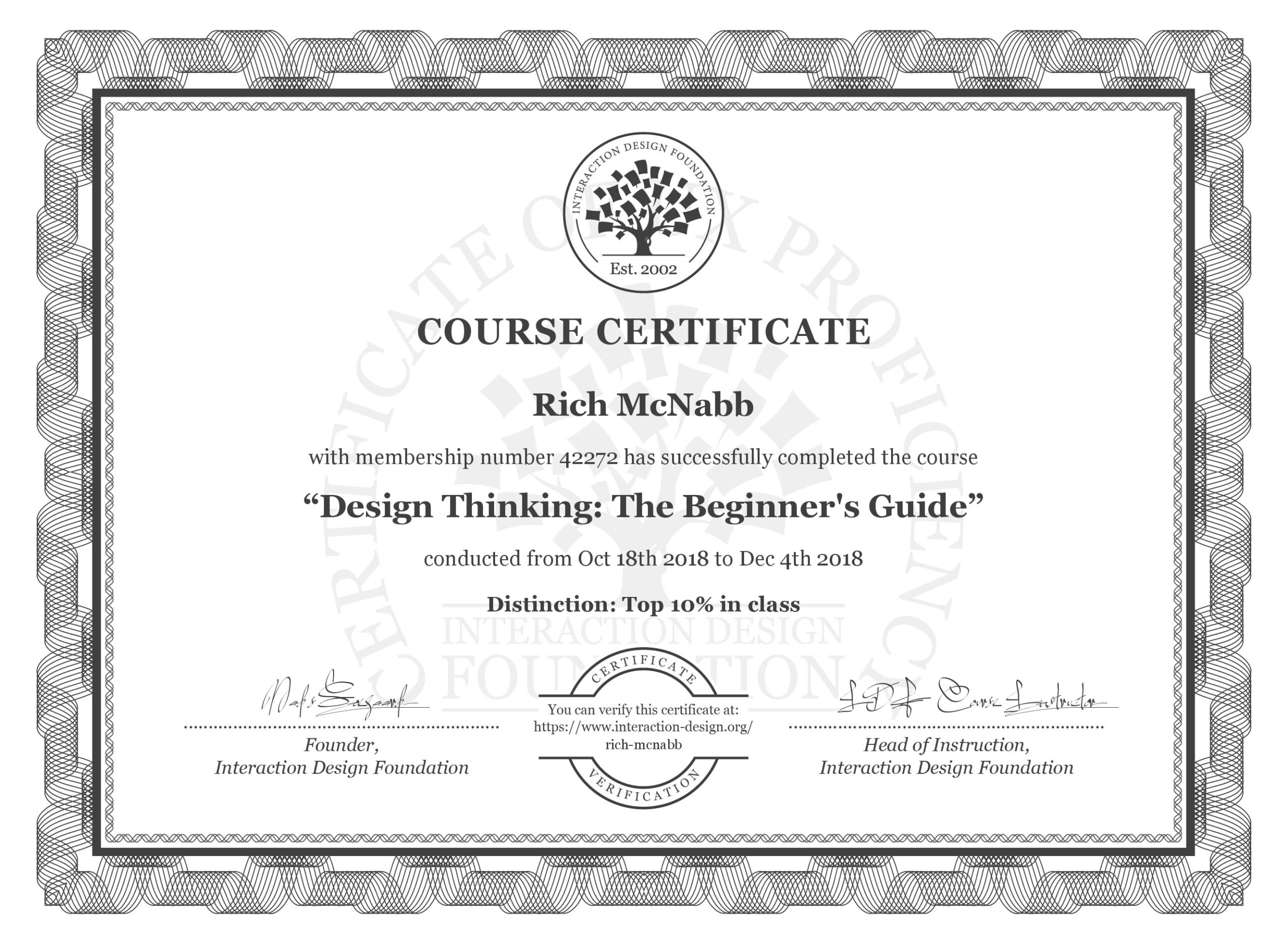
Design Thinking: The Beginner’s Guide
This course alone is enough to justify the cost of the yearly membership.
Human-Computer Interaction – HCI
This was a pretty advanced course and highlighted some areas I need to learn more about.
Human-Computer Interaction: The Foundations of UX Design
This course is a hands-on introduction to Human-Computer Interaction (HCI), where you’ll learn how to apply cognitive psychology and human-centered design principles to create intuitive, user-friendly digital products.
2. User research, interaction & usability testing
This is where assumptions meet real people. It focuses on understanding behaviour through hands-on research, interviews, mapping journeys, and testing how systems perform in the real world. The goal is to reduce friction, remove guesswork, and design experiences that are intuitive, accessible, and grounded in evidence.
User Research — Methods and Best Practices
Really practical advice on how to carry out UX research and the various techniques.
Conducting Usability Testing
An overview of how to create test scripts, interview and run usability tests.
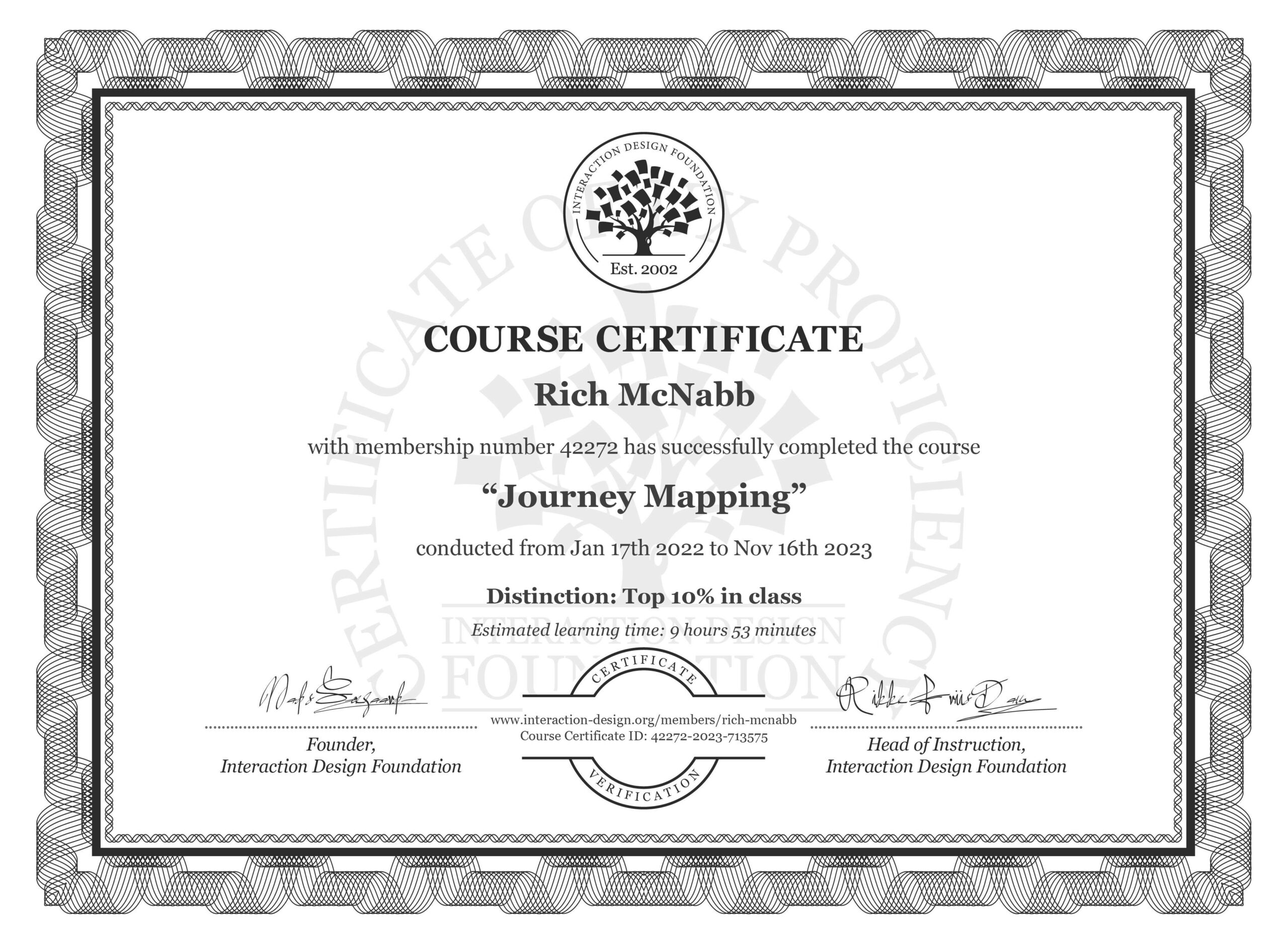
Journey Mapping
How to create an experience map, customer journey map and service blueprint. An understanding of the three most common types of journey maps and why they work so well.
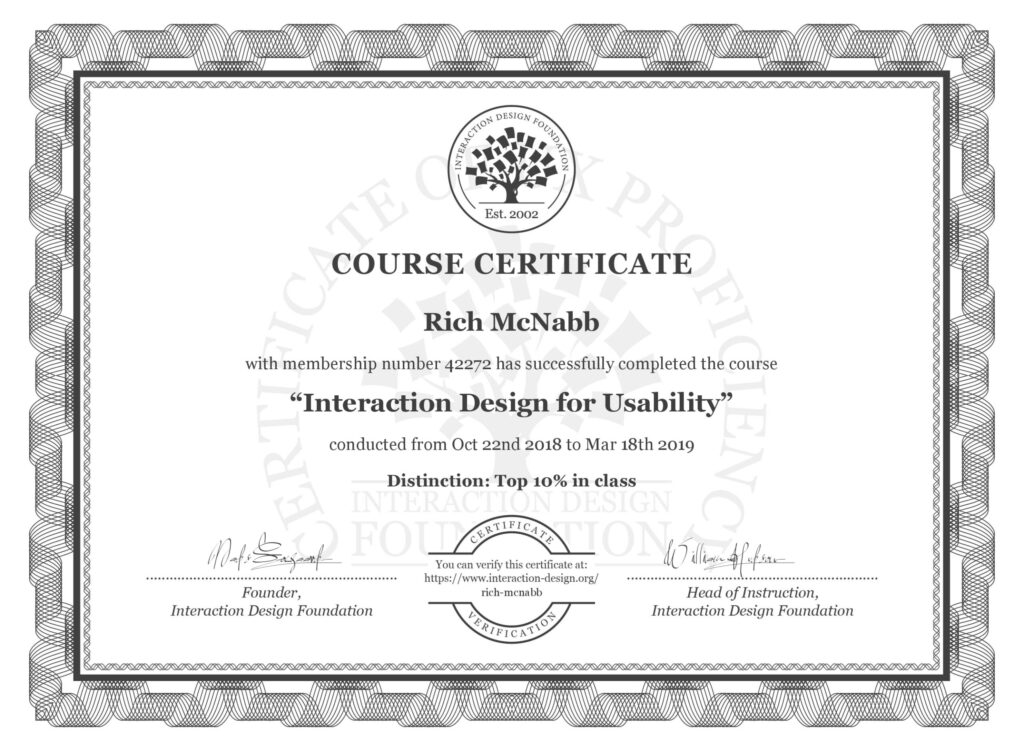
Interaction Design for Usability
A more in-depth look into interaction design and usability.
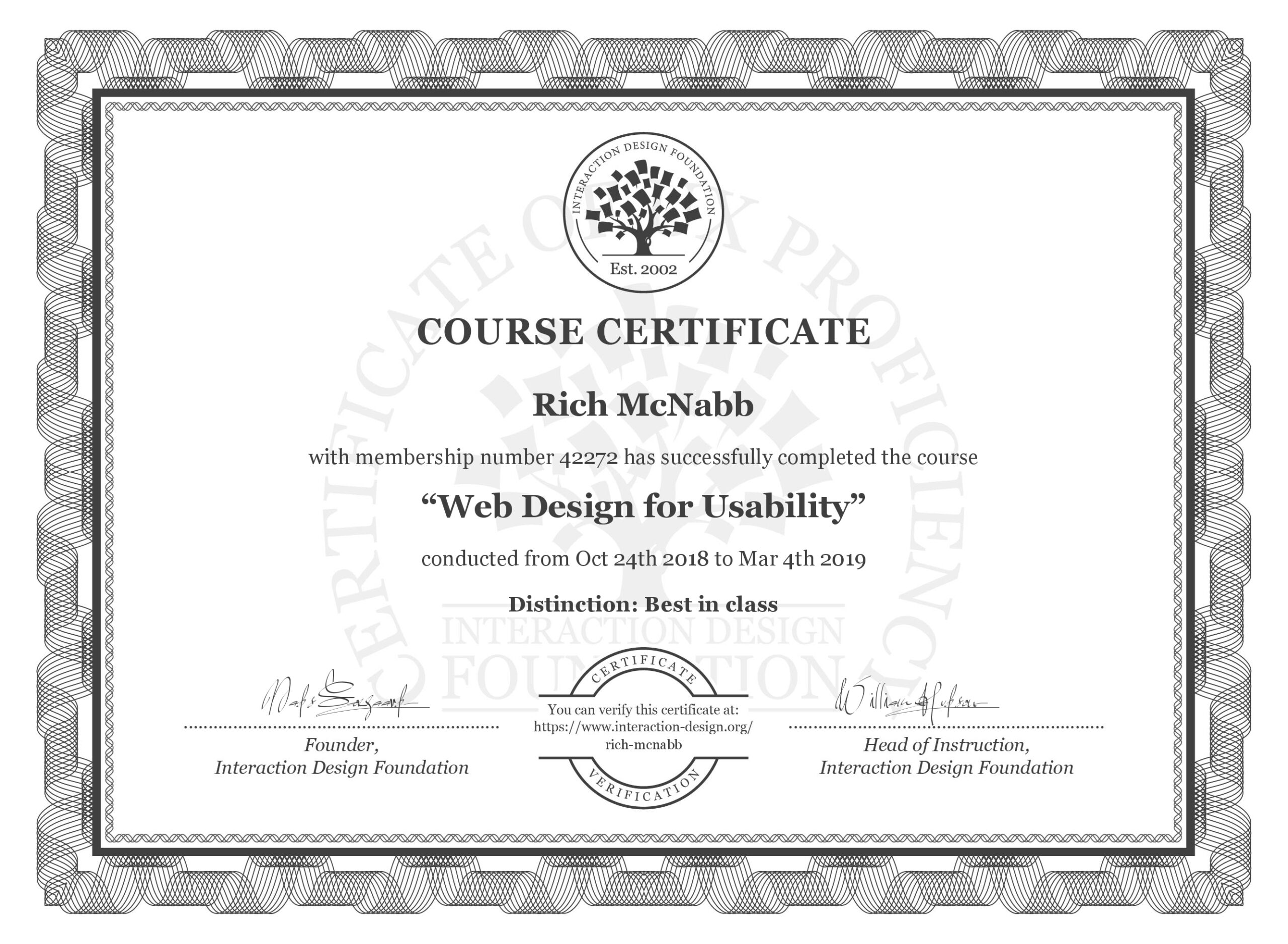
Web Design for Usability
A short introduction to web usability.
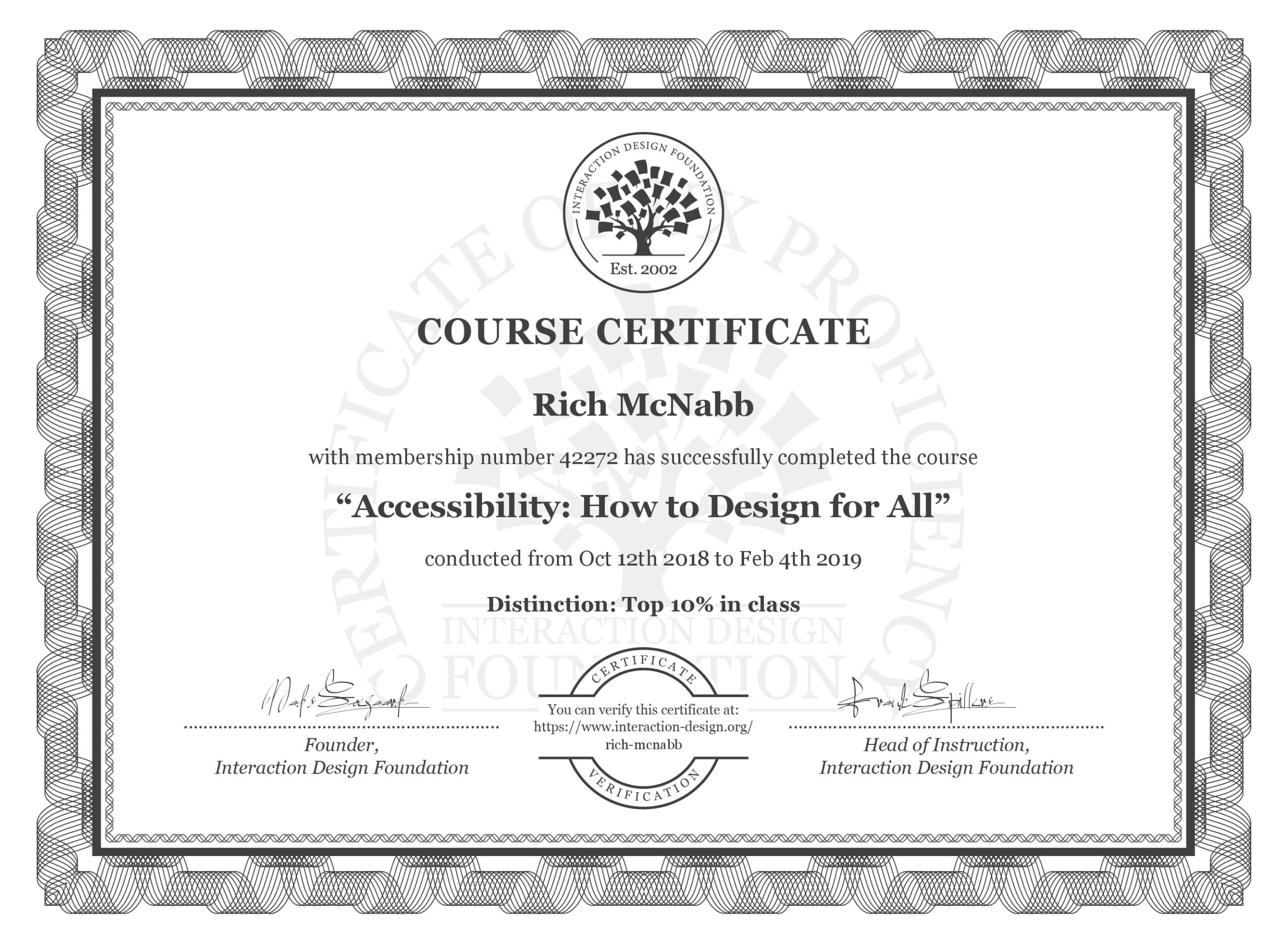
Accessibility: How to Design for All
Really challenging and eye-opening course to learn more about inclusive design and accessibility.
3. UI, visual & information design
This area connects structure with clarity. It explores how layout, hierarchy, and visual design systems guide attention and improve comprehension. It also covers how information is organised and communicated so that users can quickly understand and act without confusion.
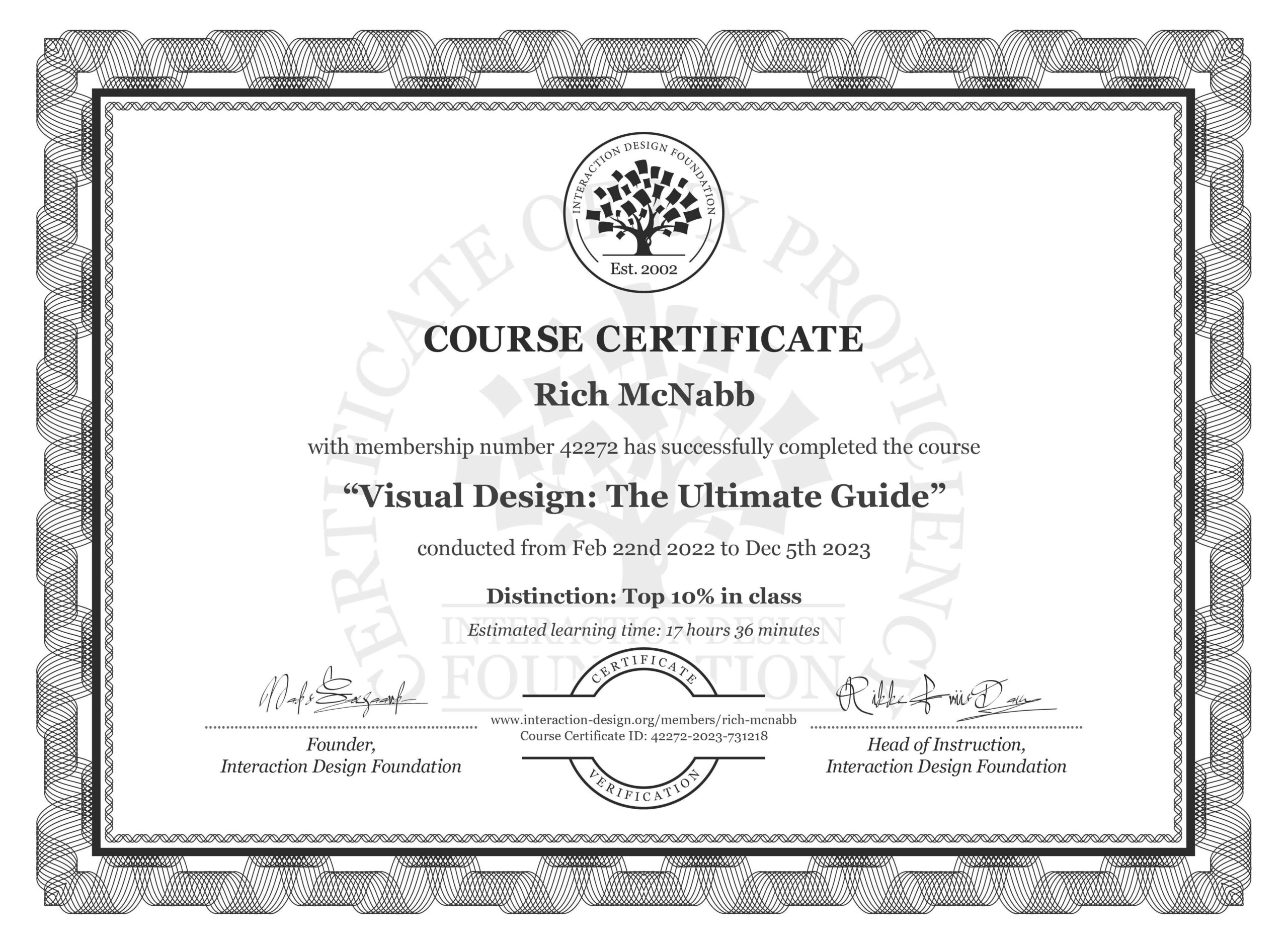
Visual Design: The Ultimate Guide
Gain a holistic understanding of visual design and increase your knowledge of visual principles, colour theory, typography, grid systems and history. You’ll also learn why visual design is so important, how history influences the present, and practical applications to improve your work. These insights will help you to achieve the best possible user experience.
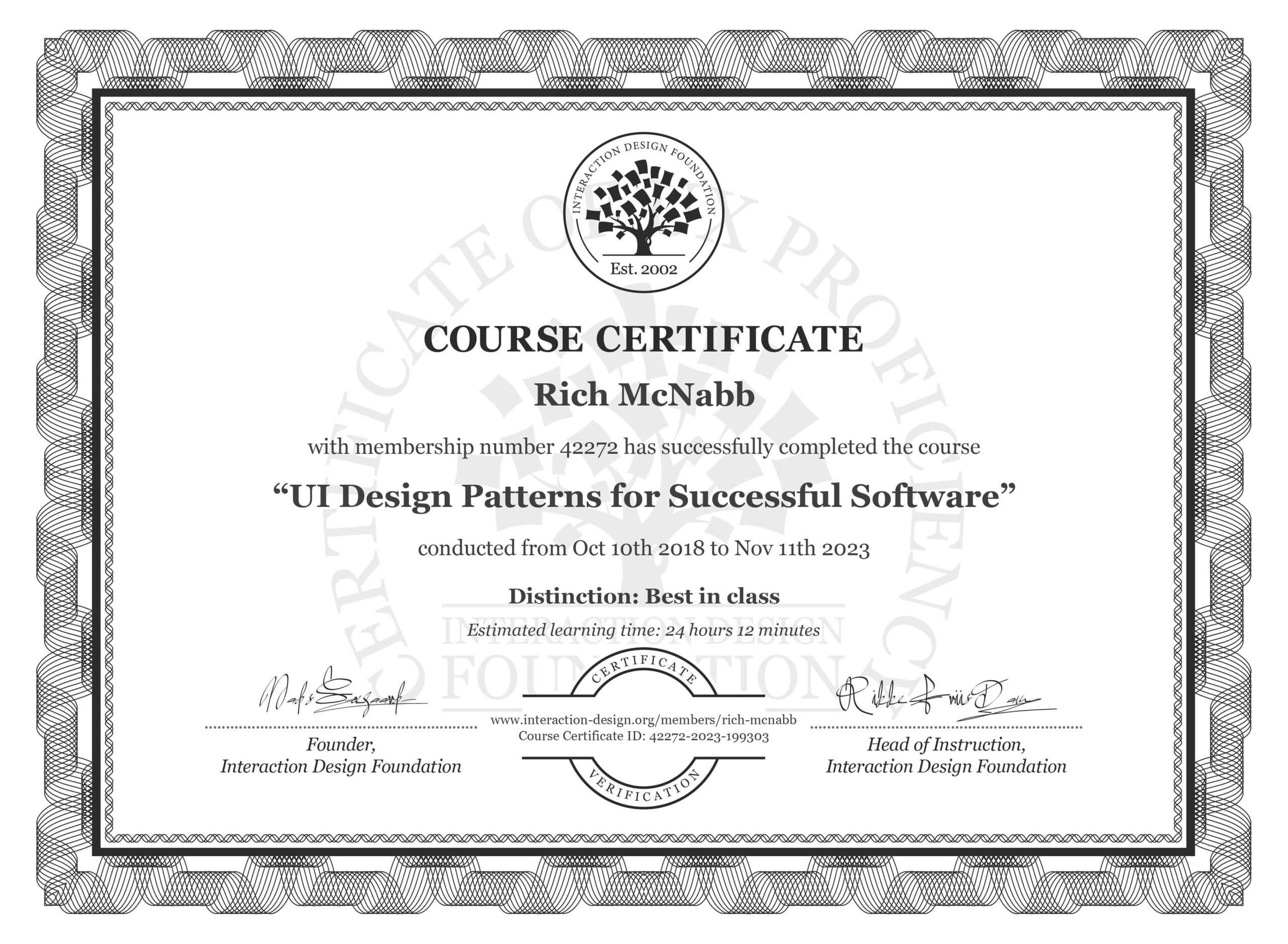
UI Design Patterns for Successful Software
Implement design patterns that facilitate people’s needs in a way that is ethically sound—for instance by avoiding dark patterns that manipulate people’s behaviors.
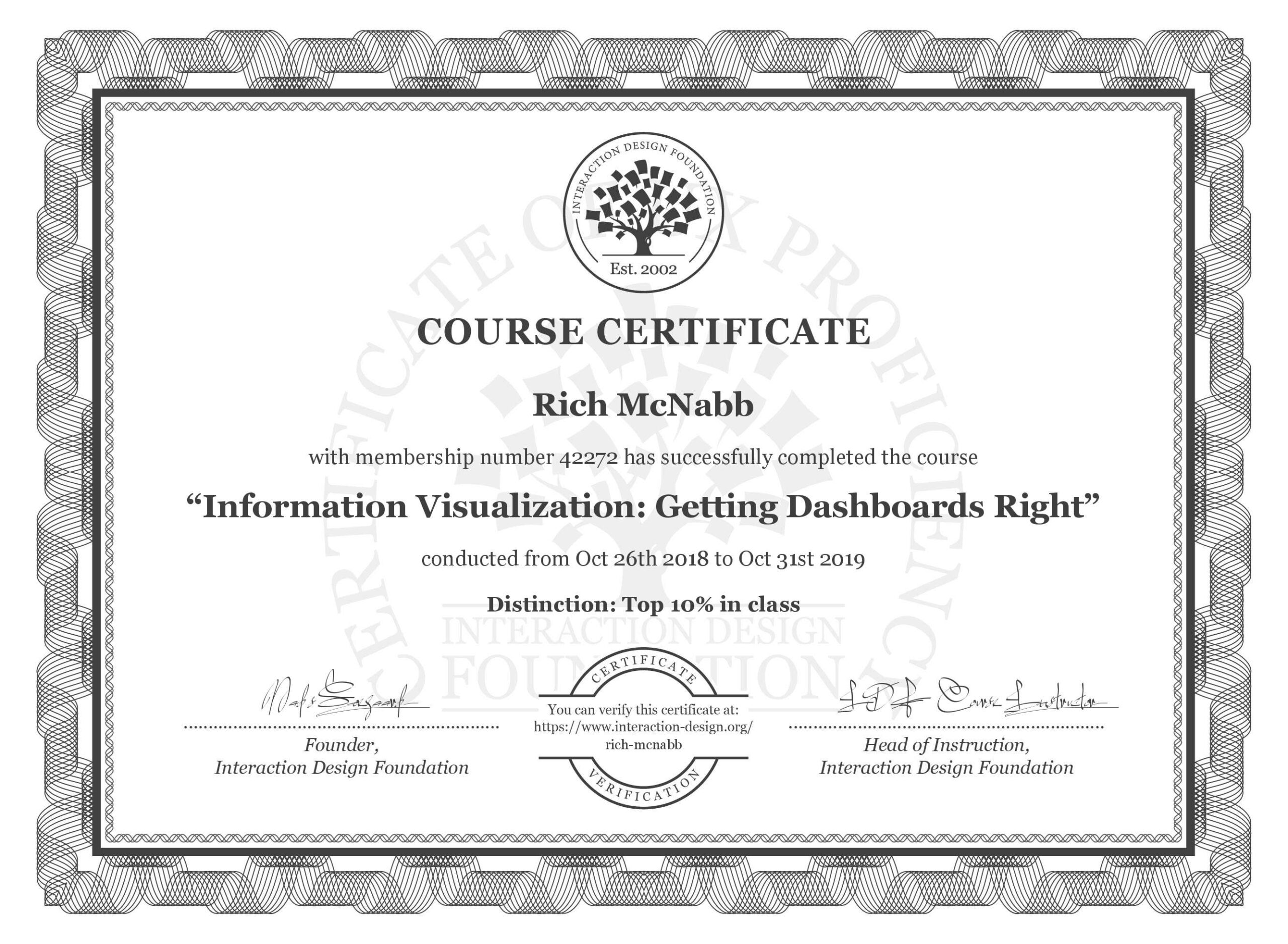
Information Visualization: Getting Dashboards Right
Present complex and abstract data in a visual way which is easy for people to understand.
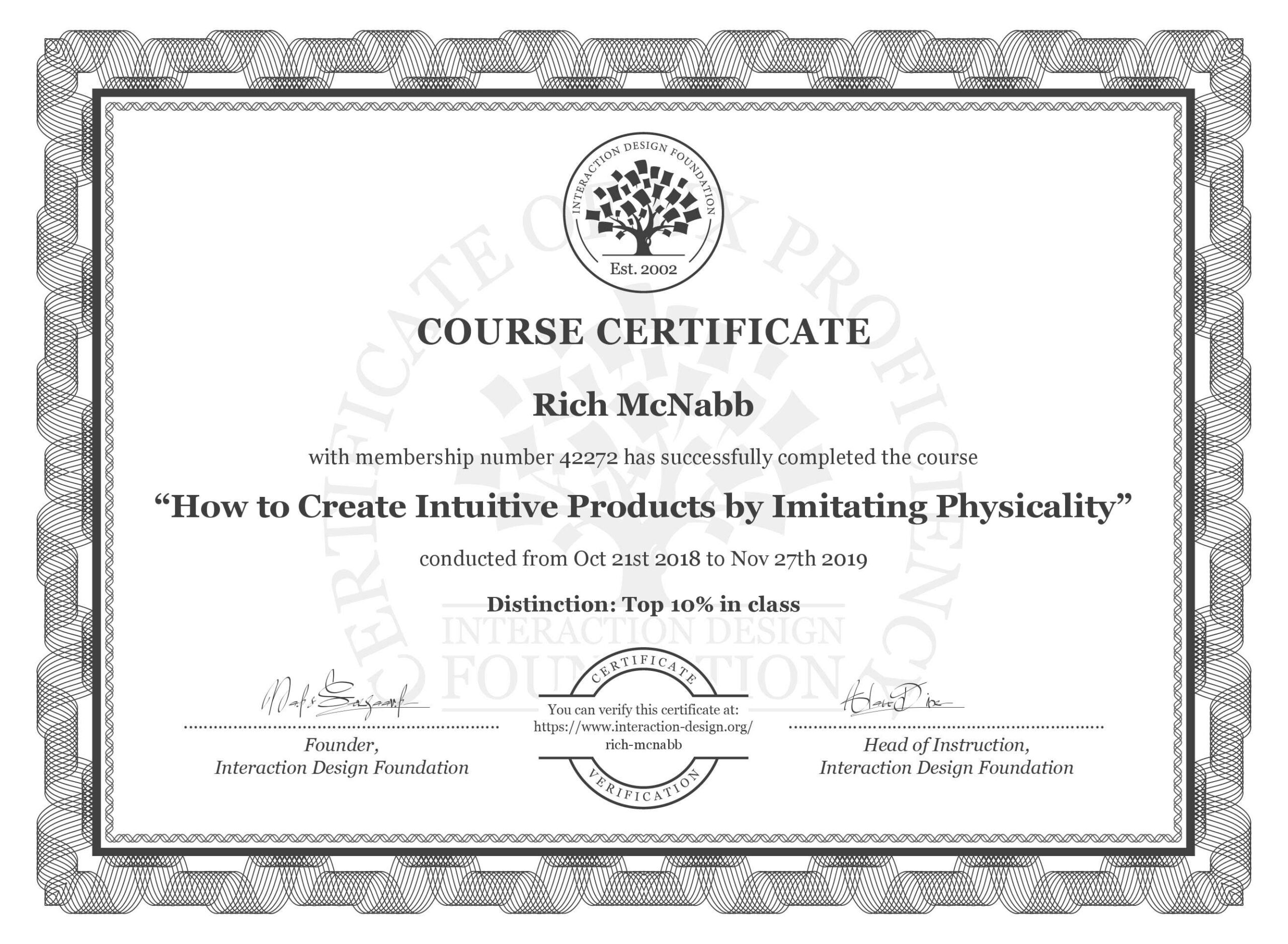
How to Create Intuitive Products by Imitating Physicality
Learning how to design intuitive and easy-to-use products by taking inspiration from physicality.
4. UX psychology & behavioural design
This is the human layer of UX. It looks at how perception, memory, emotion, and cognitive bias shape decision-making. It also explores how behavioural design can support or influence behaviour in ethical, meaningful ways, from e-commerce patterns to engagement and motivation.
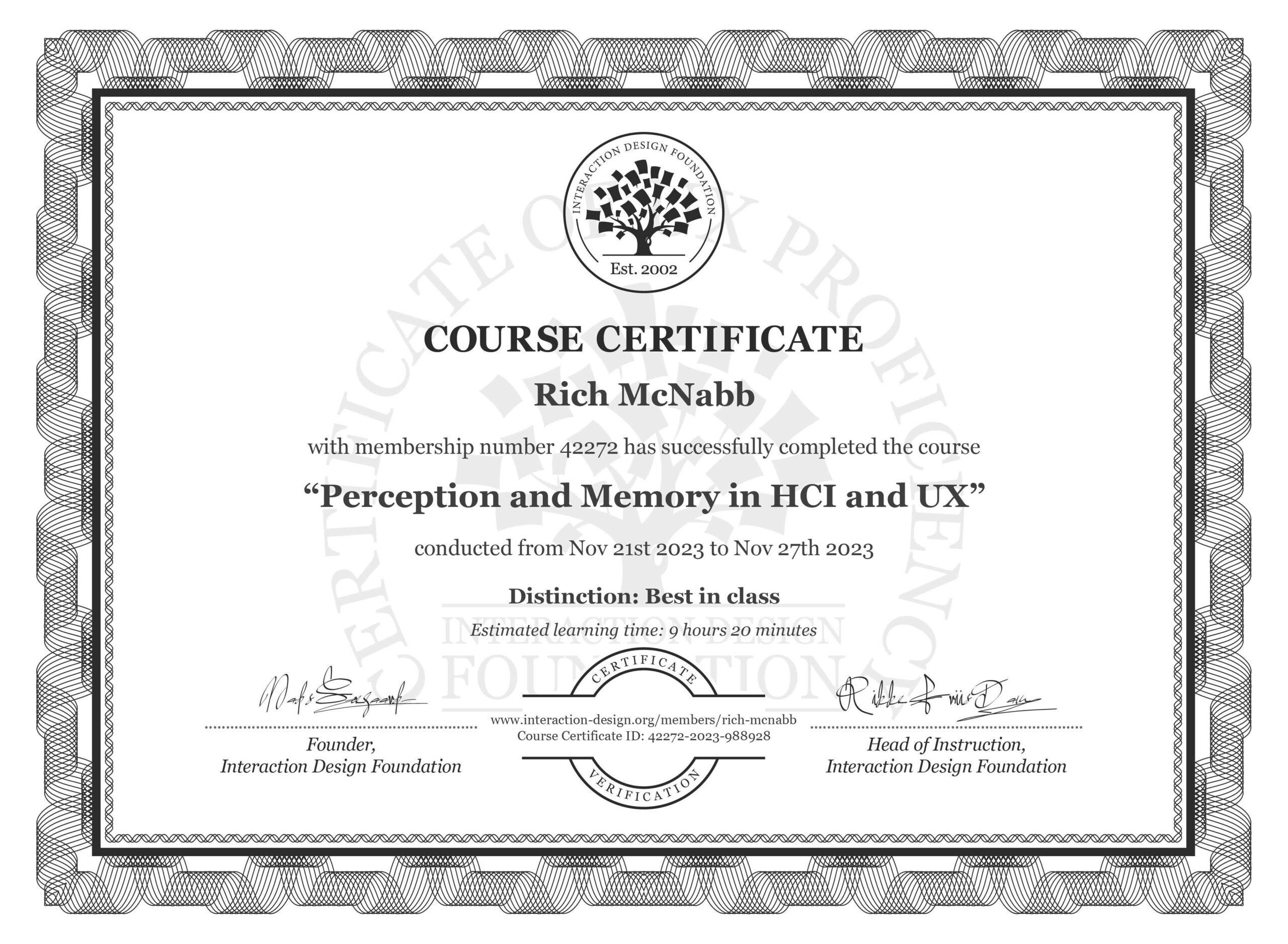
Perception and Memory in HCI and UX
A large part of human interaction relies on perception, our ability to sense the world around us. But we also need to join perceived events together, which is where memory comes in.
Gestalt Psychology and Web Design: The Ultimate Guide
Create complex interface designs that are visually intuitive to understand and operate by applying Gestalt principles.
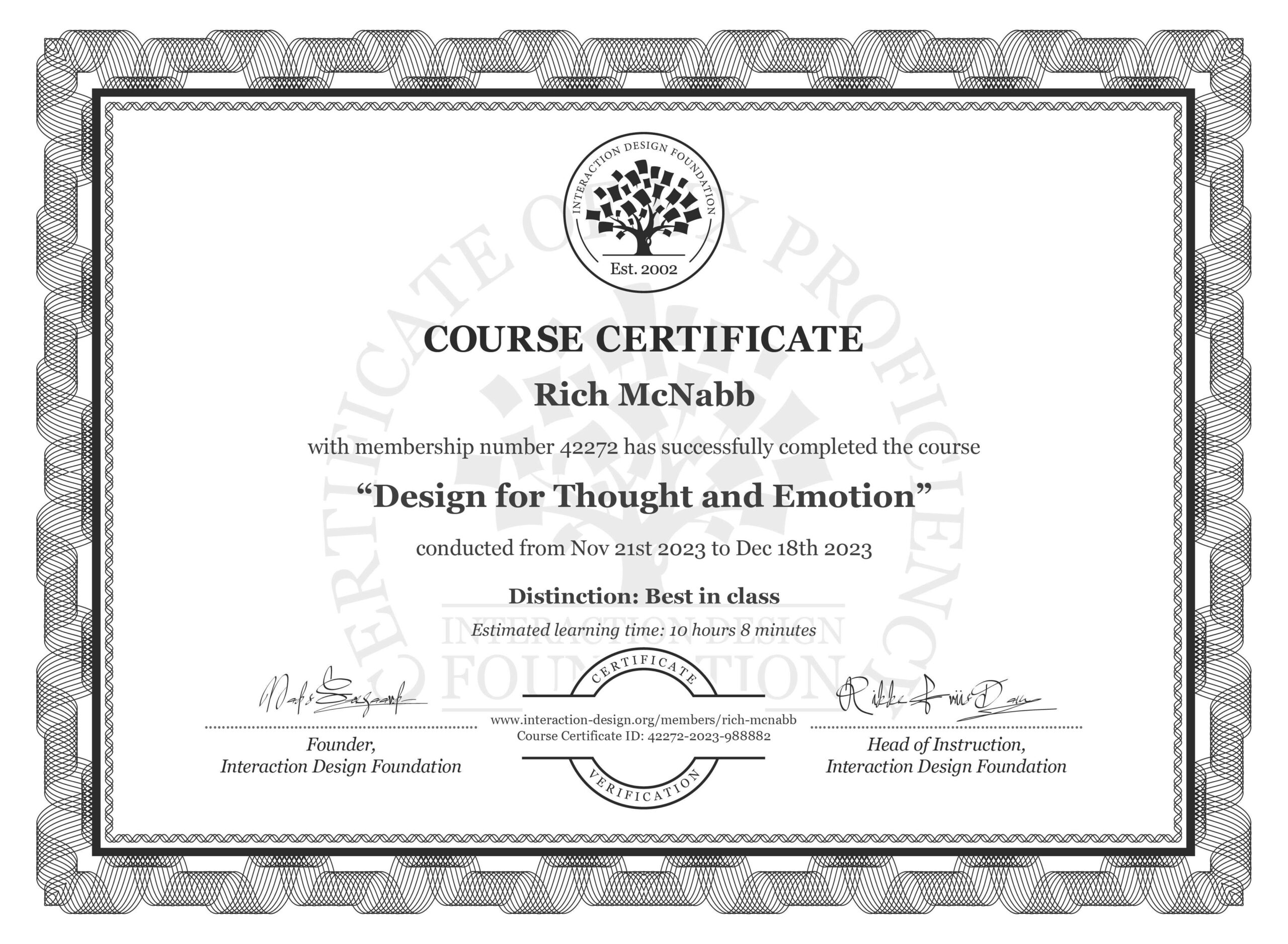
Design for Thought and Emotion
Interactive systems are more than just functional. If we hope to engage more effectively with our users, user experience is crucial. To create successful user experiences, we need to know how humans think and feel.
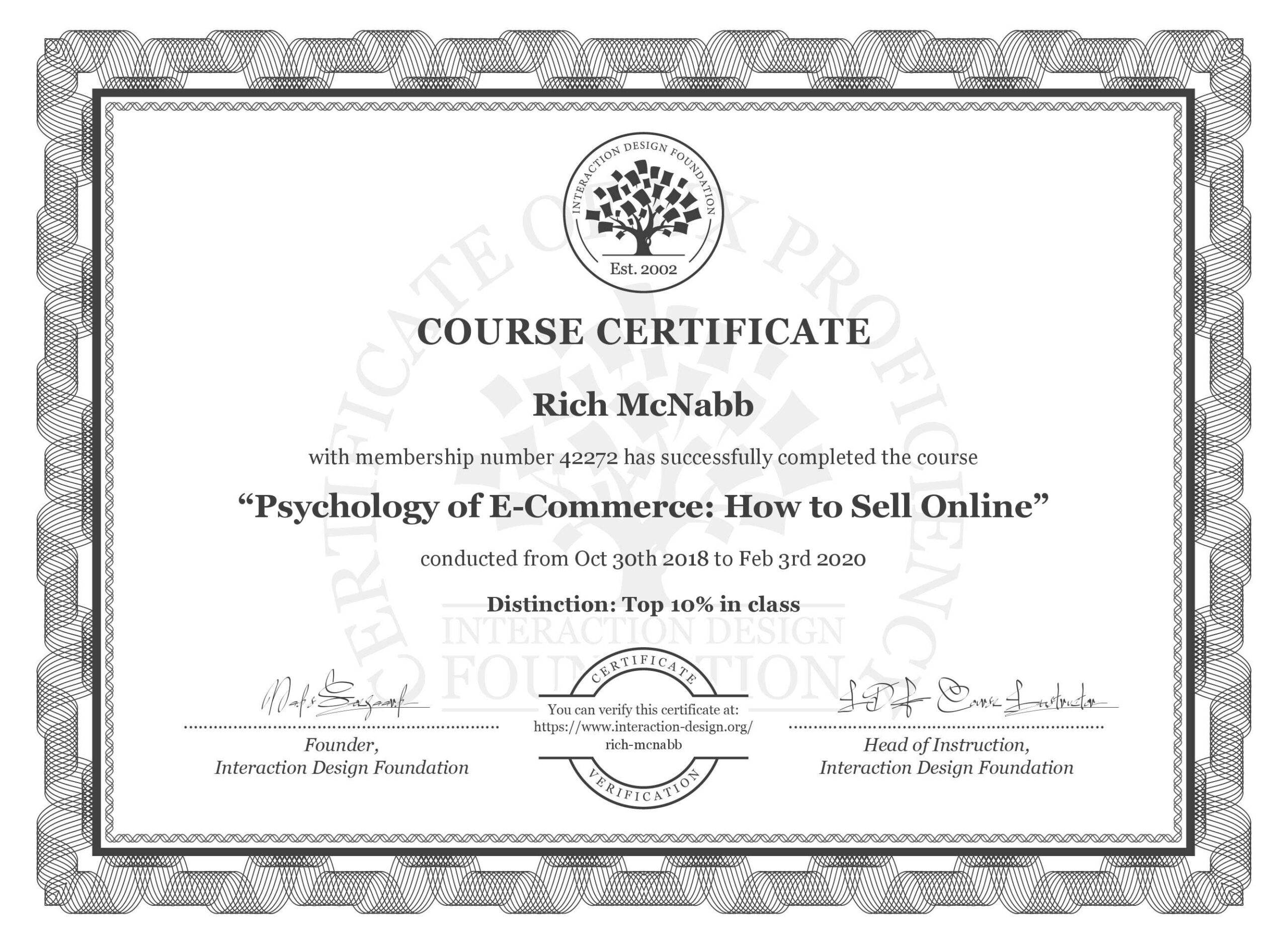
Psychology of E-Commerce: How to Sell Online
Design e-commerce websites which increase customer retention and loyalty in an ethical manner.
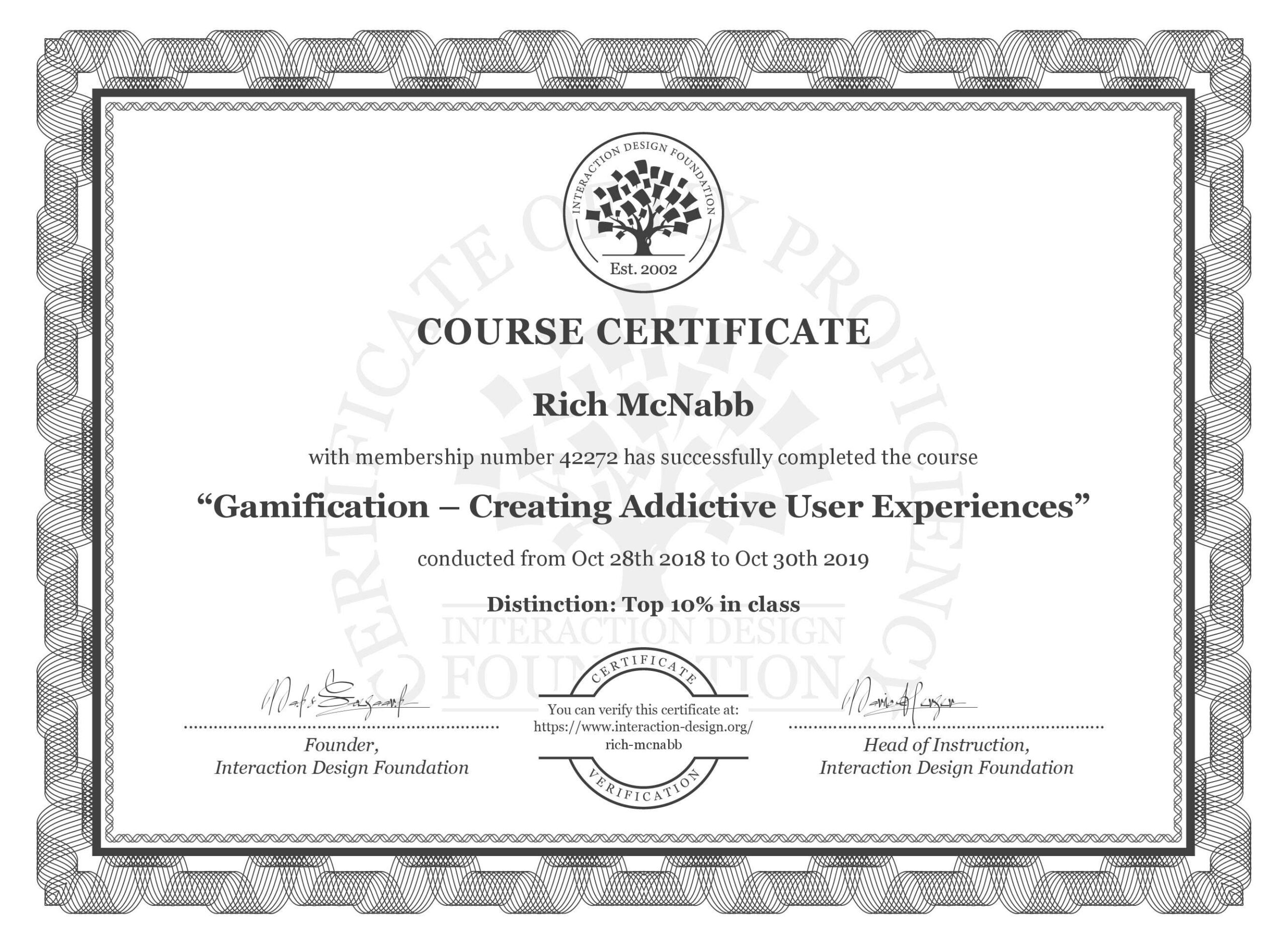
Gamification – Creating Addictive User Experiences
Create immersive player experiences that help contribute towards business goals and performance.
Get Your Product Used: Adoption and Appropriation
Manage a product’s path of use from introduction to the market and onwards to ensure that it’s constantly relevant to its customer base.
5. Mobile & emerging technologies (AI & XR)
This focuses on how UX adapts across new contexts and interfaces. Mobile patterns, spatial computing, and a growing partnership with AI all change how users interact with products. This section reflects an ability to design for shifting constraints, new behaviours, and emerging technologies.
Mobile User Experience (UX) Design
Great advice on aspects to remember when designing for smaller screens and devices.
Mobile UX Design: The Beginner’s Guide
Mobile UX design skills are now an essential part of any UX designer’s skill set. This course will provide you with the foundations of mobile UX so that you can break into this extensive market.
Mobile UI Design
A strong UI design is essential for the success of a digital product in today’s saturated market. Mobile devices’ screen real estate is small, and people are on the move, so a good UI is even more crucial. You’ll learn to encourage task completion and to make your products intuitive and easy to use.
Mobile UX Strategy: How to Build Successful Products
Create user-friendly mobile experiences that captivate and engage your users like never before! Transform your ideas into highly successful products with this comprehensive course on Mobile UX Strategy.
How to Design for Augmented and Virtual Reality
Design engaging user experiences for augmented reality (AR) and virtual reality (VR) through the use of storytelling techniques.
AI for Designers
Empower yourself with cutting-edge skills that will enable you to both seamlessly incorporate artificial intelligence (AI) tools into your design process and learn the basics of how to design for AI.
6. UX leadership, strategy & career Growth
This is the systems and impact layer. It moves beyond individual screens into teams, processes, and organisational design. It includes Agile ways of working, service design, portfolio development, and how UX connects directly to business outcomes and long-term product direction.
UX Management: Strategy and Tactics
Great practical advice on how to grow your company’s UX maturity and balancing users’ needs with business objectives and ROI. Highly recommend.
Agile Methods for UX Design
Learn both the theory and the real-world implementation of agile, its different flavours, and how you can work with different versions of agile teams.
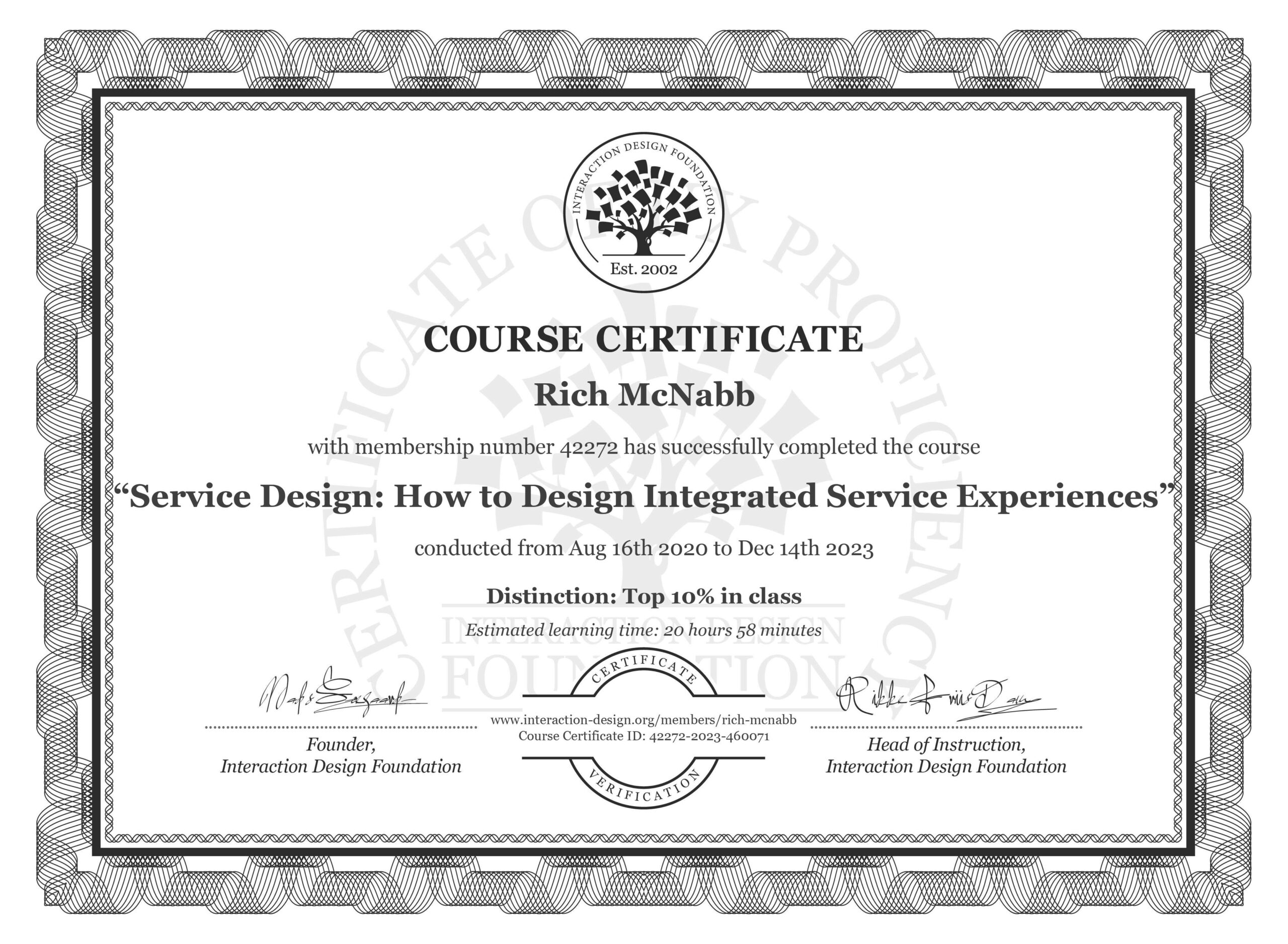
Service Design: How to Design Integrated Service Experiences
In a service design process, you use an in-depth understanding of the business and its customers to ensure that all the touchpoints of your service are perfect and, just as importantly, that your organization can deliver a great service experience every time. It’s not just about designing the customer interactions; you also need to design the entire ecosystem surrounding those interactions.
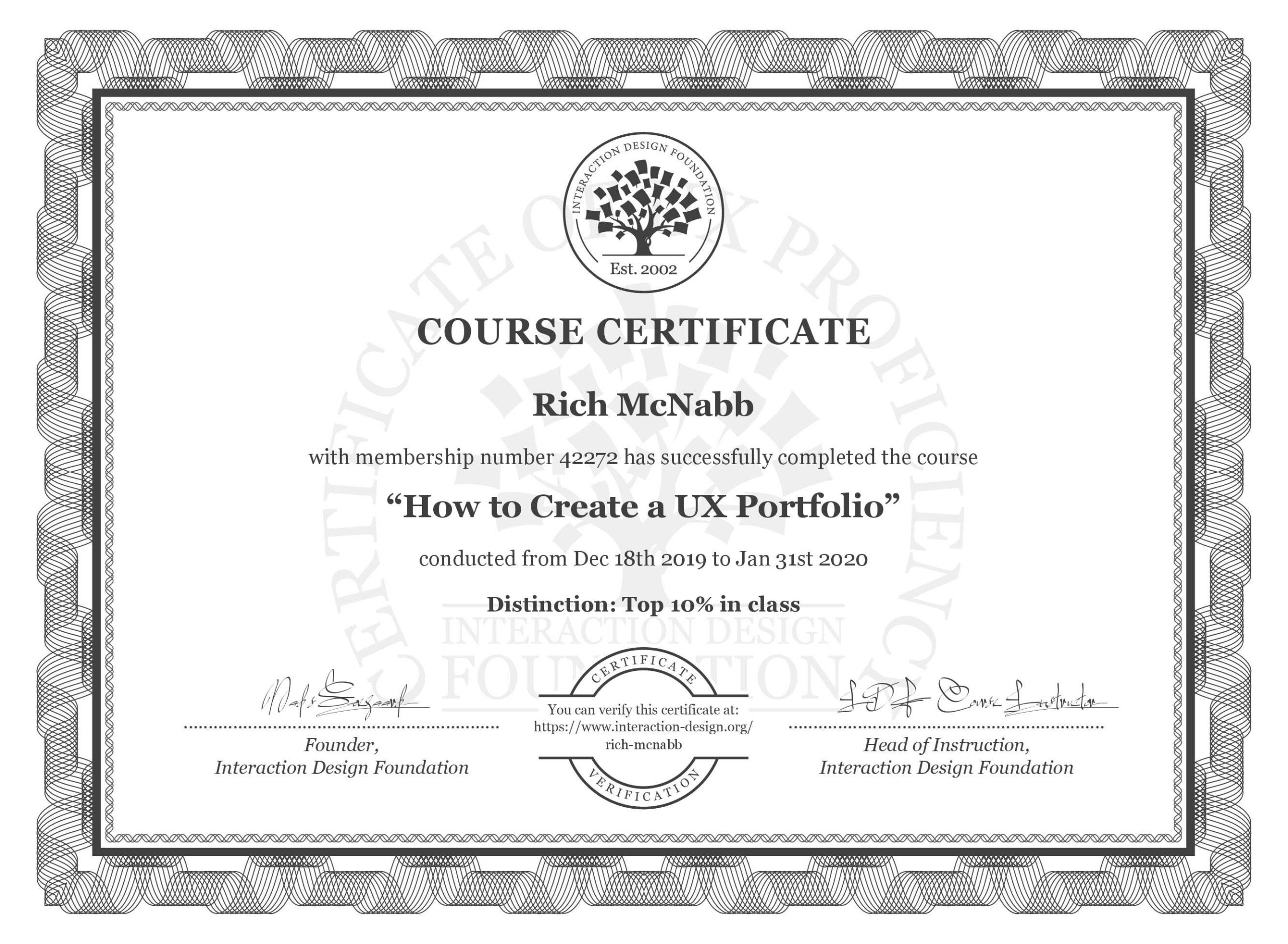
How to Create a UX Portfolio
How to craft compelling UX case studies that tell a story and motivate recruiters to invite you for job interviews.
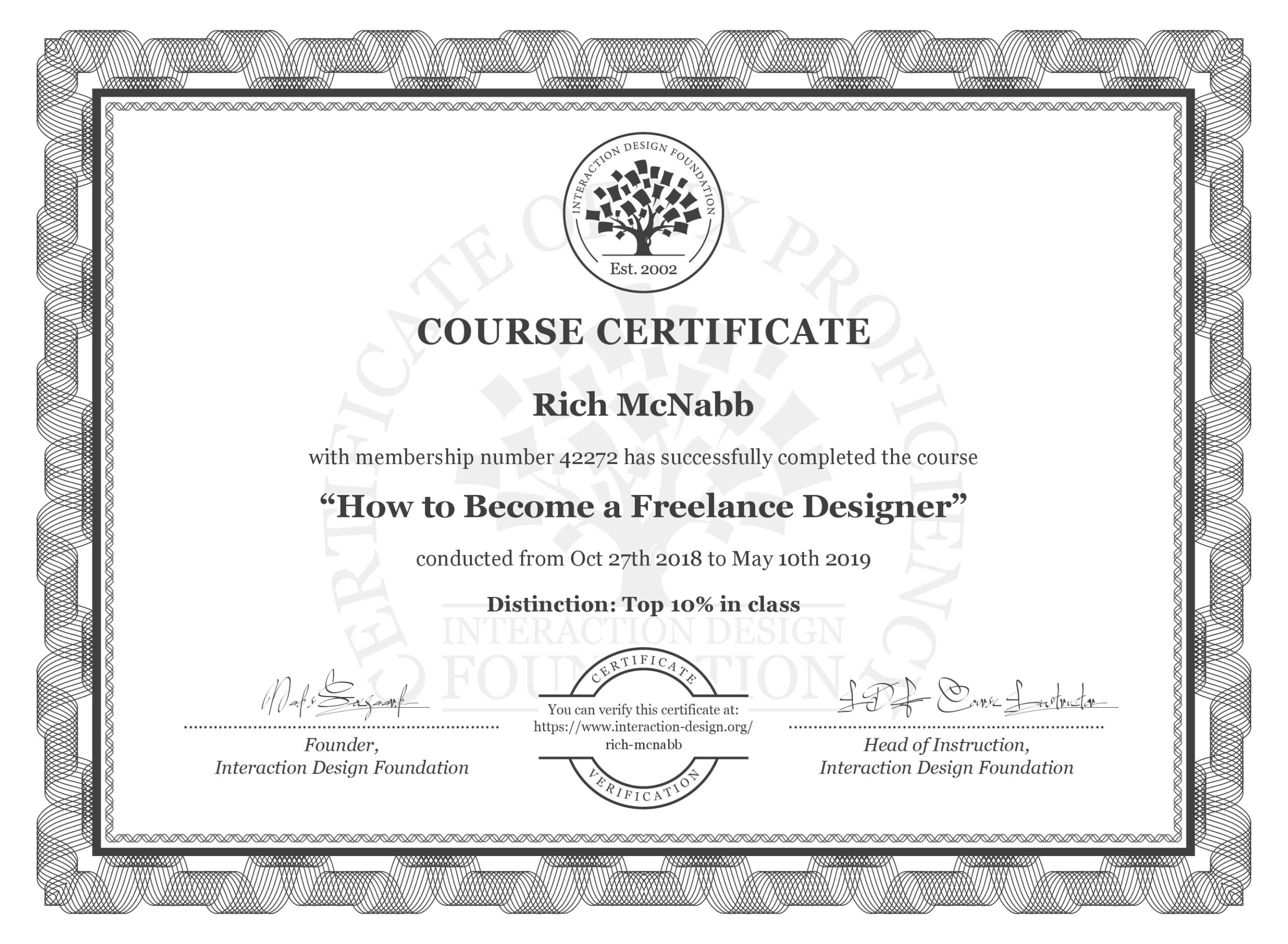
How to Become a Freelance Designer
Super practical advice on how to run and set up a design business, attract clients and market your services.
Putting the theory into practice
These courses gave me a shared vocabulary and a sturdier foundation under skills I’d already been building on the job for years. The real test is whether it shows up in the work itself, in how a product actually gets designed, not just in a certificate. Still working through a few more. I’ll keep this page updated as I go.