How I built my own surf strength training routine from scratch after a shoulder injury, the workout itself, the gear that actually matters, and what changed once I stopped chasing goals and started building systems.
My shoulder was never the issue, it was my surf strength… and stamina
In March 2015, a couple of weeks after buying a brand new mountain bike, I went over the handlebars riding downhill at Mākara Peak Mountain Bike Park with friends. The bike flipped. The seat catapulted straight into my shoulder, and I fractured my scapula in three places. Was I travelling at pace? No. Was I getting big airs off some jump? Also no.
I was travelling at an awkwardly slow pace, and instead of clearing the jump like a normal person, gravity took over and I fell to the bottom of the ramp in slow motion. The full story, helicopter rescue, reality TV camera crew and all, lives on my about page.
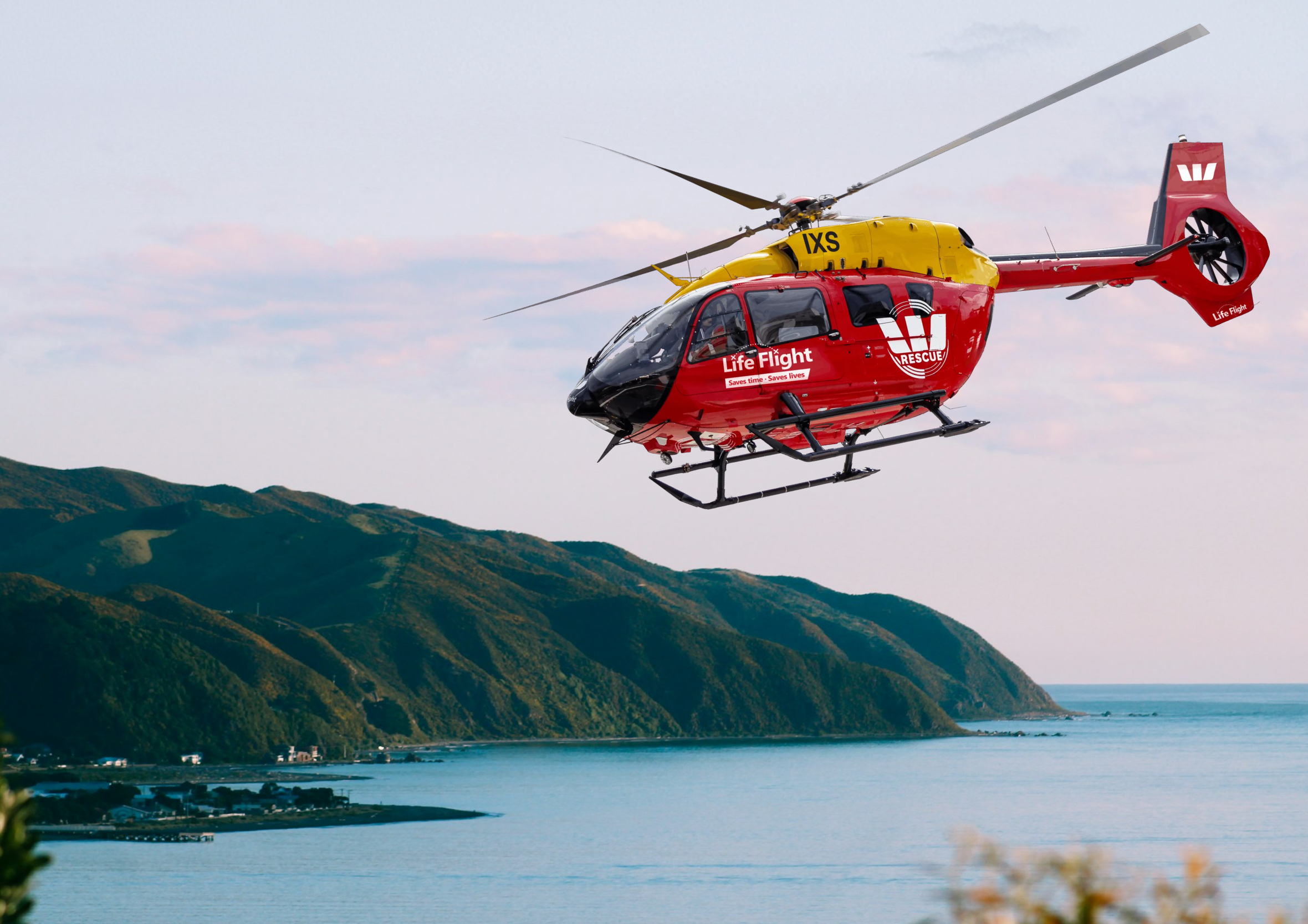
The Life Flight Trust operates the Westpac Rescue Helicopter and a dedicated fleet of Air Ambulance planes out of Wellington, New Zealand
The doctor at the hospital recommended against surgery, since most shoulder injuries like this are better left for the body to heal naturally. The scapula is connected to, and surrounded by, so much overlapping muscle and ligament that operating on it can create more problems than it solves. So mine was left to put itself back together, like that scene from Terminator 2, minus the liquid metal and the ominous soundtrack.
It healed clean, no lasting damage on paper. Still, the body keeps its own records, and mine hangs onto receipts like a 1920s accountant. My left arm never got its full strength back, and I lost some mobility along with it, properly lost it, if I’m honest.
Designing my own workout program, for the most part
That awareness is part of what sent me looking for How to Rip on YouTube and eventually The Ocean Warrior Course. Getting fitter was never really the whole story though, that’s a separate one worth telling properly another time.
Reading health articles and watching YouTube videos shaped most of this program, customised specifically to surfing, my age, and my injuries. Training for something that pays off in the water, rather than training for its own sake, made the whole approach feel grounded with purpose.
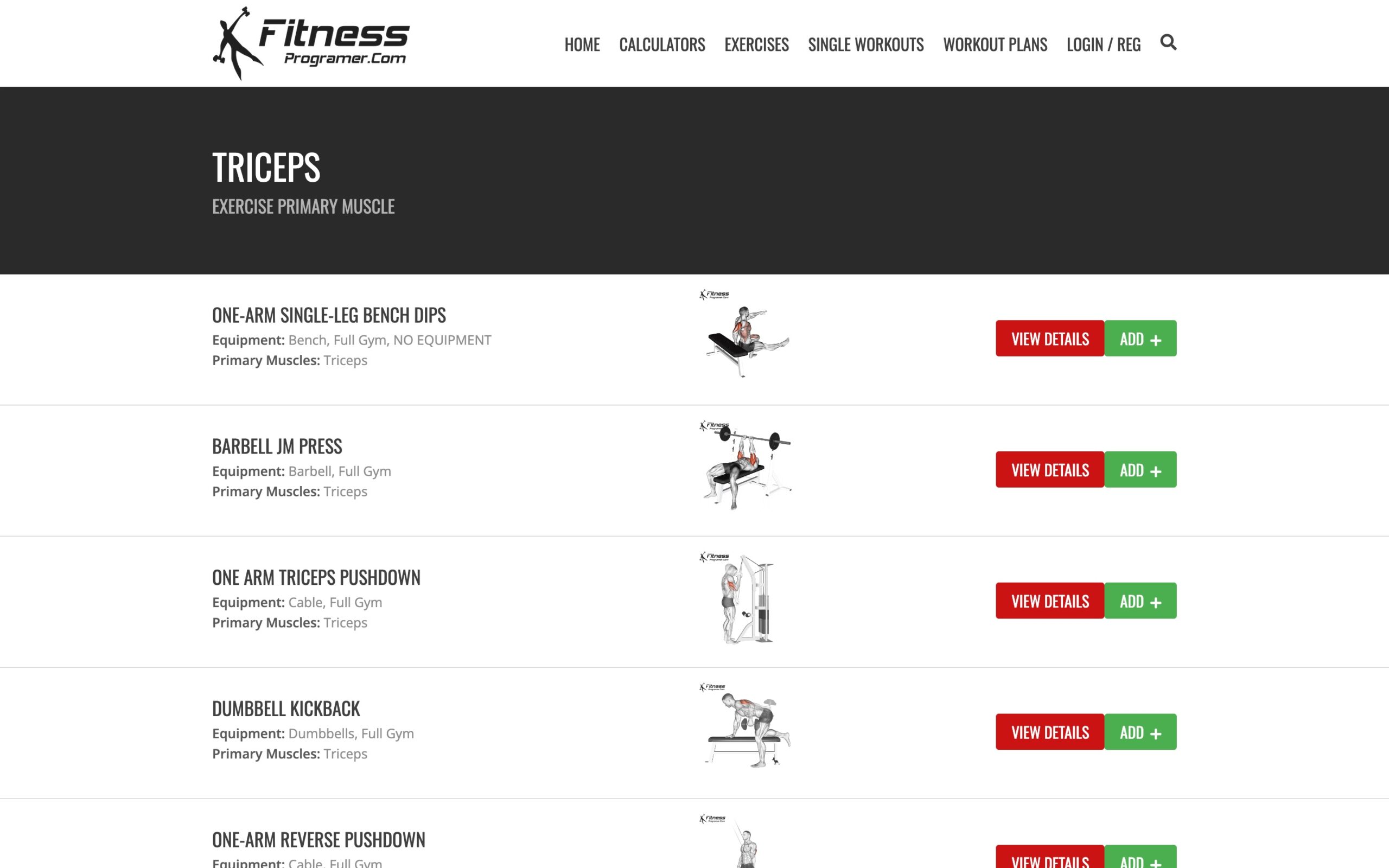
The FitnessProgramer.com library I used to design and build a tailored program around my specific goals and injuries.
Choosing not to work with a personal trainer isn’t a criticism of what they bring to the table. Freedom and flexibility matter more to me, choosing my own adventure on the day works better than committing to a fixed weekly session. Motivation has never really been the struggle, and paying someone every week mostly buys accountability, which isn’t the piece I’m missing. Learning something myself, most of the time, beats having someone else run the session for me. Where a trainer earns their fee, in my view, is technique: a solid block of sessions three or four times a year to nail good form and posture on something specific, then check in and adjust every few months rather than paying weekly once everything’s dialled in. This is just what’s worked for me, not a hard and fast rule.
FitnessProgramer.com became my go-to for this. Its exercise library breaks nearly every movement down by muscle group and equipment, complete with anatomical diagrams showing exactly what’s firing and clear technique notes, so you’re not guessing your way through something you’ve only half seen on YouTube. Building a program this way, filtering exercises by what I actually had access to and what my shoulder could handle, felt less like a compromise and more like designing something properly mine.
Surf strength training workout
Here’s what that looks like on paper, four blocks, roughly 45 minutes to an hour depending on the day and what’s actually free at the gym.
1. Warm up
Calf extensions (5 x 15)
Hip abduction – out (5 x 15)
Hip abduction – in (5 x 15)
2. Strength: part one
Row (5 x 15)
Chest Press (5 x 15)
3. Strength: part two
TRX (5 x 15)
Cable Tricep (5 x 15)
Lat pull down wide (5 x 15)
Dip assist (5 x 15)
Chin up assist (5 x 15)
Cable Biceps (5 x 15)
Face pulls (5 x 15)
Dead hangs (3 x 30 sec)
4. Cardio
Rowing machine (5 min: 15 sec intense followed by 45 sec lower intensity)
Treadmill (30 min)
Bike (30 min)
5. Core
7 minute workout
Forecasts, surf cams, and the right board for the day
Every surfer knows the feeling of paddling out in whitewash conditions, howling onshore wind, messy and disorganised waves stacking up one after another, no let-up between duck dives. It’s usually a decision made out of sheer desperation after too long away from the water, and the results are mixed at best. That said, the paddle out sometimes tells a completely different story from what the shore promised, and it’s worth the gamble. I’ve had some genuinely great sessions this way, glassy waves out the back while it looked like rubbish from the beach, and it’s almost funny paddling back in afterwards to see just how bad it really did look.
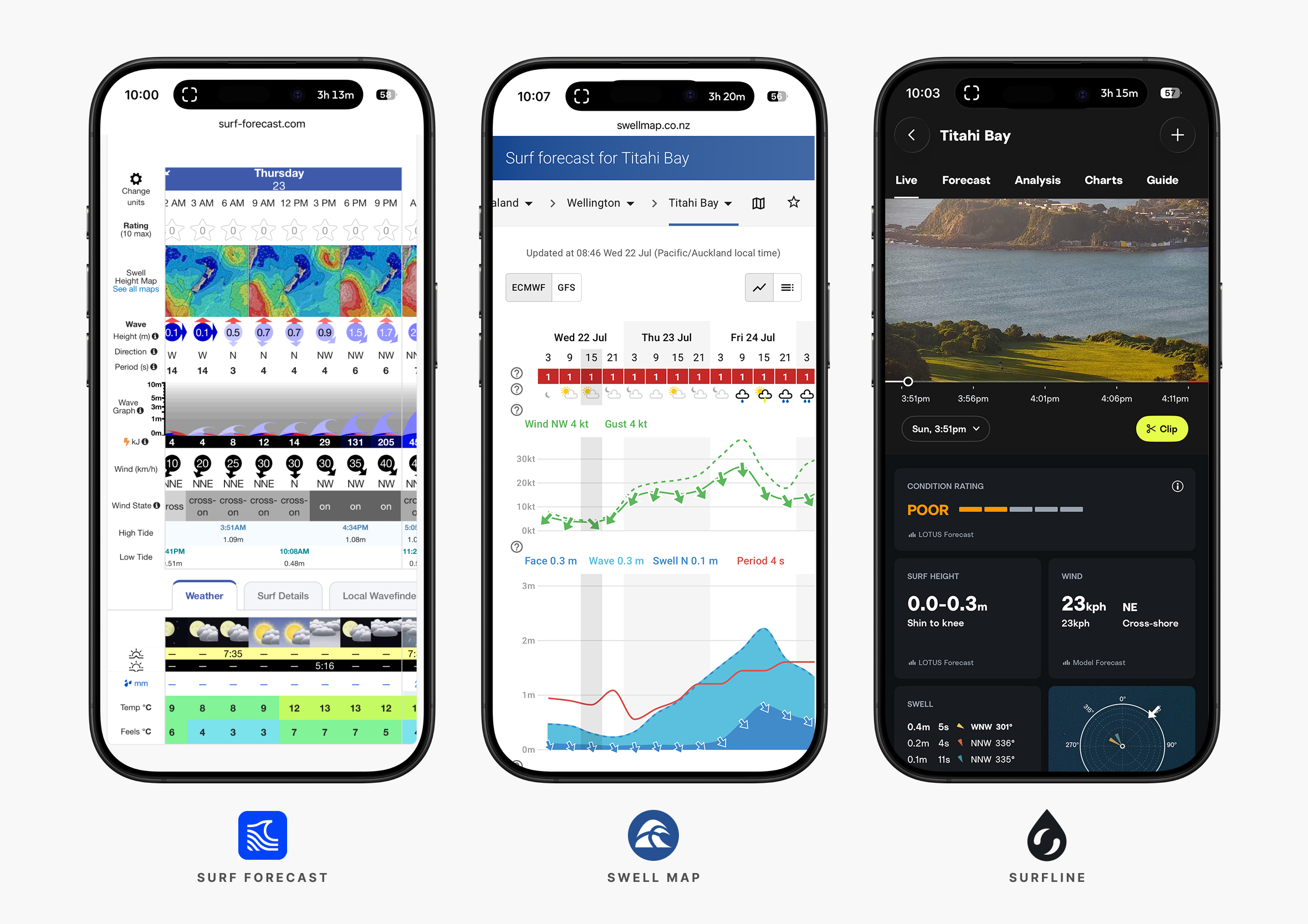
I check all three of these before paddling out, surf-forecast.com, swellmap.co.nz and surfline.com, rather than trusting any single forecast on its own
That’s when my shoulder and rotator cuff remind me they’re not built for this anymore. These days I check surf cams and study forecasts on surf-forecast.com, swellmap.co.nz and surfline.com properly before paddling out. Understanding how wind direction, wind speed, wave energy and tide come together means I actually know what I’m signing up for, most of the time. Picking the right board for the day matters too: a shortboard duck dives and manoeuvres far more easily than a 7-foot-plus mid-length ever will, though in low energy conditions the longer boards absolutely earn their place in the quiver. For Wellington surf specifically, a fish or a mid-length covers at least 90% of what you’ll actually encounter.
Skip leg day by becoming an unapologetic gym crim
Leg day gets skipped permanently, without a second thought, and the world keeps spinning. Old knee injuries make squats and lunges more trouble than they’re worth, especially once weights enter the mix, so the treadmill and stationary bike carry the low-impact cardio instead. Easy on the joints, still gets the heart rate up. Also helps avoid the classic “gym-crim” physique, skinny legs sticking out like an orange balanced on toothpicks.
My weekly surf training routine
Every single day includes some kind of training, though “every day” is doing a lot of quiet, nuanced work in that sentence. Mood, injury and whatever the weather’s doing all get a vote. A beautiful day outside means skipping the treadmill entirely for a walk in the hills behind the house instead, summit views stretching out over Wellington harbour, the airport, forests and ranges in every direction. The treadmill loses that argument every time, no negotiation.
Roughly 30 minutes of weights fills a typical gym day, whatever’s free and on the list, tuned into what the body’s actually saying and skipping anything that starts feeling like damage instead of progress. Another 30 minutes on the treadmill or bike closes the session out with a proper sweat.
Home workout days run completely differently: something decent on the TV or music blasting, moving through exercises based on whatever’s within reach, ducks in disarray rather than a row. Unstructured F45 is probably the closest comparison, minus an instructor yelling encouragement, plus noticeably better snacks and a far more relaxed atmosphere.
Invest in gear that buys you more time in the water
Warmth and flexibility in a wetsuit matter more than people give them credit for. An O’Neill Hyperfreak Chest Zip 4/3+ Steamer paired with an O’Neill HyperFire No Sleeve 1mm vest turned out to be the goldilocks combination, the vest underneath keeps vital organs properly warm without adding any extra resistance to the shoulders while paddling.
Getting it wrong once was an expensive lesson. A Rip Curl Flashbomb Heatseeker 4/3mm Zip Free Steamer, bought brand new for $750, put so much strain through the shoulder that two or three short surfs were all it managed before pulling the pin. Two weeks out of the water followed while the shoulder settled down, and the suit itself sold a month later for $400. Sometimes the best lessons are the ones that hit hardest at the time.
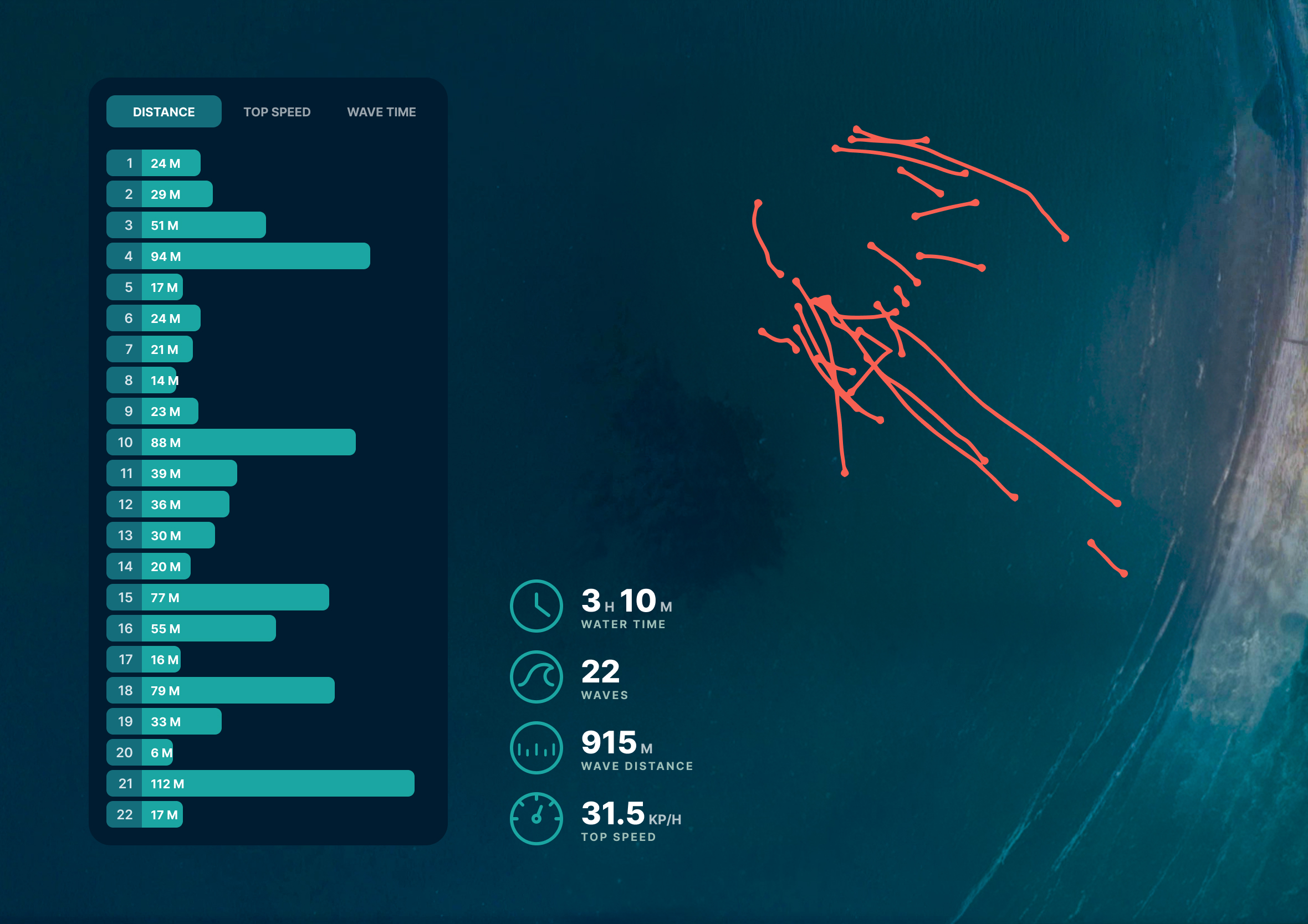
One session, 3 hours 10 minutes in the water, twenty-two waves, all of it tracked and mapped, a Dawn Patrol-style breakdown of a single morning out.
Chatting with O’Neill’s customer support team sorted it properly, the shoulder injury, the mistake of going too thick and warm the first time, worked through over a few back-and-forth chat messages until we landed on the current combination. Years later, it’s still the go-to.
Properly cold mornings, the kind where the windscreen needs defrosting before the drive, are exactly when this combination pays off. Building real endurance is impossible when a wetsuit fights back the whole session, and the two and three hour sessions this whole setup makes possible would fall apart without it. Getting up at 5:40am to surf before work stops feeling like a sacrifice when the gear does its job properly. Done right, this is the favourite part of the whole day, and the pressure to squeeze in a workout is a distant memory in the rear-view mirror by the time the drive home starts, wash the gear, shower, grab breakfast and coffee, then sit down at the desk to start work.
How dry land training changed my surfing, not just my fitness
Endurance was the first thing to shift, and it shifted fast, a genuinely noticeable difference almost straight away. Sessions that used to tap out around the one hour mark started easily stretching beyond two, sometimes three hours on a regular basis. Calling it quits before going for broke matters though, there needs to be enough left in the tank for the paddle in, which can take a lot longer than expected on a variable day.
My shoulder stopped its usual next-day complaints. Confidence, endurance and my actual surfing all climbed together, yet let’s not get carried away, I’m still a terrible surfer, zero sponsors or awards to show for it. I’m just having a lot more fun out there as a result.
The bigger shift happened somewhere quieter, in my head. I stopped panicking the moment a genuinely massive set started stacking towards me. That calm didn’t materialise out of nowhere, it’s the same breath-hold discipline and stay-steady-under-a-wipeout technique from The Ocean Warrior Course, and I still lean on it constantly: one big breath before paddling into something serious, staying loose if I get rolled and dragged. Feeling that level of control in the water changed my entire relationship with the sport, not just my fitness.
Taking off on bigger waves I would have passed up before, rather than calling the session early and heading back to shore, became normal. Chasing the biggest wave out there was never really the point, chasing getting better at this was.
You make the real gains in the kitchen, not the gym
Losing 12kg turned out to matter more for my surfing than any single session at the gym did. Less of the board sat underwater with every paddle, and duck diving stopped feeling like hauling a heavy kettlebell through every wave. I track nutrition with the LoseIt app alongside weight and calories, not because I’m obsessive about the numbers, but because seeing them somehow makes me more consistent and committed. One week in, I could already see how much this was going to level things up, so I bought the lifetime subscription and never looked back.
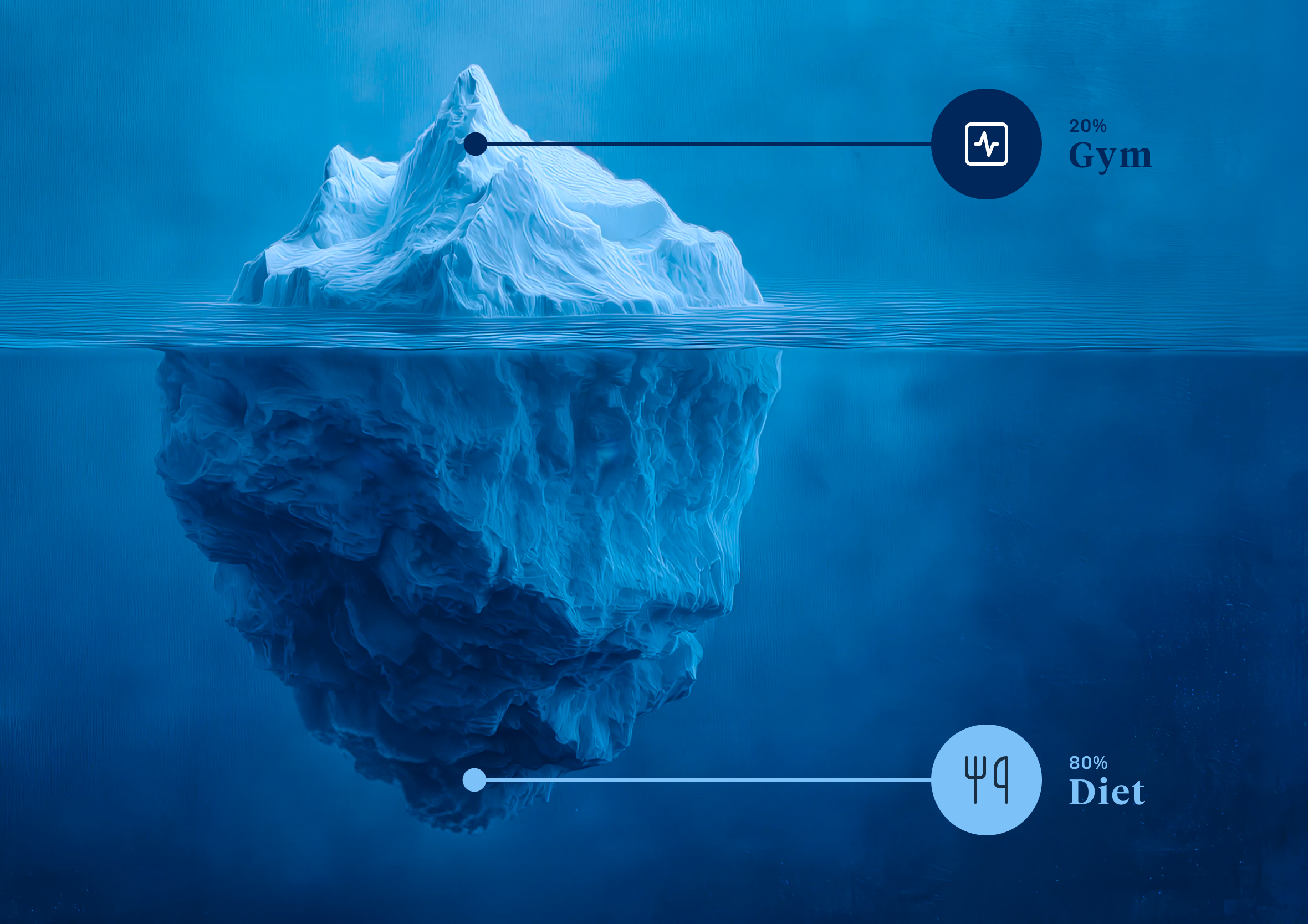
Once you focus 80% of your effort on nutrition, the rest of the plan is the easy part. Photo by Marcin Paśnicki (modified)
One thing worth mentioning. I’ve got a heap of food allergies, dairy, gluten, and nightshades (tomato, chillies, capsicum/bell peppers, and potato) all off limits. So I tend to eat healthy less by choice and more because my hand’s forced. My favourite food is potato chips, which is exactly why my wife keeps them in the trunk of her car rather than the house, otherwise I’ll demolish a full bag like a drunk Cookie Monster in a competitive eating contest.
That’s fine, though. Genuinely. The entire point of building a system instead of chasing a goal is that it doesn’t collapse the second you fall off it. You just climb back on and keep paddling.