
• Written by Rich McNabb • Proofread & Edited by Claude AI
Popular fonts for web and mobile design
The serif and sans-serif typefaces professional designers actually reach for, with the history behind each one and where to get it.


• Written by Rich McNabb • Proofread & Edited by Claude AI
The serif and sans-serif typefaces professional designers actually reach for, with the history behind each one and where to get it.
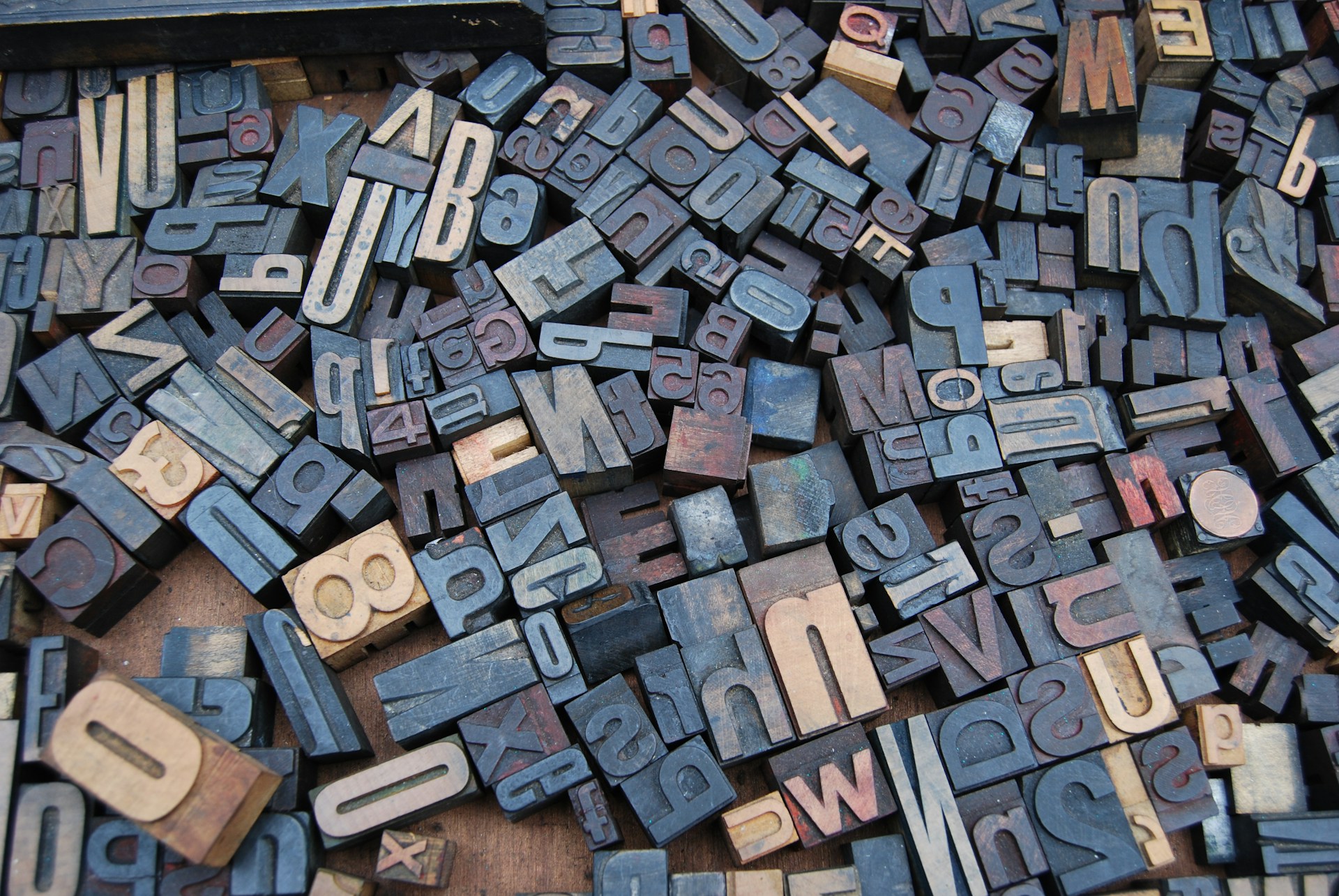
Image credit:
These are some of the most recognisable and trusted fonts used by graphic designers to convey style, themes, emotion, readability, and accessibility. I keep coming back to this list myself, whenever a project needs a serif with real history behind it or a sans-serif that won’t date in five years. These are the typefaces graphic and digital designers reach for again and again, they show up in branding, editorial work, wayfinding, and interfaces, earning their place rather than chasing a trend. Some go back centuries, others were built specifically for screens. Each one links straight through so you can see it, license it, or download it yourself.
Serif
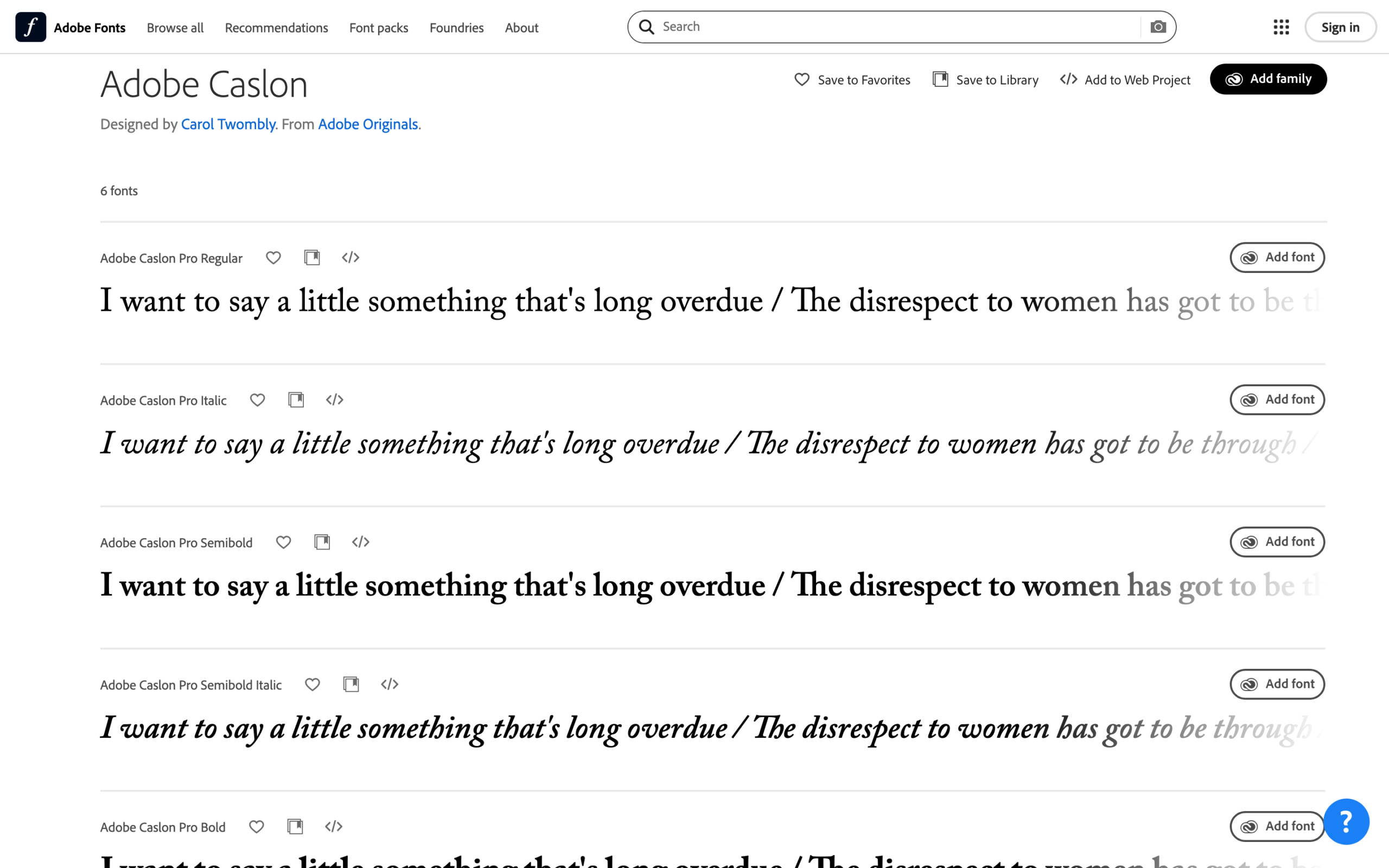
William Caslon released his first typefaces around 1722, becoming the first great English punchcutter and ending Britain’s reliance on imported Dutch type. His designs were immediately popular throughout the British Empire and the American colonies. Benjamin Franklin was an enthusiastic user, and the Declaration of Independence was set in Caslon. Adobe Caslon is a careful digital revival by Carol Twombly, released in 1990 and based on Caslon’s original specimen pages from 1734 to 1770. It is an old-style serif with short ascenders and descenders, bracketed serifs, and a graceful rhythm that makes it particularly well-suited to long-form text and editorial work.
Serif
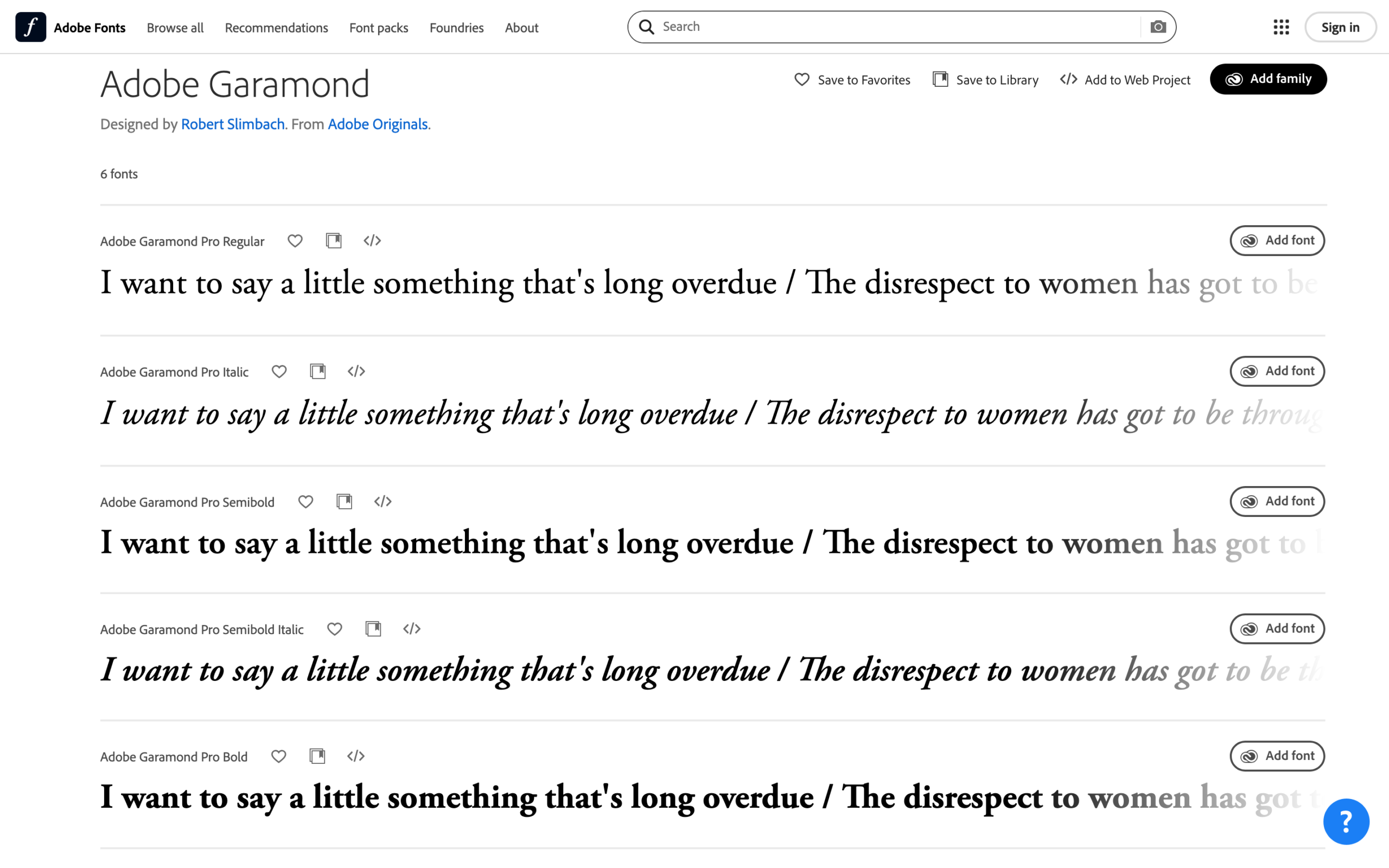
Claude Garamond was a sixteenth-century Parisian type designer whose roman types became the model for an enormous proportion of the serif typefaces that followed. Adobe Garamond, designed by Robert Slimbach in 1989, is a digital revival based directly on Garamond’s original type specimens held in the Plantin-Moretus Museum in Antwerp. It is an old-style serif of exceptional elegance, refined, balanced, and remarkably readable at small sizes. It has been widely used in book typography and editorial design for over three decades and remains a benchmark for quality in serif type.
Sans Serif
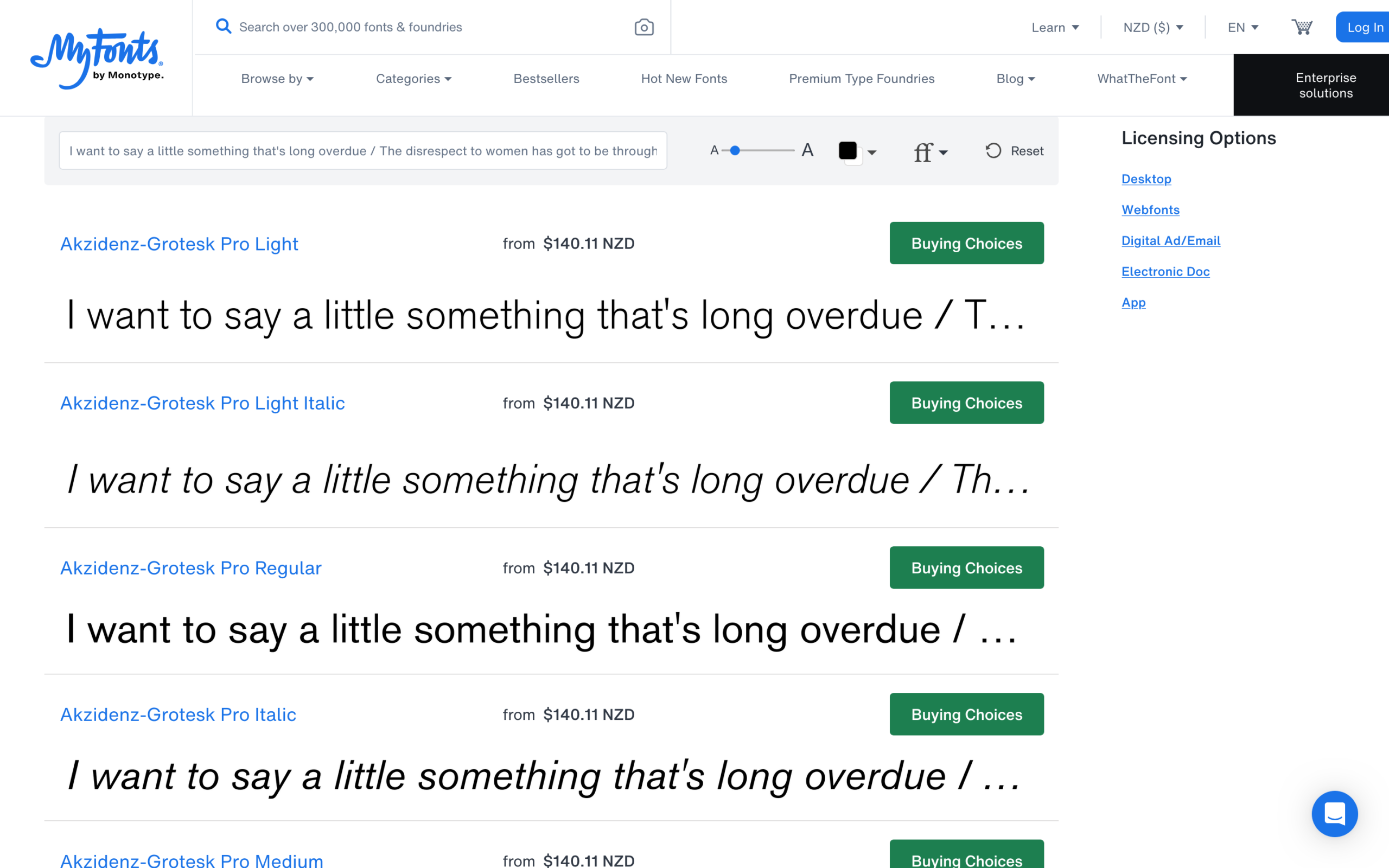
Released by the Berthold Type Foundry in Berlin in 1896, Akzidenz Grotesk is often described as the mother of all sans-serifs. The name roughly translates as “jobbing sans-serif,” a workhorse built for commercial print runs like tickets, forms, and signage rather than fine printing. It spent decades quietly in the background before becoming the typeface of choice for Swiss graphic designers in the 1950s and 60s, helping define what we now call the International Typographic Style. It also directly influenced the creation of Helvetica. Clean, neutral, and quietly authoritative, it remains widely used in branding and editorial design today.
Sans Serif
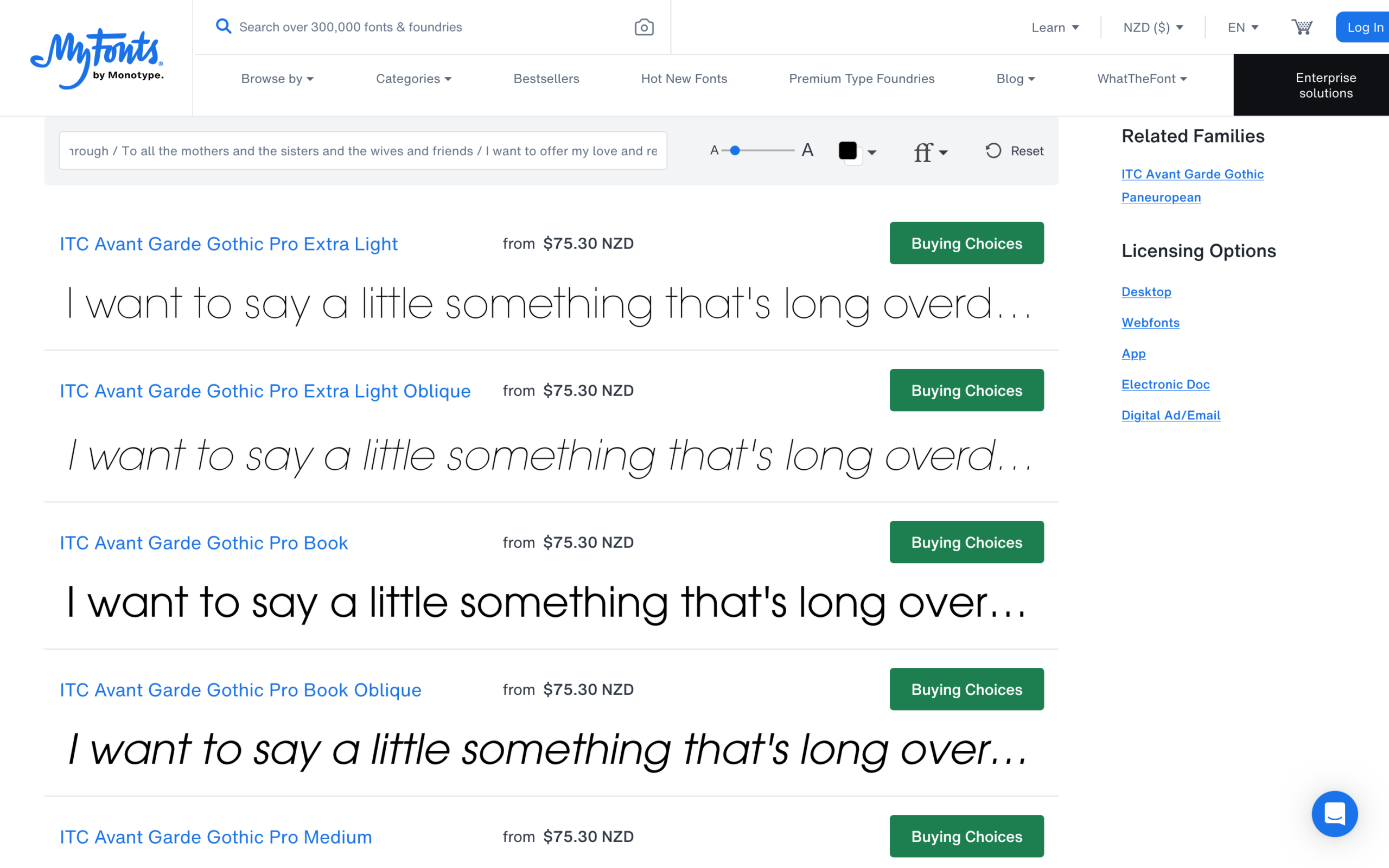
Avant Garde Gothic started life as a magazine logo. In the late 1960s, designer Herb Lubalin created the masthead for Avant Garde, a bold and often controversial American arts and culture publication. The design was a tight geometric construction of overlapping capitals, and it proved so striking that it became a full typeface in 1970, released by the newly formed International Typeface Corporation. Tom Carnase drew the original alphabets from Lubalin’s sketches, resulting in a pure geometric sans-serif built almost entirely from circles and straight lines. Its large open counters, tall x-height, and famous ligatures made it one of the defining typefaces of the 1970s. It remains a popular choice for display and headline use.
SANS-SERIF
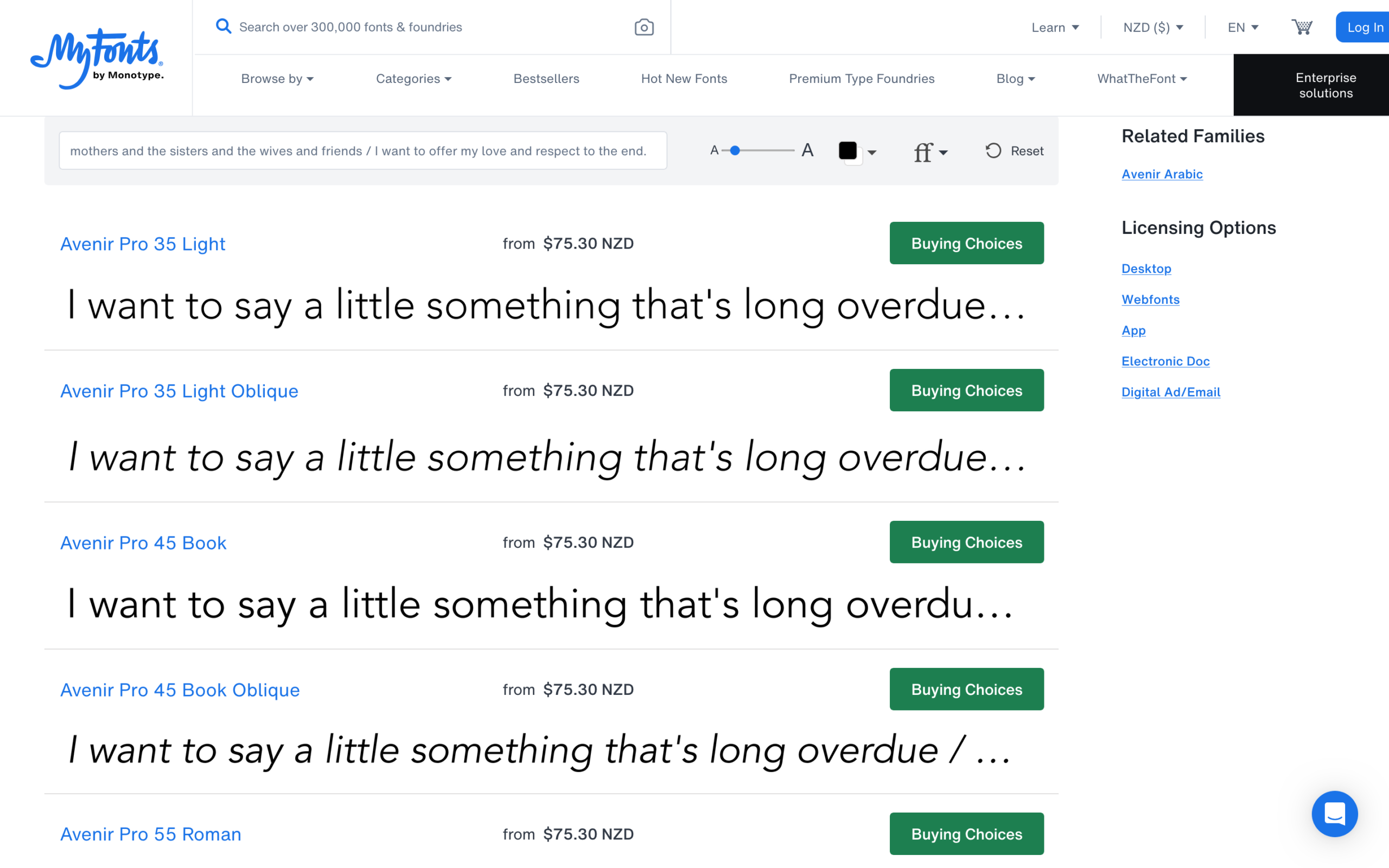
Designed by Adrian Frutiger and released by Linotype in 1988, Avenir (French for “future”) is a geometric sans-serif that quietly improves on its predecessors. Where Futura is strictly geometric, Avenir introduces subtle humanist touches, slightly varied stroke weights and softer letterforms, that make it far more comfortable to read at length. Frutiger himself described it as the typeface he was most satisfied with. It is widely used in corporate identity, wayfinding systems, and digital interfaces, and remains one of the most refined and readable geometric sans-serifs available.
Sans Serif
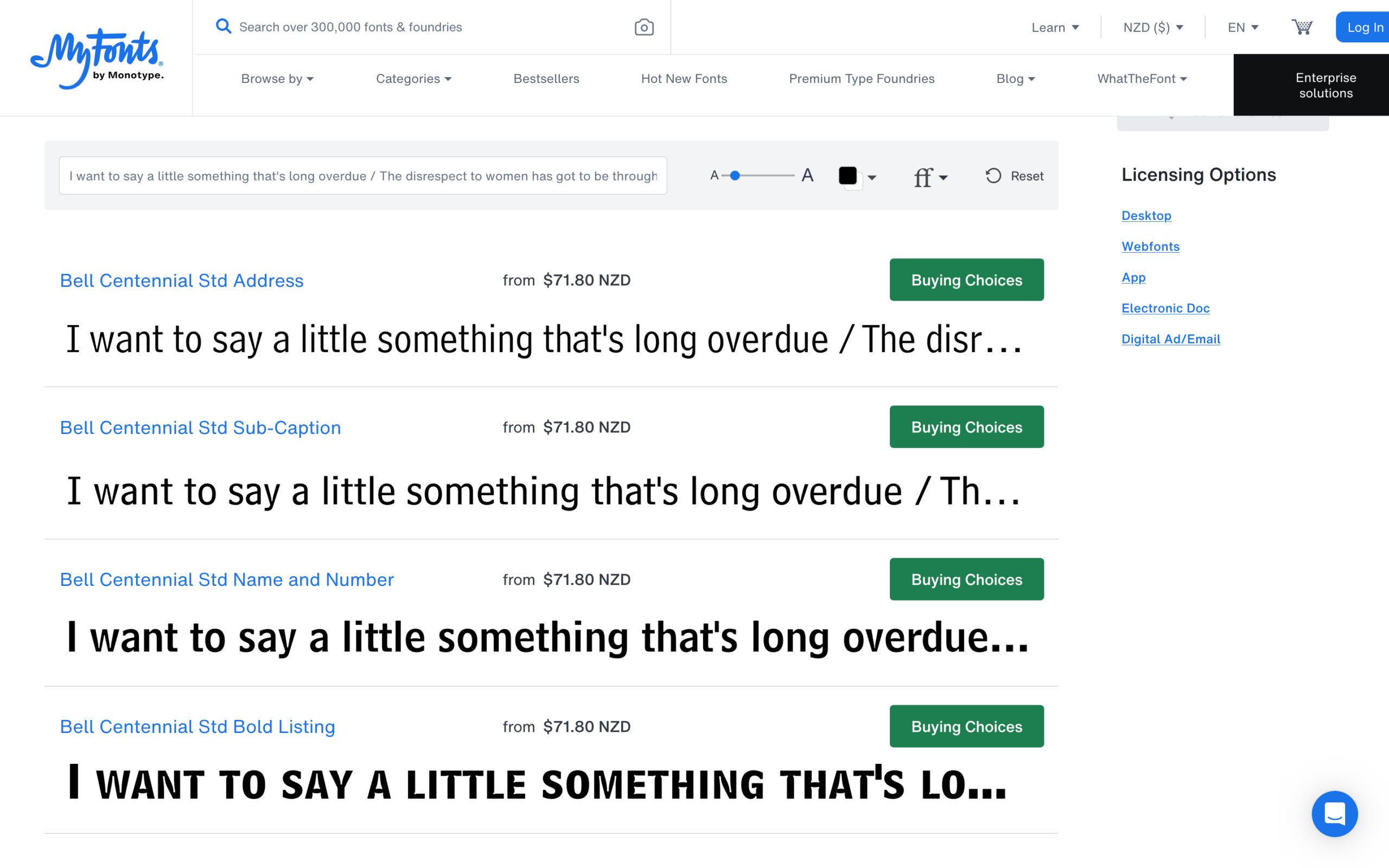
Bell Centennial was designed by Matthew Carter in 1978, specifically commissioned by AT&T to replace Bell Gothic as the typeface for their telephone directories. The challenge was extreme: text had to be printed at tiny sizes on thin, absorbent newsprint. Carter engineered the typeface around those constraints, including ink traps, small notches cut into the letterforms that compensate for ink spread under pressure. The result is a font where every detail serves a functional purpose. It is a masterclass in problem-solving through type design, and its directness makes it a compelling choice well beyond its original context.
Sans Serif
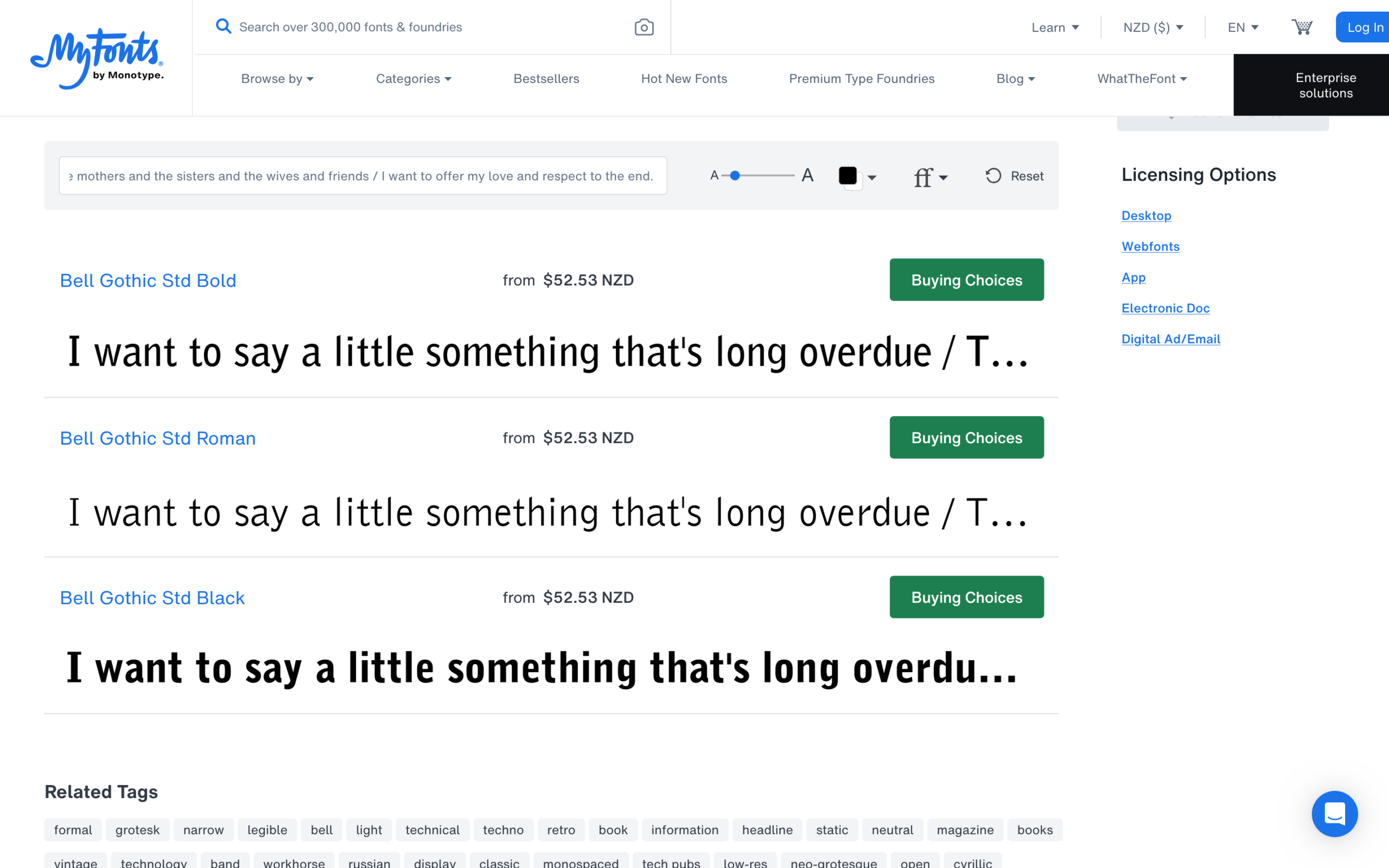
Bell Gothic was designed in 1938 by Chauncey H. Griffith for Mergenthaler Linotype, commissioned by Bell Telephone as the typeface for phone directories across the United States. Like its successor Bell Centennial, it was purpose-built for legibility at small sizes in difficult print conditions. It has a compact, no-nonsense character that makes it useful well beyond its original purpose, and appears regularly in editorial and branding contexts where a functional, direct sans-serif is needed.
Serif
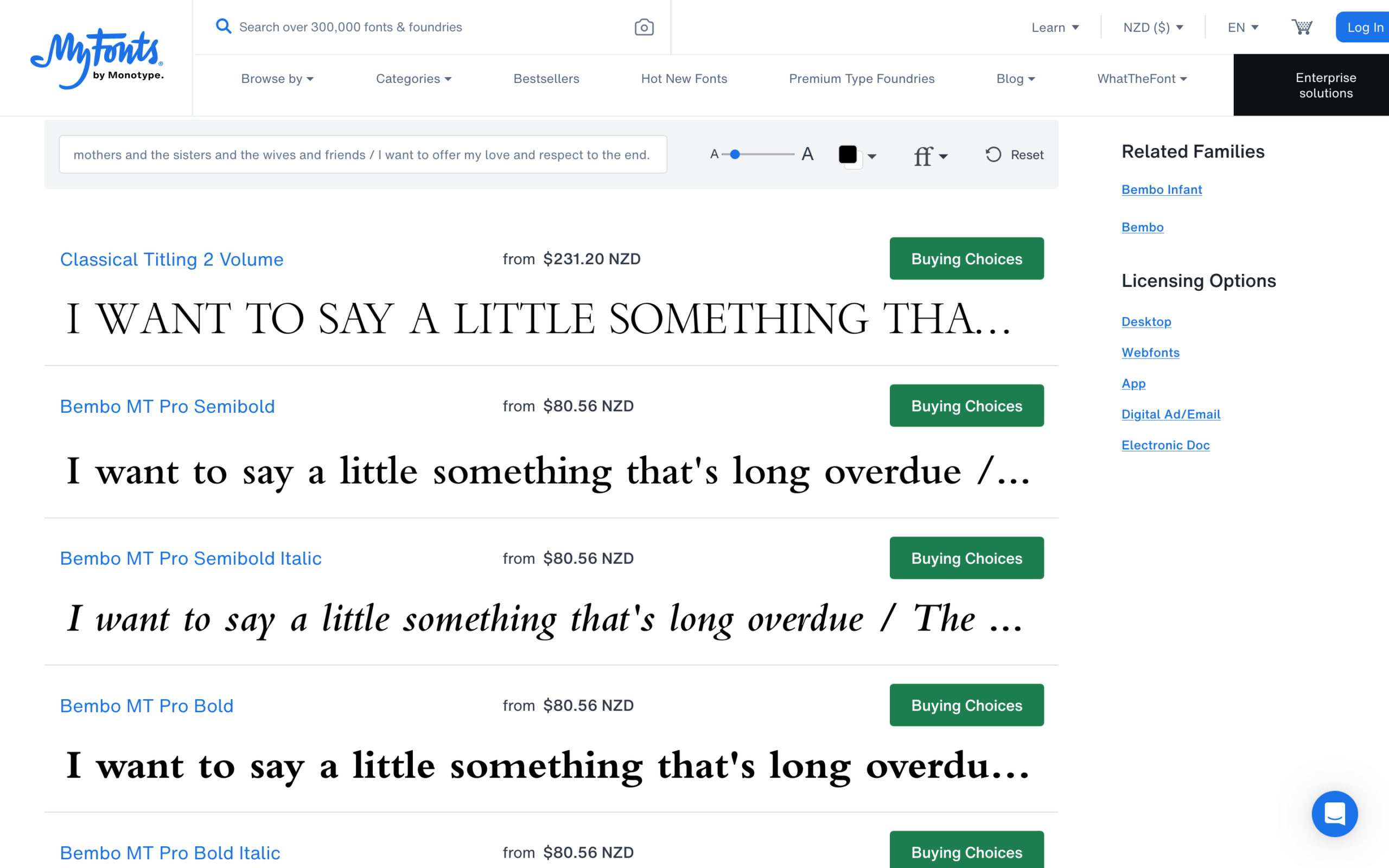
Bembo’s origins reach back to one of the most important printers of the Italian Renaissance, Aldus Manutius. In 1496 he used a new roman typeface cut by Francesco Griffo to print a short book by the scholar Pietro Bembo, after whom the face would eventually be named. That typeface became hugely influential, serving as the model for dozens of later Renaissance types. In 1929 Stanley Morison and the Monotype design team created a revival for modern use, preserving the original’s graceful proportions and quiet authority. It is a classic old-style serif, ideal for book typography, long-form reading, and any context where typographic restraint and historical depth are valued.
Serif
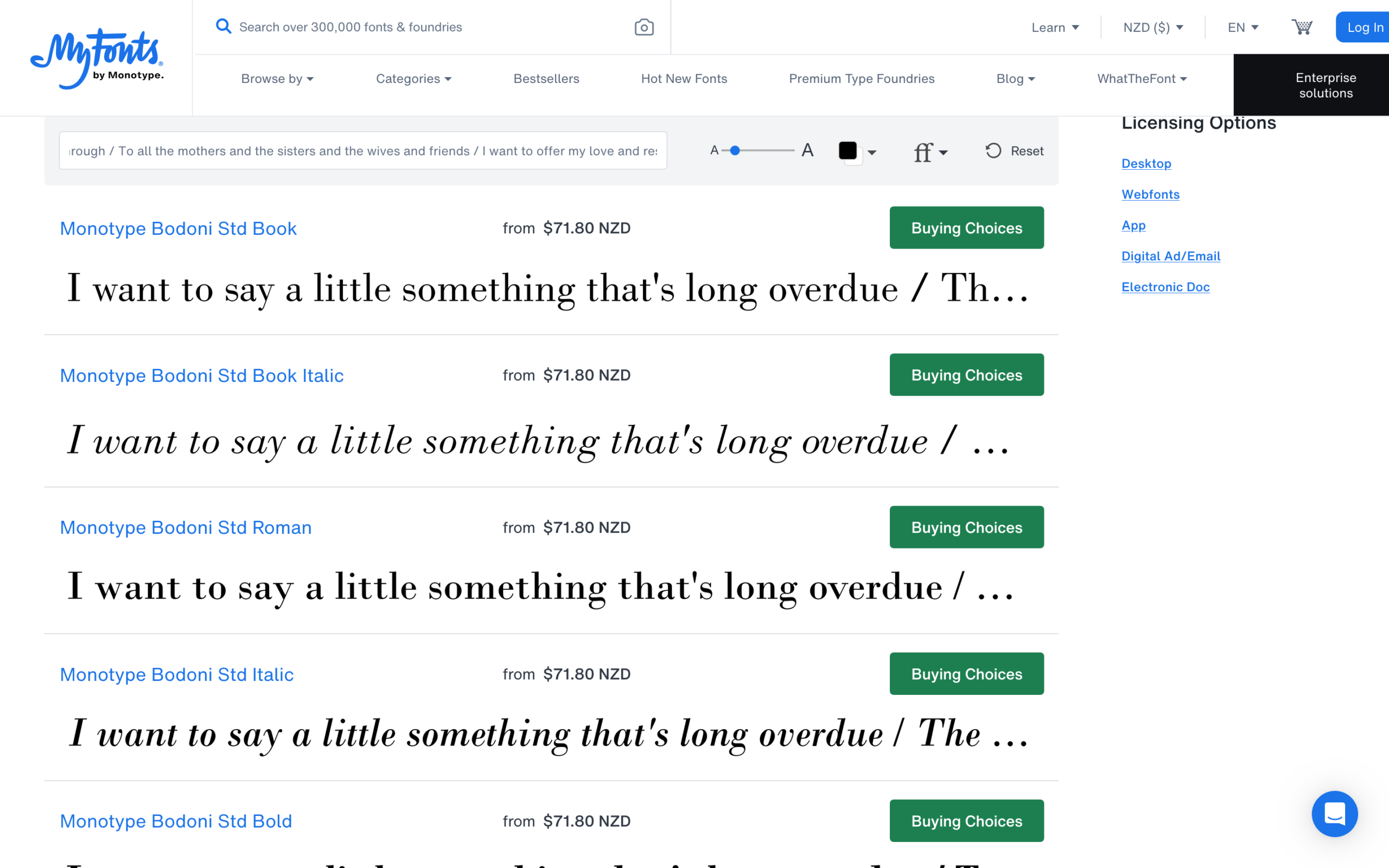
Giambattista Bodoni was an eighteenth-century Italian printer and typographer who pushed the contrast between thick and thin strokes to an extreme, creating a style of typeface that had never been seen before. His designs, geometric, precise, and strikingly high in contrast, mark the shift from old-style to modern serif typography. The Monotype Bodoni revival preserves the razor-sharp hairline serifs and dramatic stroke weight variation that give the family its distinctive impact. Bodoni is a staple of fashion and luxury publishing, where its elegant severity has been used by Vogue since the early twentieth century.
Sans Serif
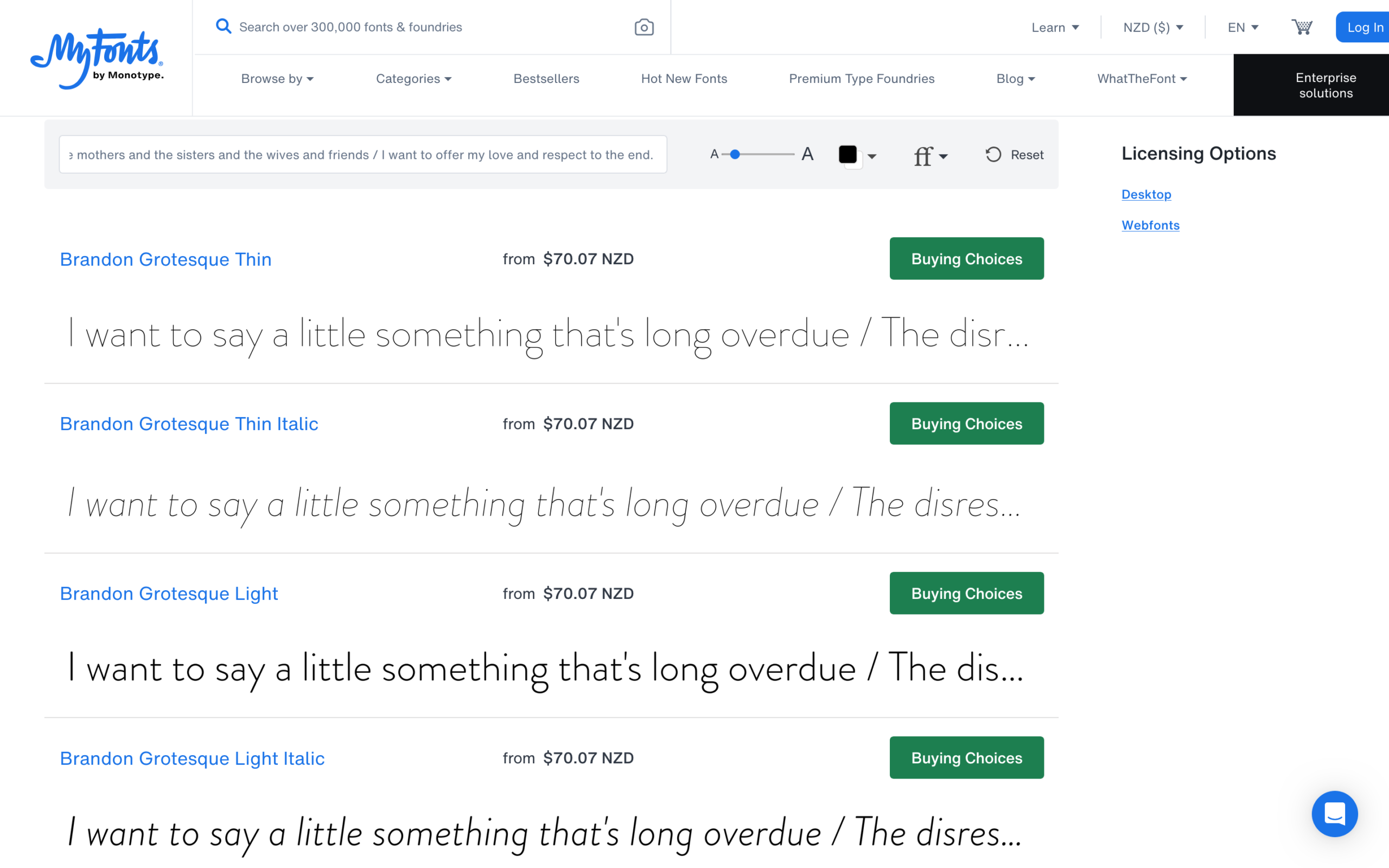
Brandon Grotesque was designed by Hannes von Döhren of HVD Fonts between 2009 and 2010, drawing on the geometric sans-serifs of the 1920s and 30s, especially Futura and Kabel. What distinguishes it from its predecessors is a notably low x-height for a geometric sans, which gives it an elegance that most similarly styled typefaces lack. It works well across a wide range of sizes and is available in six weights with matching italics. Since its release it has become one of the most popular commercial sans-serifs of the past 15 years, widely used in branding, packaging, and digital design.
Serif
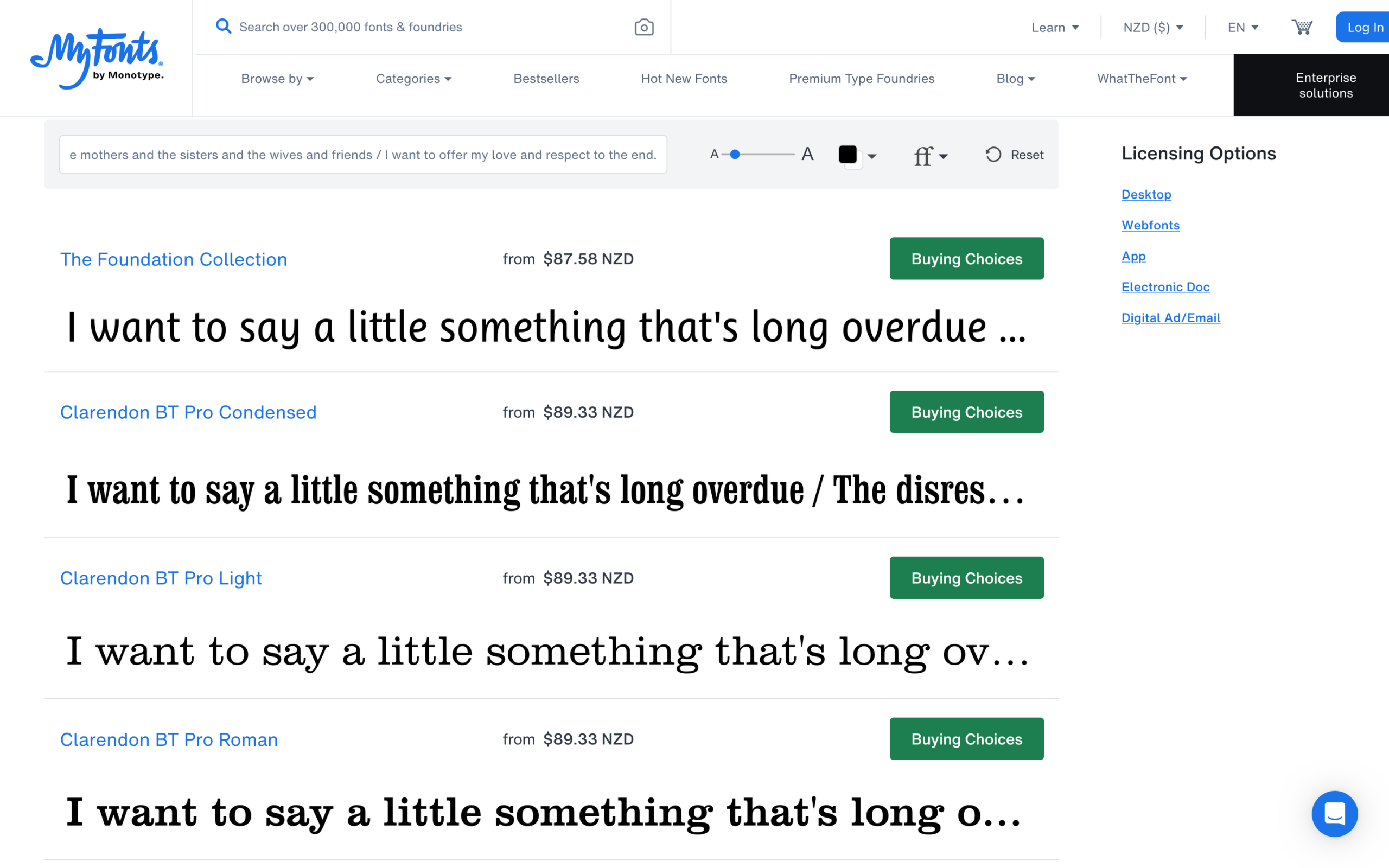
Clarendon was first released by the Fann Street Foundry in London in 1845, making it one of the earliest registered typefaces in history. It is a slab-serif characterised by sturdy bracketed serifs and moderate stroke contrast, giving it a confident, readable presence even at large sizes. It became a staple of Victorian advertising and signage, and its bold weights were widely used for emphasis and display across British and American printing throughout the nineteenth century. Digitised versions have kept it in active use for branding, editorial design, and any context where a strong, grounded serif is needed.
Serif
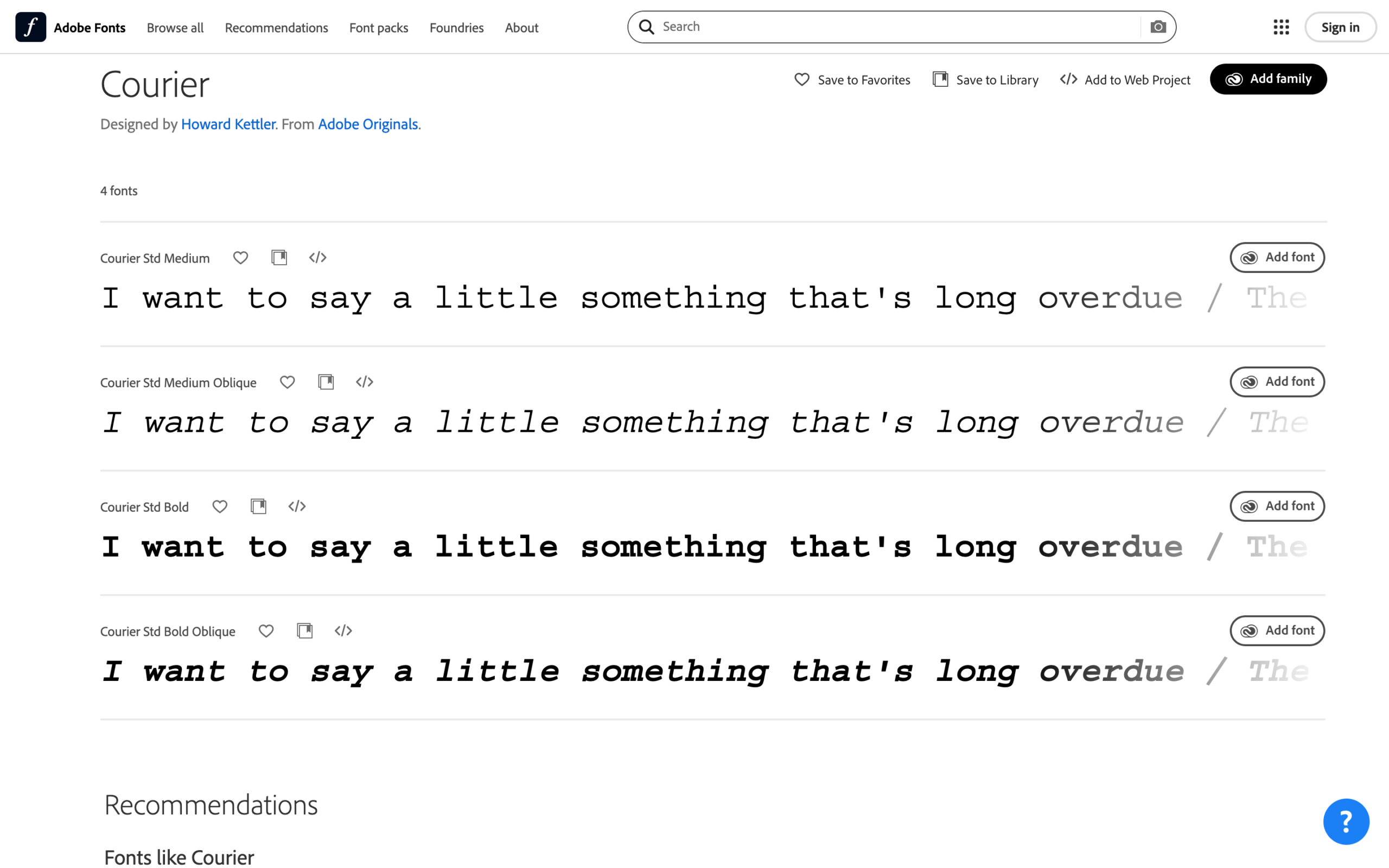
Courier was designed by Howard Kettler in 1955 for IBM. It’s often said Adrian Frutiger later redrew it for the IBM Selectric typewriter series, though some type historians argue that’s a mix-up with Frutiger’s separate work adapting Univers for the same machines. It is a monospaced slab-serif where every character occupies exactly the same horizontal space, mimicking the mechanical uniformity of a typewriter. IBM made the unusual decision not to patent the design, which allowed it to spread freely and become the universal standard for typewritten text. Today Courier appears in legal documents, screenplays, programming environments, and anywhere a fixed-pitch typeface is required. Its association with the written word in its most unadorned form gives it a particular authenticity.
Sans Serif
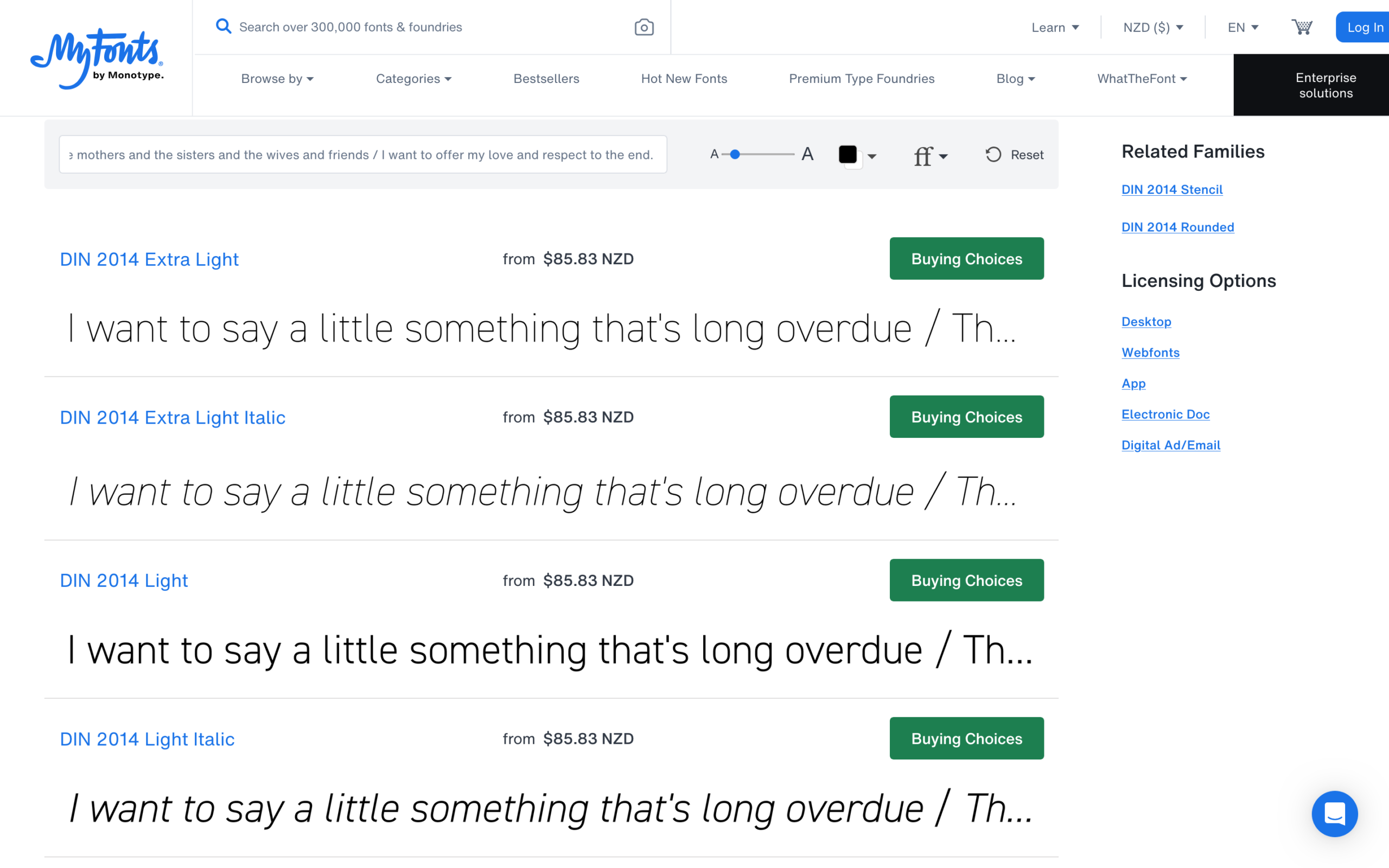
DIN takes its name from the Deutsches Institut für Normung, the German Institute for Standardisation. The original DIN typeface was developed in early twentieth-century Germany for use on railways, road signs, and technical documents, where its clean, mechanical character made it ideal for signage and engineering. Over time it crossed into corporate and digital design, where that same clarity reads as quietly authoritative. DIN 2014, released by Paratype, is a modern revival that significantly expands on the original, adding narrow styles, refined italics, and broad language support, while preserving the typeface’s distinctive industrial directness.
Serif
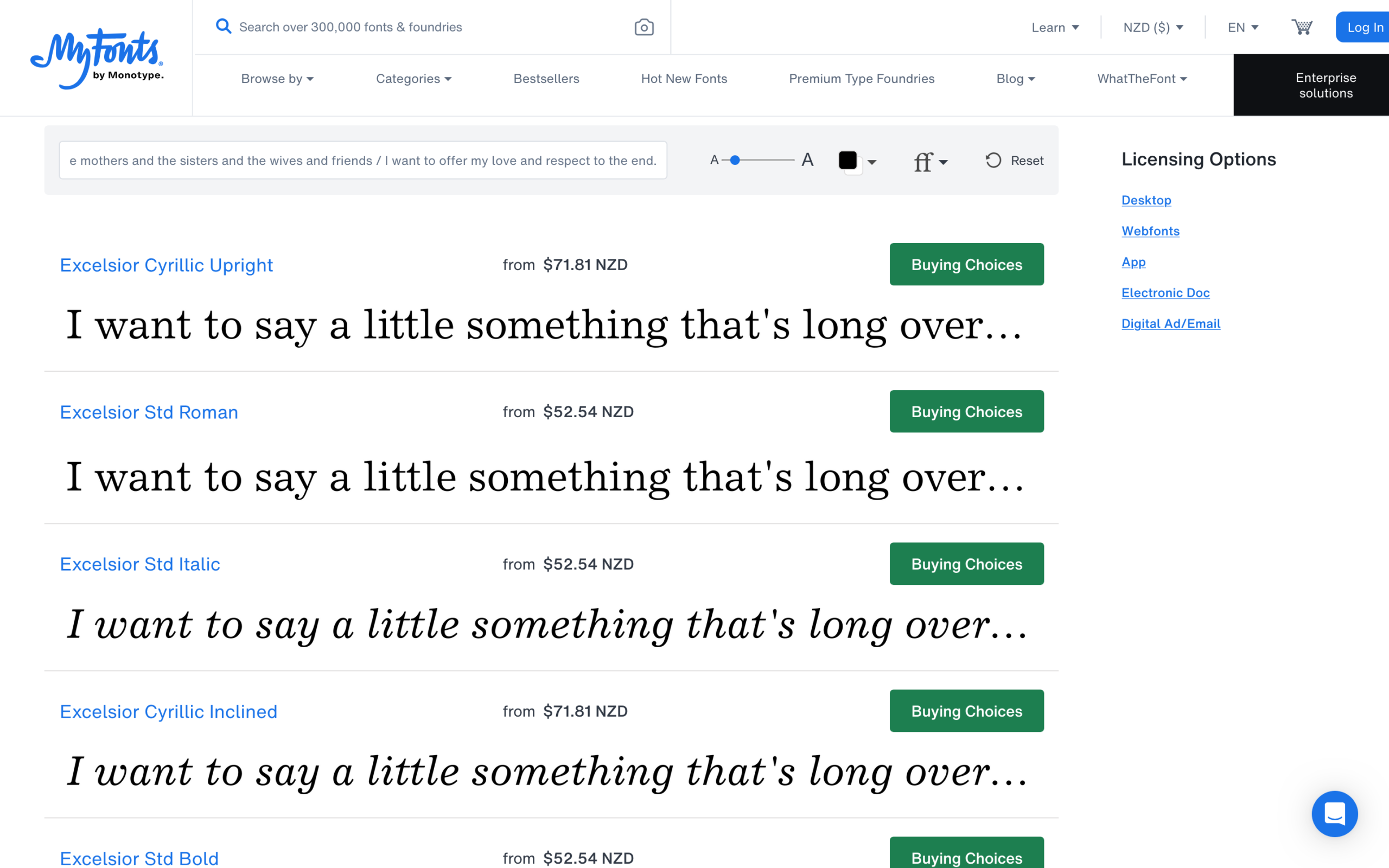
Excelsior was designed by Chauncey H. Griffith for Mergenthaler Linotype in 1931, part of a group of typefaces known as the Legibility Group, engineered specifically for newspaper body text. These faces were designed for small sizes, high-speed printing, and the challenges of newsprint. Excelsior has slightly wider letterforms and open counters that prevent ink fill-in at small sizes, giving it strong performance under difficult conditions. It remains a solid choice for text-heavy applications where reliability and legibility at small sizes matter most.
Sans Serif
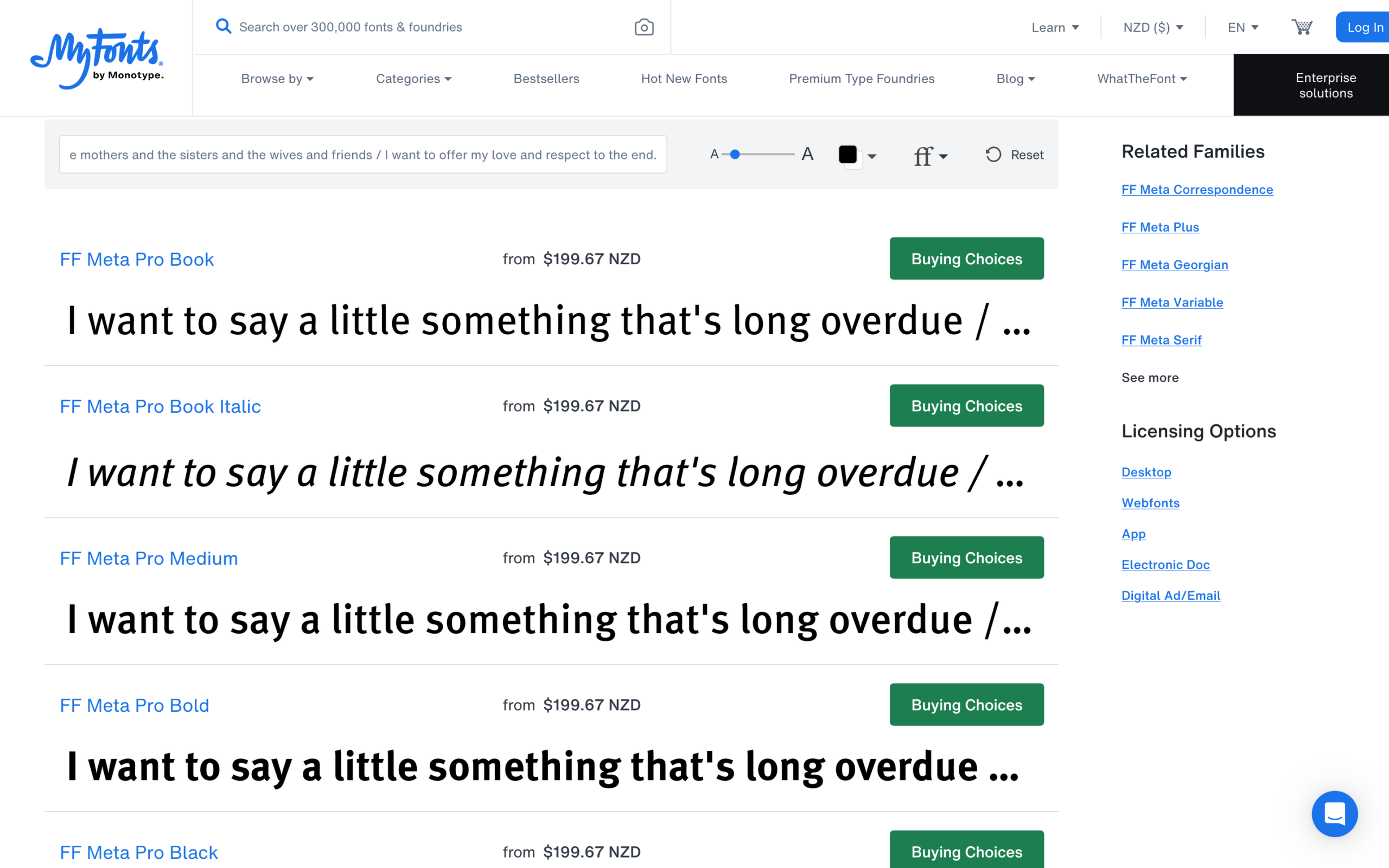
FF Meta was designed by Erik Spiekermann in the mid-1980s, originally commissioned for the Deutsche Bundespost, the German Federal Post Office, who ultimately never used it. Spiekermann released it himself through his FontFont library in 1991, describing it as his intended “complete antithesis of Helvetica,” which he found “boring and bland.” Where Helvetica aims for total neutrality, Meta has character: a humanist sans-serif with subtle calligraphic qualities, open counters, and a warmth that makes it highly readable in small sizes and on low-quality paper. It became so popular through the 1990s that it was dubbed the Helvetica of the 90s, a label that rather undercut its original ambition, but spoke to just how good it is.
Sans Serif
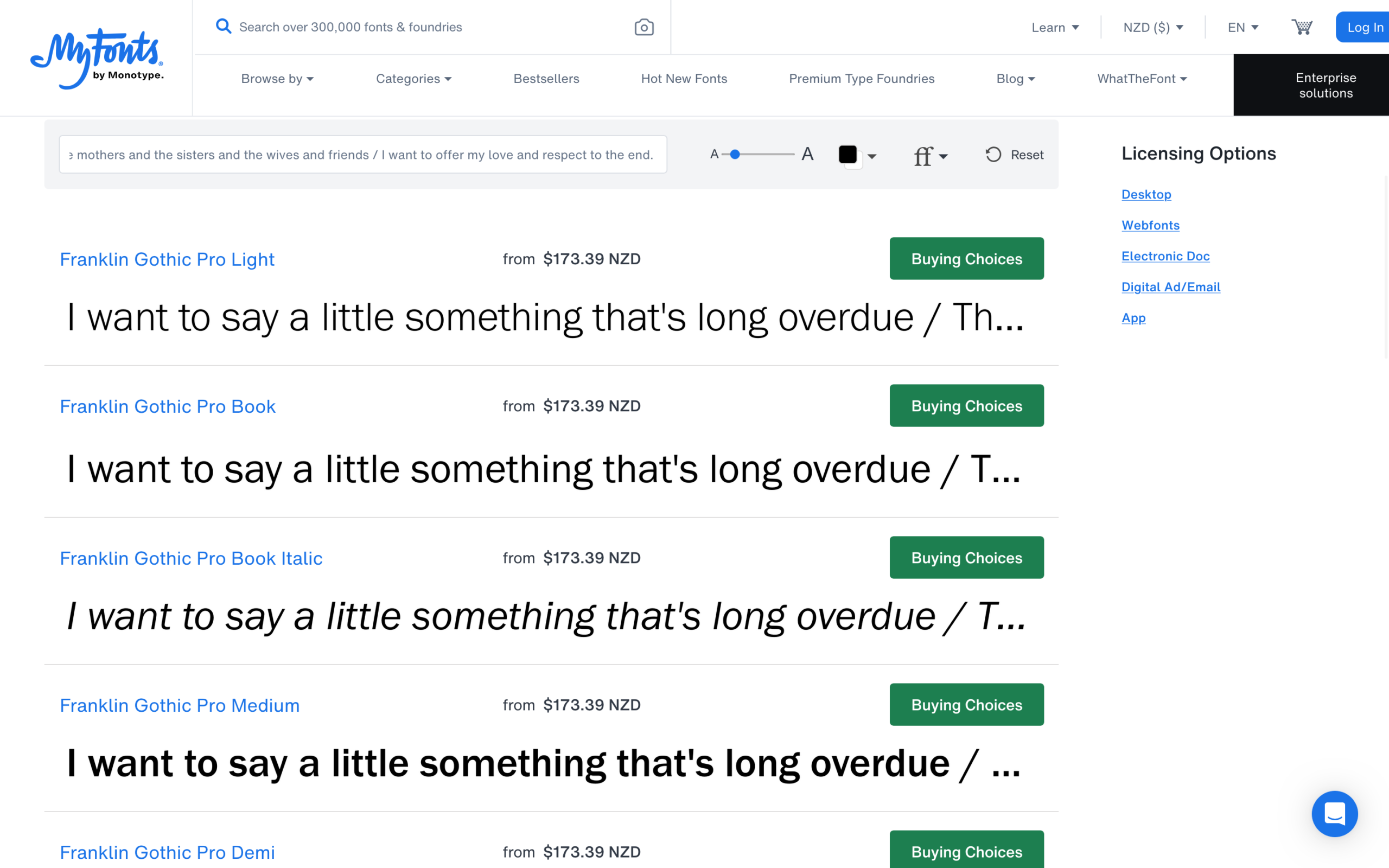
Franklin Gothic was designed by Morris Fuller Benton for American Type Founders in 1902 and quickly became one of the most enduring American typefaces of the twentieth century. It is a grotesque sans-serif with strong, confident strokes and a slightly condensed structure that makes it particularly effective for headlines and display use. Newspapers across the United States adopted it as a standard headline face, and its influence is still visible across editorial and advertising design today.
Sans Serif
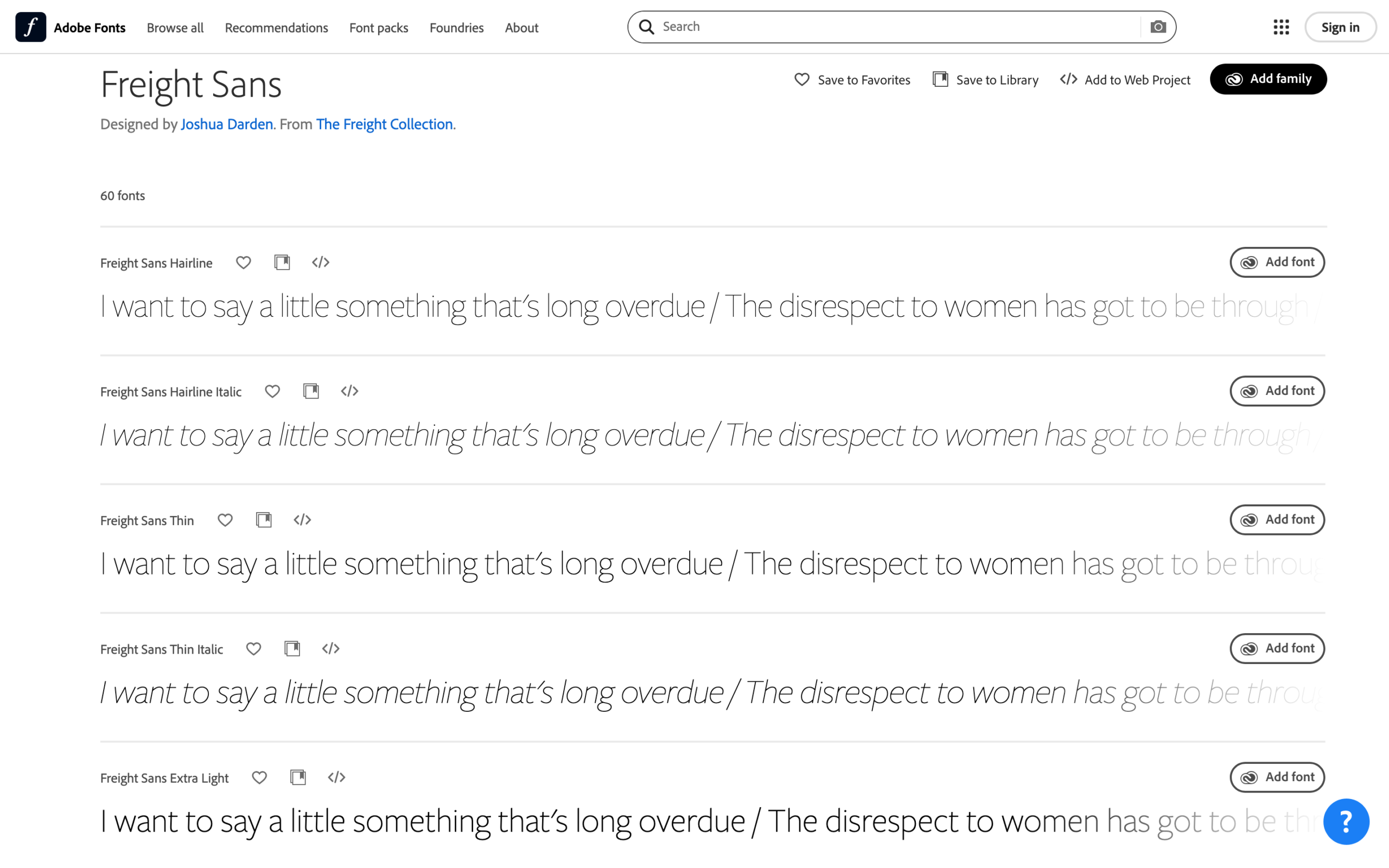
Freight Sans Pro is part of the sprawling Freight super-family designed by Joshua Darden and published by GarageFonts. What makes the Freight family remarkable is its breadth: it spans sans, serif, text, and display variants all designed to work together seamlessly. Freight Sans is the workhorse of the family, clean, open, and highly legible, suited to everything from body text to display type. An extensive range of weights gives real flexibility, and the family is particularly well-suited to editorial design, interfaces, and publishing.
Sans Serif
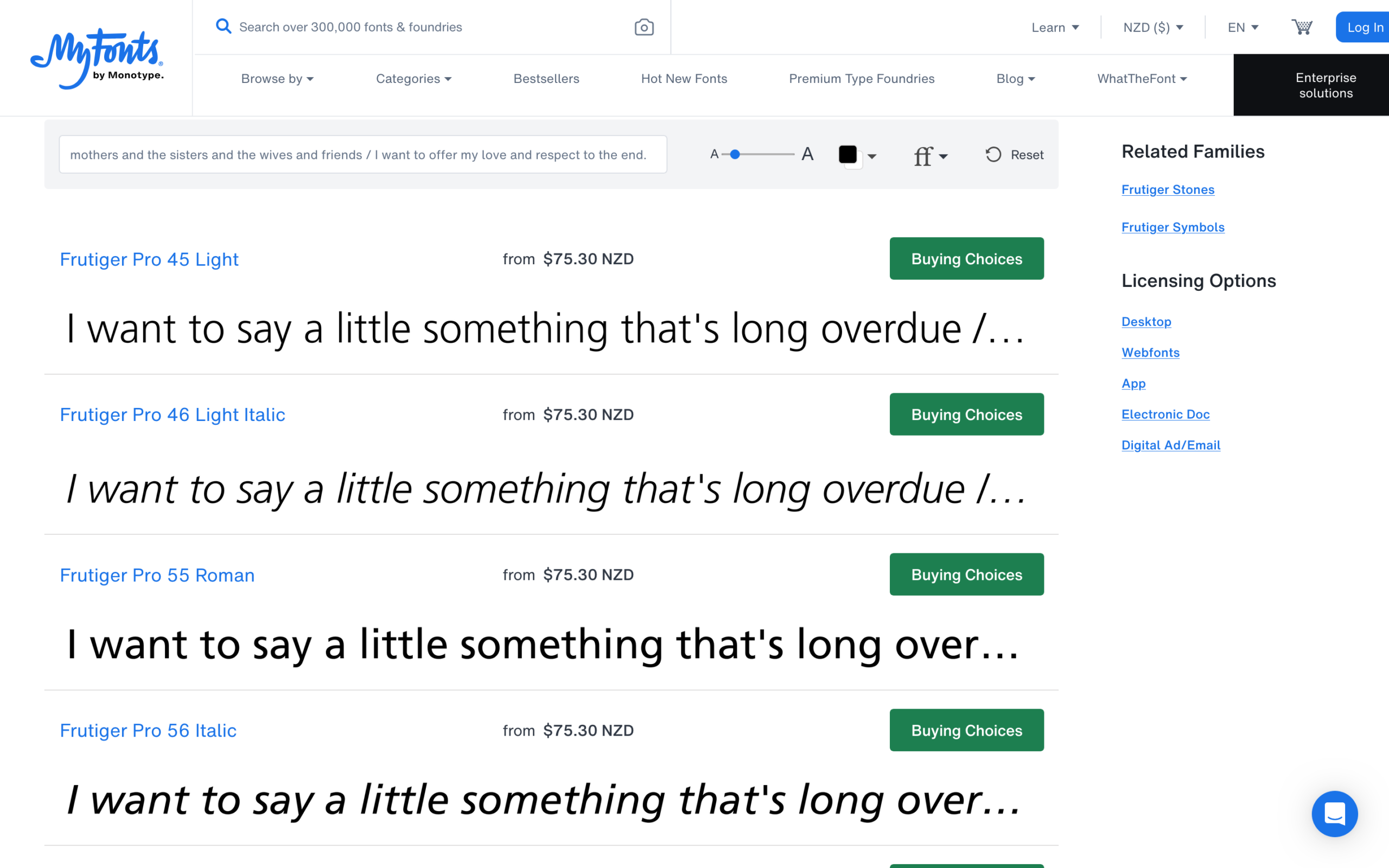
Adrian Frutiger designed this typeface in the early 1970s for the signage system at the newly built Charles de Gaulle Airport in Paris. The brief demanded that it be instantly legible at distance, in poor light, from a moving vehicle, and for people reading in a second language. Frutiger achieved this through wide, open letterforms and subtle humanist touches that give each character a distinct identity even at small sizes or long reading distances. Released commercially by Linotype in 1976, it quickly became one of the most widely used typefaces in the world, found in airports, hospitals, corporate identity systems, and digital interfaces.
Sans Serif
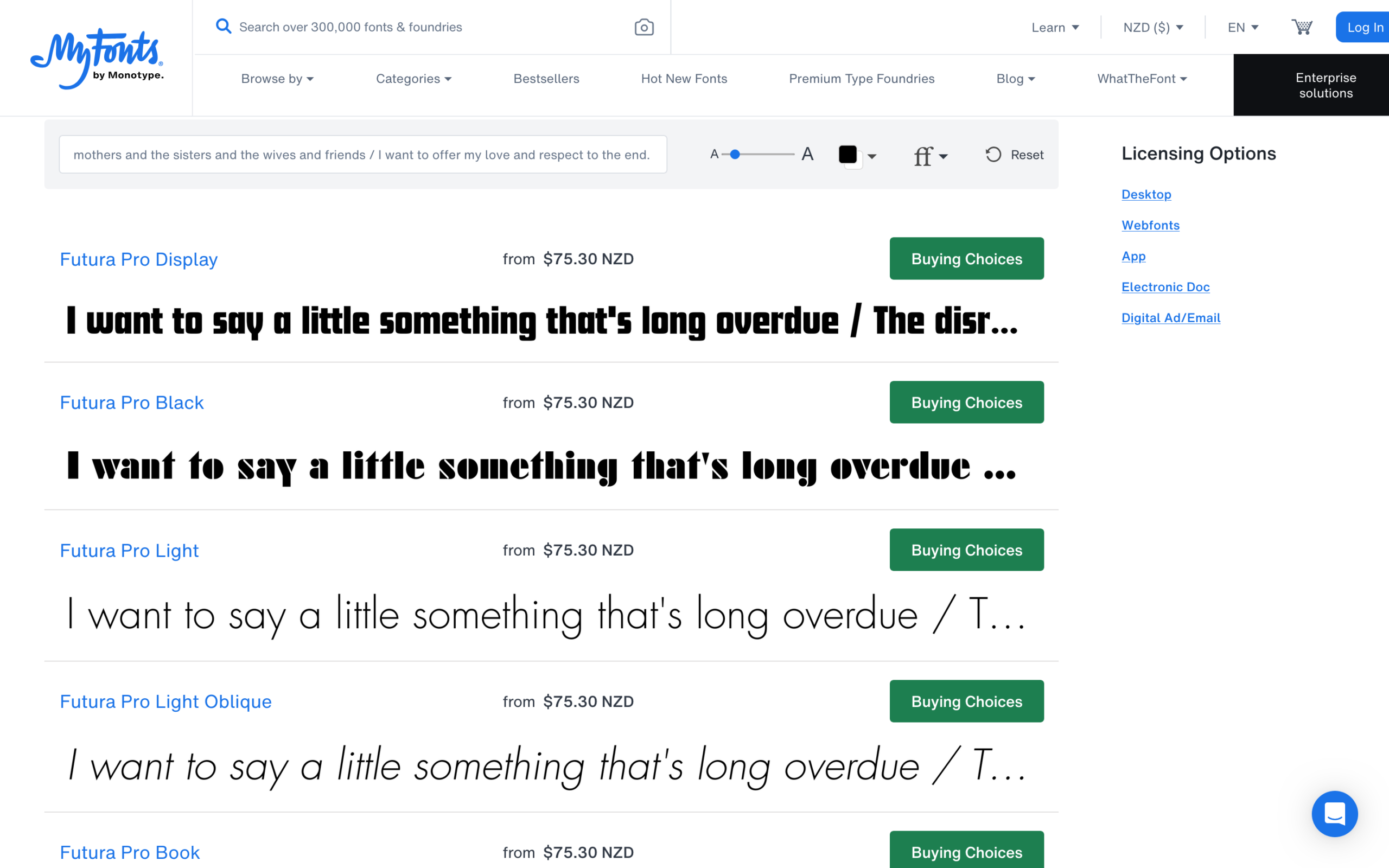
Designed by Paul Renner and released by the Bauer Type Foundry in 1927, Futura was a radical statement. Built almost entirely from geometric primitives, circles, triangles, and straight lines, it was a direct expression of Bauhaus ideals: that design should be stripped of decoration and driven by pure form and function. Its perfectly circular O, single-storey a, and uniform stroke weights made it unlike anything that had come before. It became one of the most influential typefaces of the twentieth century, used by Volkswagen, IKEA, and Nike, and is famously the typeface inscribed on the plaque left on the Moon by the Apollo 11 mission.
Sans Serif
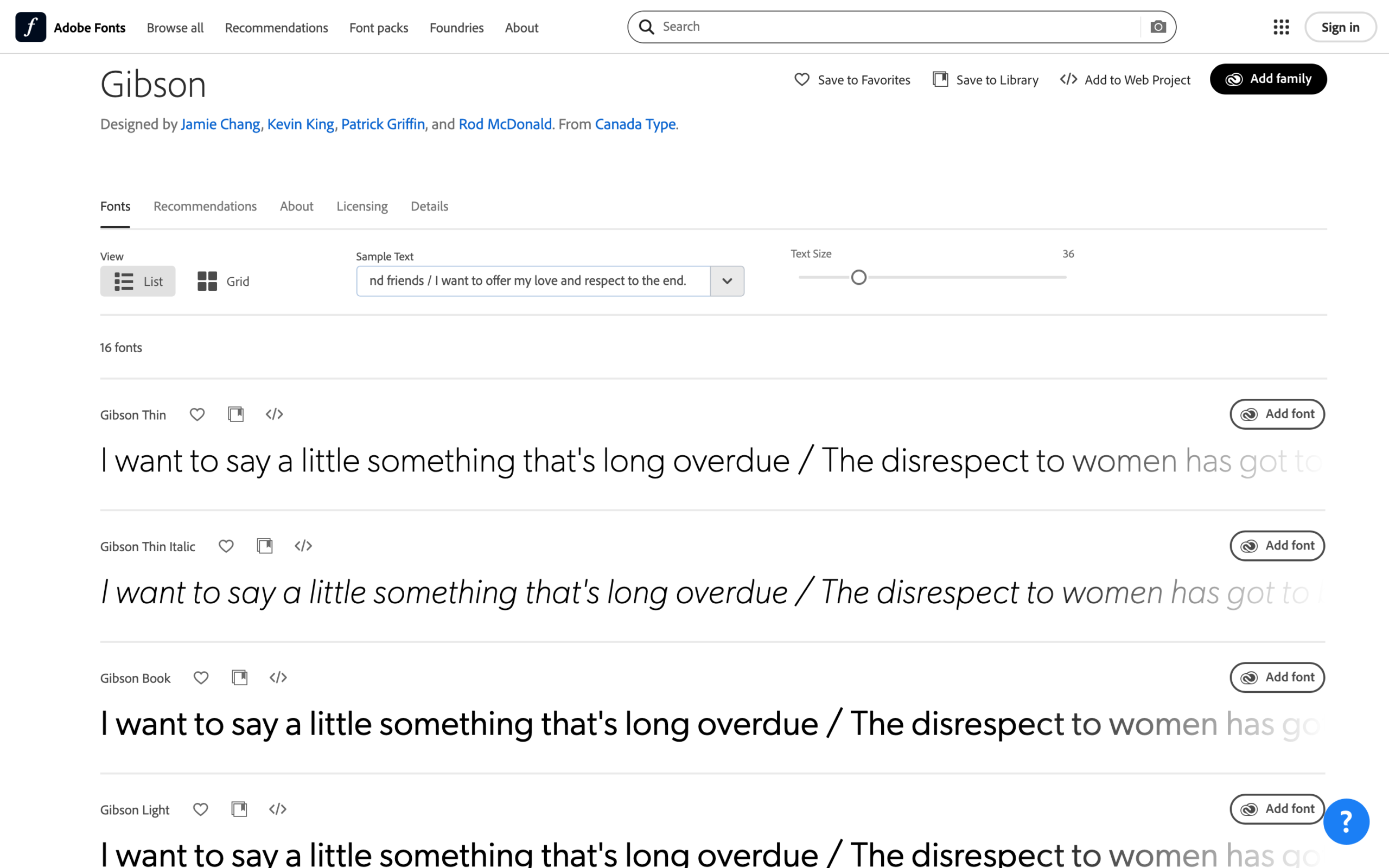
Gibson was designed by Rod McDonald and published by Canada Type in 2011, created as a tribute to John Gibson (1928–2011), one of the founding members of the Society of Graphic Designers of Canada. It is a contemporary humanist sans-serif that sits comfortably between the warmth of Gill Sans and the clean utility of Helvetica. Available in a generous range of weights with matching italics, it has become a popular choice for branding, interfaces, and editorial design. All proceeds from its sales are donated to support design education in Canada.
Sans Serif
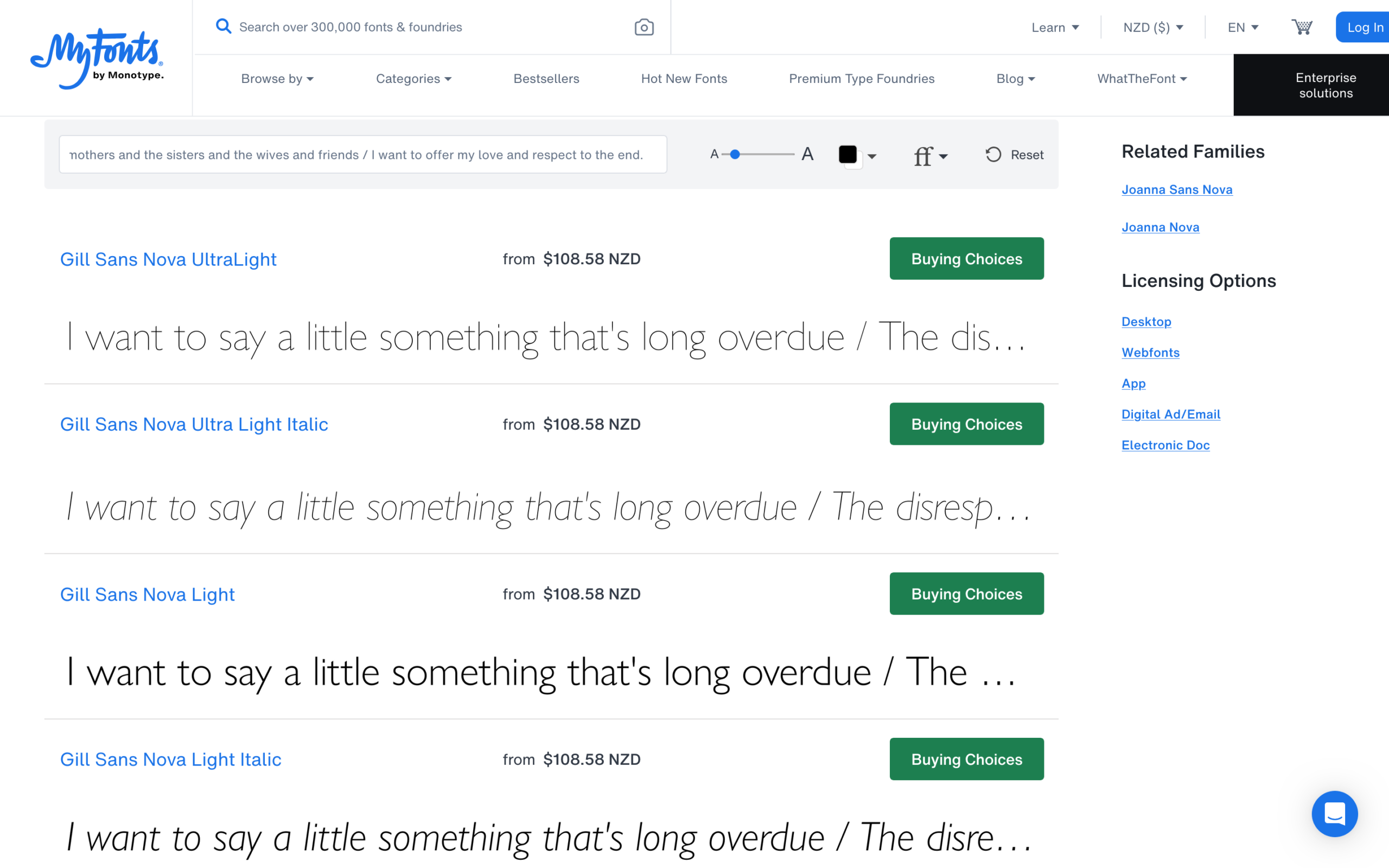
Designed by Eric Gill and released by Monotype in 1928, Gill Sans is one of the most distinctly British typefaces ever made. It grew out of Gill’s studies under the calligrapher Edward Johnston, who had designed the lettering for the London Underground, and Monotype commissioned Gill to create a sans-serif that could compete with the geometric German faces gaining popularity at the time. The result was a humanist sans-serif rooted in classical roman letterforms rather than strict geometry, giving it a warmth and personality that sets it apart from its continental contemporaries. It became the typeface of British Railways, the BBC, and Penguin Books. The modern version, Gill Sans Nova, expands the original family to over 40 styles.
Sans Serif
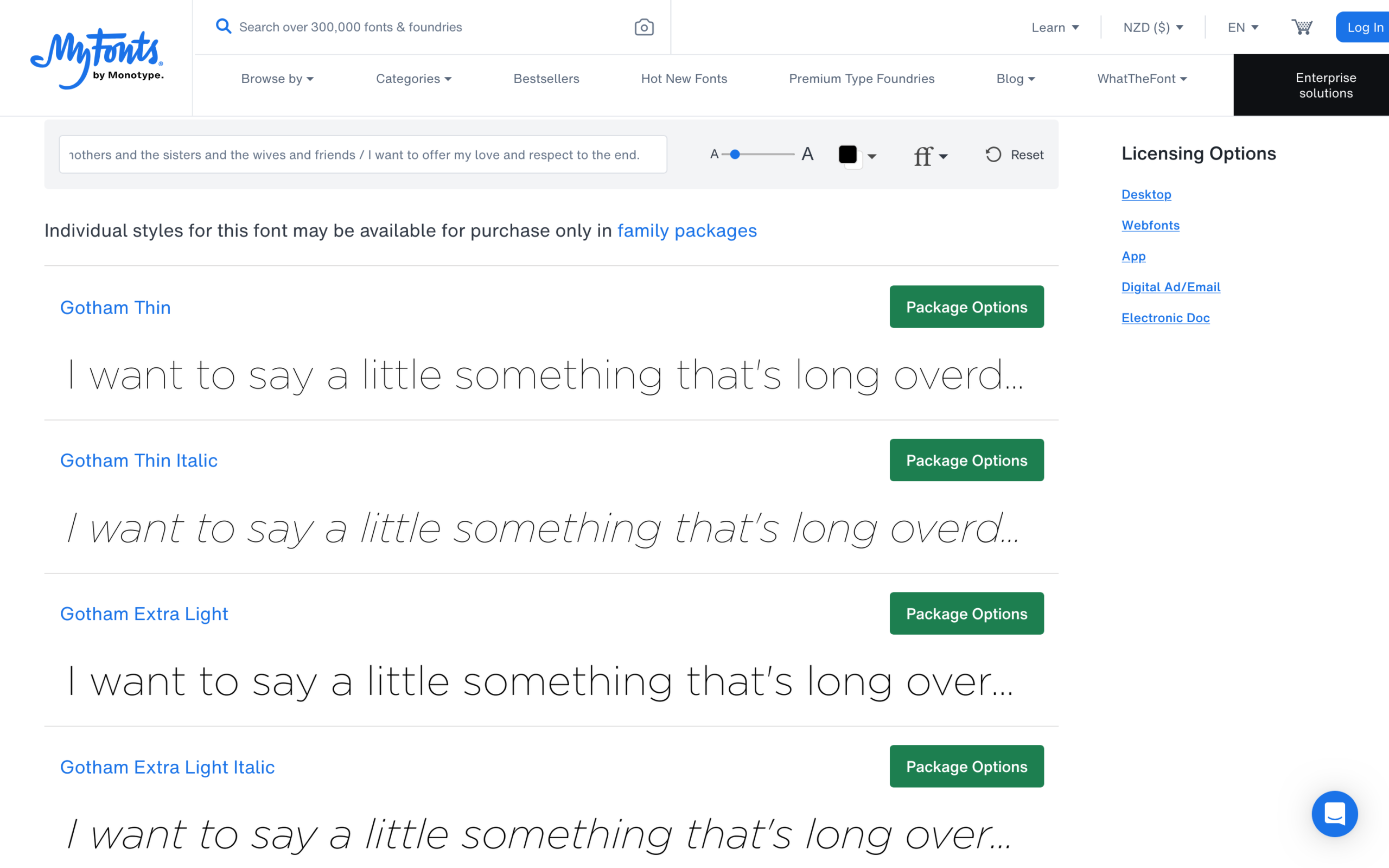
Gotham was designed by Tobias Frere-Jones in 2000, originally commissioned by GQ magazine for a typeface that felt “masculine, new, and fresh.” Frere-Jones found his inspiration not in type history books but on the streets of New York, specifically in the bold, no-nonsense lettering on mid-century building facades and signage, most notably the Port Authority Bus Terminal on 42nd Street. The result is a geometric sans-serif with an unmistakably American character: direct, confident, and unpretentious. It became the typeface of Barack Obama’s 2008 presidential campaign, and its visual language, clean, trustworthy, and optimistic, helped define the look of a generation of corporate and tech design.
Sans Serif
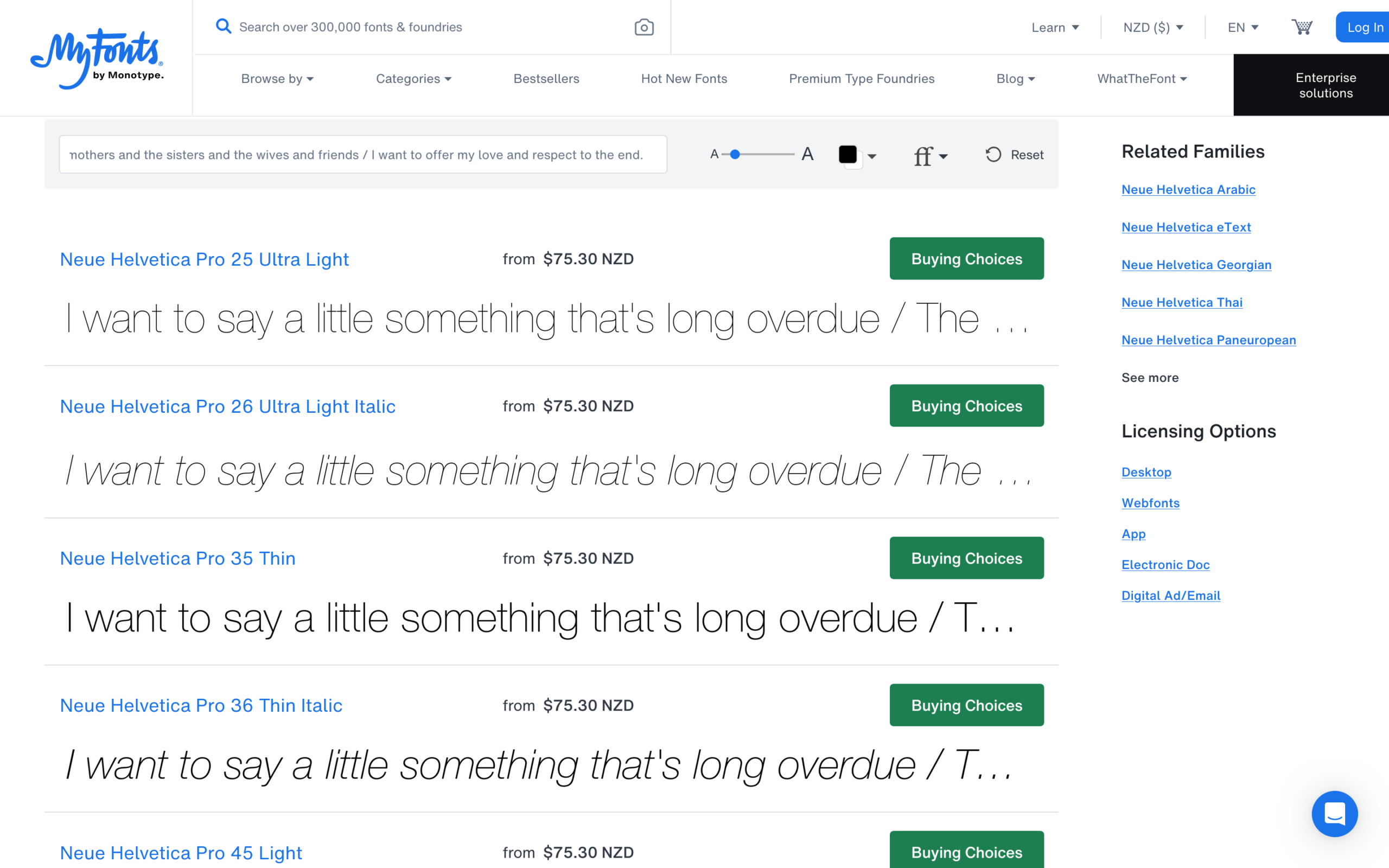
Helvetica began life as Neue Haas Grotesk, designed by Max Miedinger in 1957 for the Haas Type Foundry in Switzerland. Renamed Helvetica in 1960 from the Latin name for Switzerland, it became the defining typeface of the Swiss International Style and then spread to virtually every corner of the designed world. By the 1980s the family had grown through contributions from different designers, resulting in inconsistencies across weights. Helvetica Neue, released in 1983, was a comprehensive redesign that brought the family into coherence, with unified proportions, improved legibility, heavier punctuation, and better number spacing, expanding it to over 50 styles. It remains one of the most widely used and recognised typefaces in history.
Sans Serif
Inter was designed by Rasmus Andersson, a Swedish designer and engineer who spent years at Spotify and later at Figma. The project started in late 2016 as an experiment to build a perfectly pixel-fitting font at a specific small size. It was released in August 2017 under the SIL Open Font Licence, making it free for anyone to use. The driving motivation was straightforward: existing typefaces like Roboto were originally designed with both display and body text in mind, which meant compromises at small screen sizes. Inter was conceived entirely in a digital context, engineered from the ground up for screen legibility. It features a tall x-height, open apertures, and over 2,000 glyphs covering 147 languages. It is available as a variable font with a weight axis running from Thin to Black, and includes OpenType features like contextual alternates and slashed zero. It has since become the default UI font in Figma, the body text of Linear, Vercel, and GitHub, and one of the most widely used typefaces in digital product design anywhere in the world.
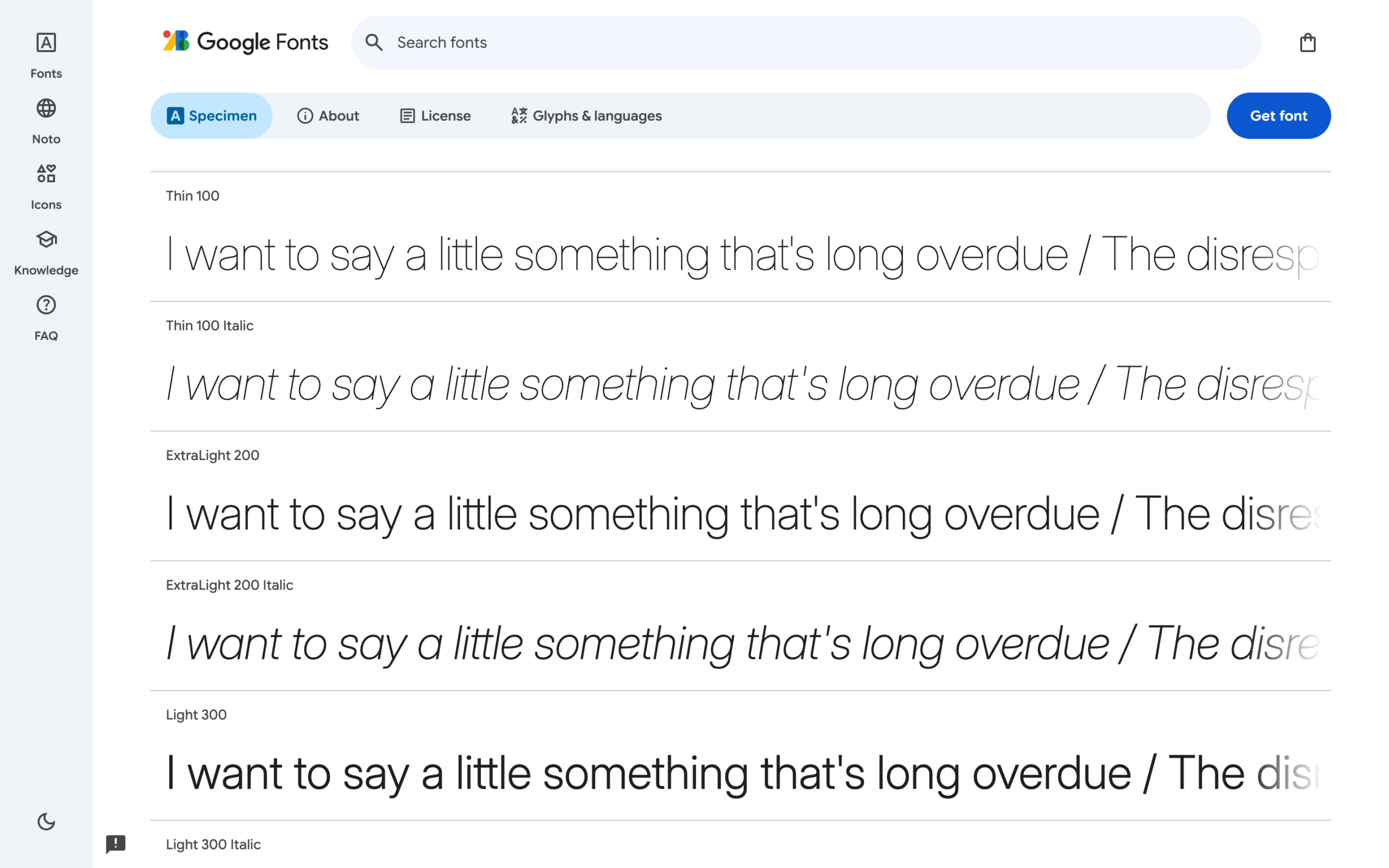
Serif
Lucida was designed by Charles Bigelow and Kris Holmes in 1984, originally conceived as a typeface that would remain legible at the low screen resolutions and early laser printer outputs of the time. It was one of the first typefaces designed with digital rendering constraints at its core rather than adapted from earlier print designs. The family expanded considerably over the years to include serif, sans, and monospaced variants. Lucida Bright, the serif variant, retains the warmth and readability of a classic book face while performing well on screen and at low print resolutions.
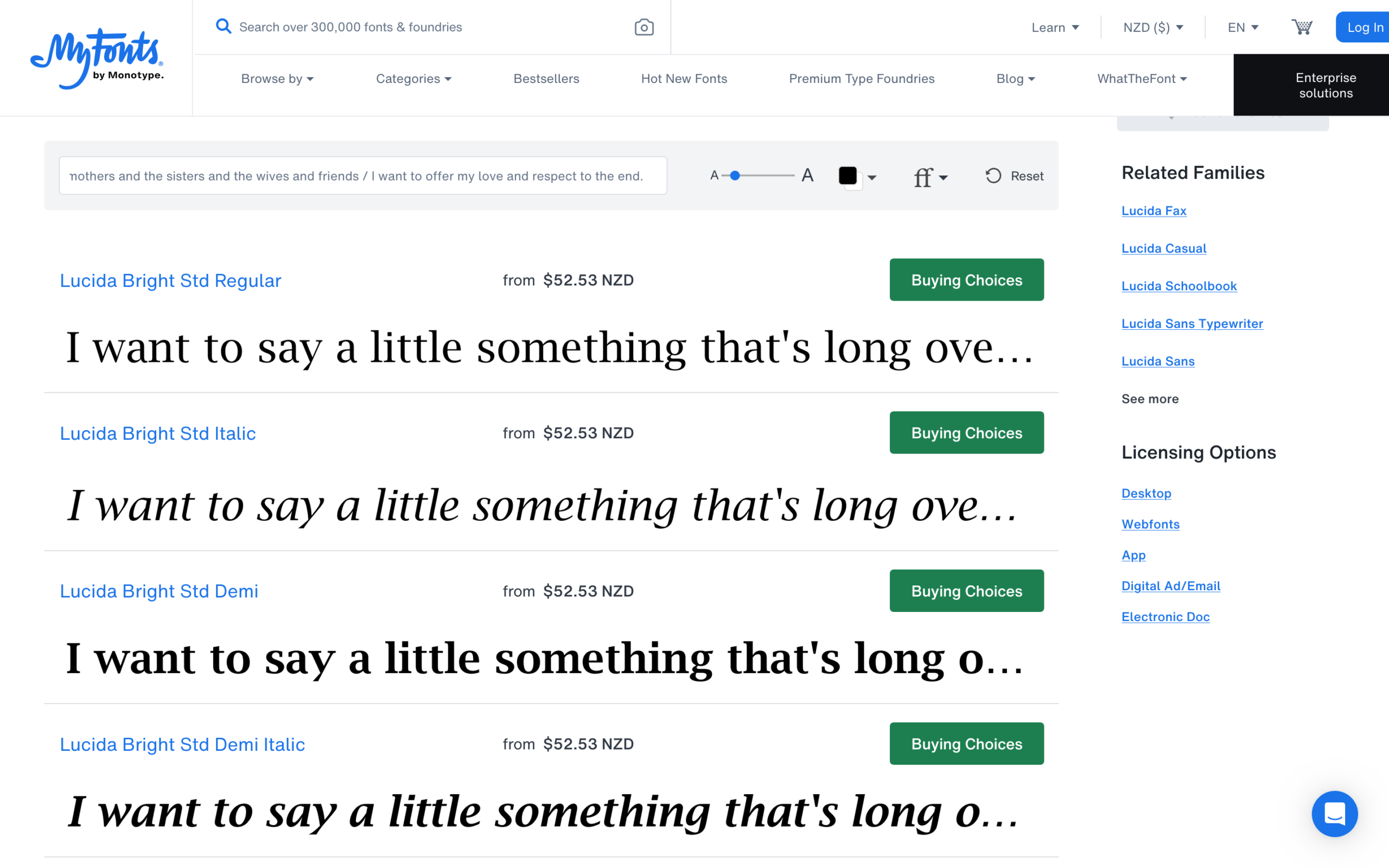
Serif
Minion was designed by Robert Slimbach for Adobe in 1990, inspired by the typefaces of the late Renaissance, a period he considered to have produced some of the most refined and readable text type ever made. It is an old-style serif with a classical elegance that works exceptionally well for long-form reading. The OpenType version, Minion Pro, includes an extraordinarily comprehensive glyph set covering multiple scripts, optical sizes, and typographic features. Despite its understated character compared to more dramatic serifs, Minion is one of the most respected and widely used typefaces in book and editorial typography.
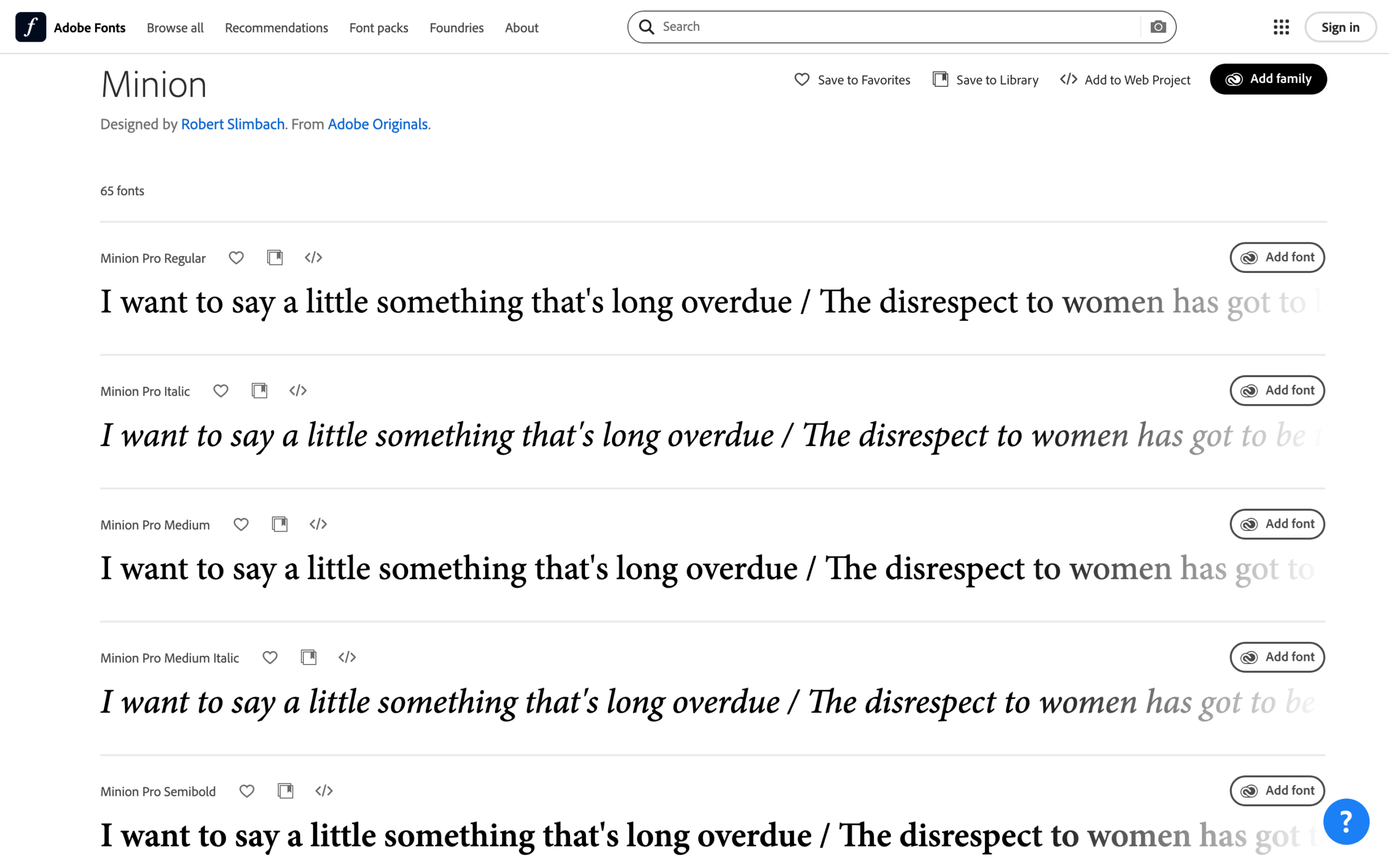
Sans Serif
Montserrat was designed by Argentine graphic designer Julieta Ulanovsky and released in 2011, born out of a personal act of preservation. Walking through the historic Montserrat neighbourhood of Buenos Aires, Ulanovsky was captivated by the old hand-painted signs and vintage posters on the buildings, lettering rooted in mid-century geometric design that was slowly disappearing as the neighbourhood changed. She set out to digitise and rescue that typographic character. The result is a geometric sans-serif with a large x-height, short descenders, and wide open apertures that make it highly legible at small sizes. Released free via Google Fonts under an open-source licence, it is now used on over 19 million websites.
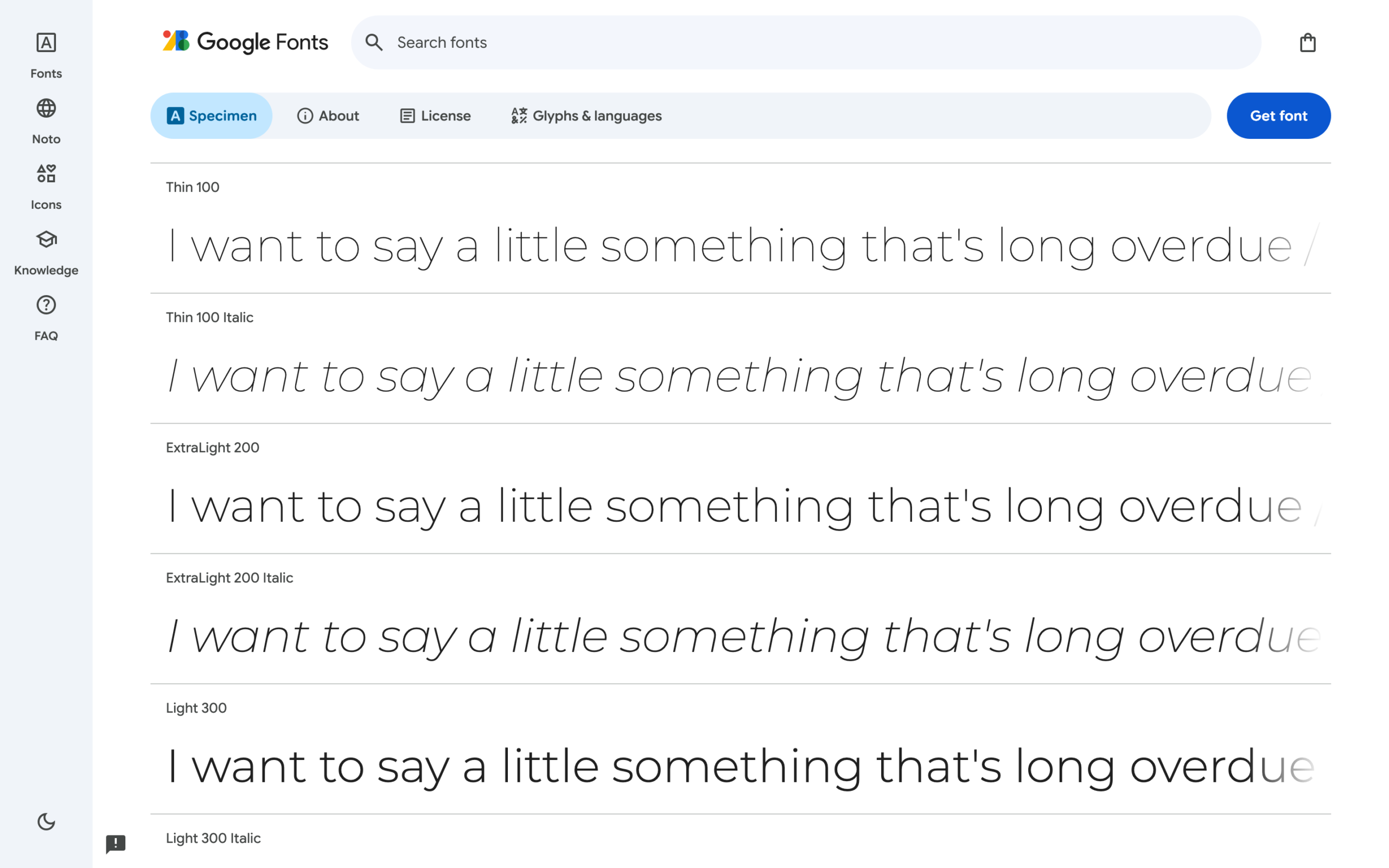
Sans Serif
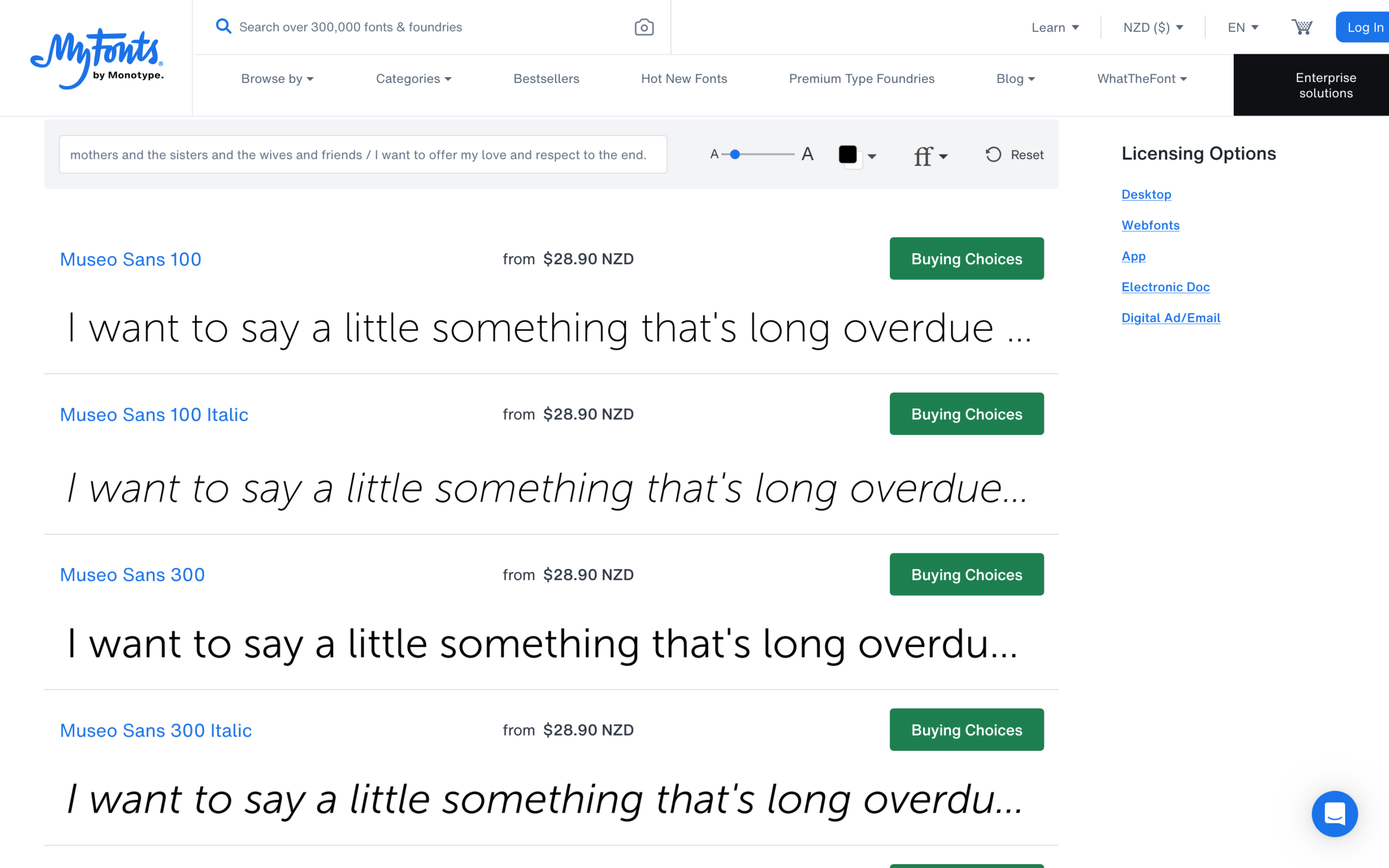
Museo Sans was designed by Dutch type designer Jos Buivenga and released in 2008 through his foundry Exljbris. It is a companion to Museo, a slab-serif family that had already become a remarkable success, sharing its geometric clarity and consistency while offering the clean simplicity of a sans-serif. Buivenga made a bold move by releasing several weights for free, a first for an extended font family at the time, which helped Museo Sans become a MyFonts bestseller that same year. It is sturdy, low-contrast, and highly legible at any size, making it equally at home in display use and body text.
Sans Serif
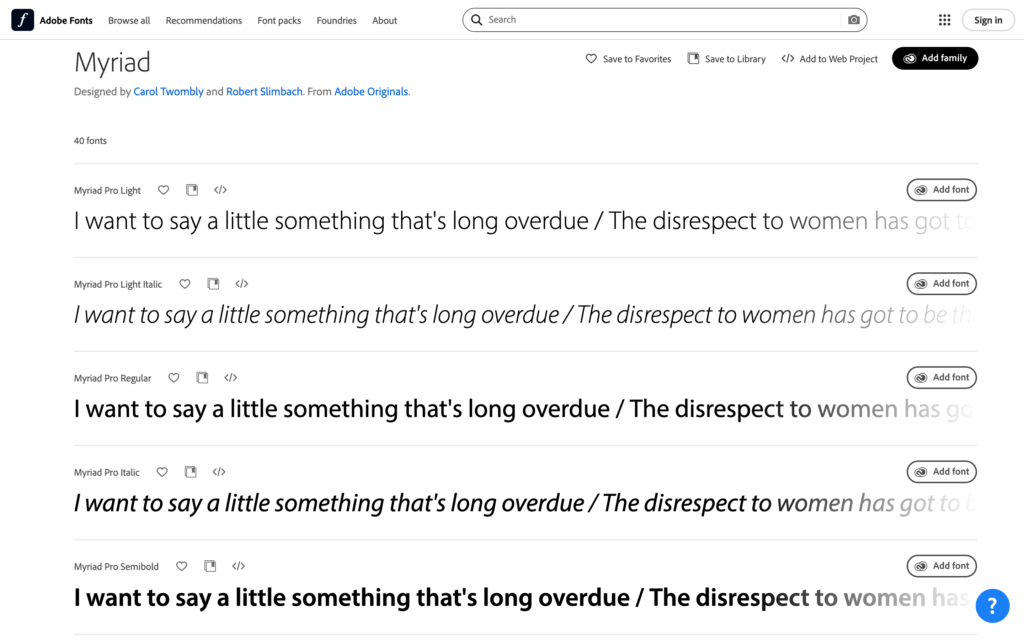
Myriad was designed by Robert Slimbach and Carol Twombly for Adobe in 1992, with Myriad Pro being the expanded OpenType version released in 2000. It is a humanist sans-serif with a warmth and readability that made it one of Adobe’s most-used bundled typefaces and, for over a decade, Apple’s corporate typeface, appearing in product packaging, marketing, and the iTunes interface. It combines the friendliness of a humanist face with broad language support and a comprehensive set of weights, making it versatile enough for almost any context.
Sans Serif
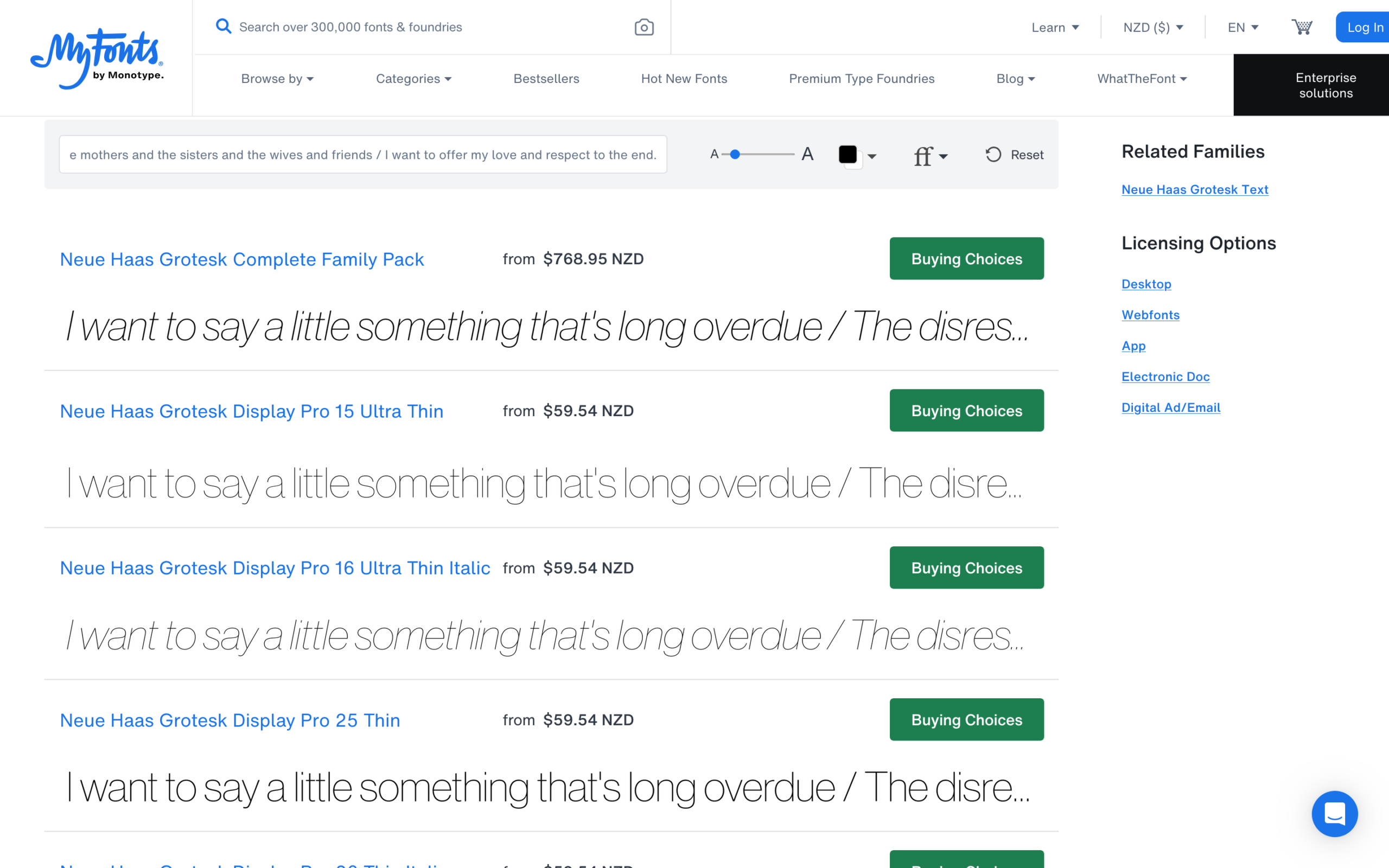
Neue Haas Grotesk is the original design from which Helvetica grew. Max Miedinger created it in 1957 for the Haas Type Foundry in Switzerland, and it was renamed Helvetica by Linotype in 1960 for international marketing. The version sold today under this name is a meticulous digital revival by Christian Schwartz, painstakingly reconstructed from the original metal type specimens to restore the character and nuance lost through decades of photocomposition and early digital adaptation. For designers who love Helvetica but want the real thing, this is it.
Sans Serif
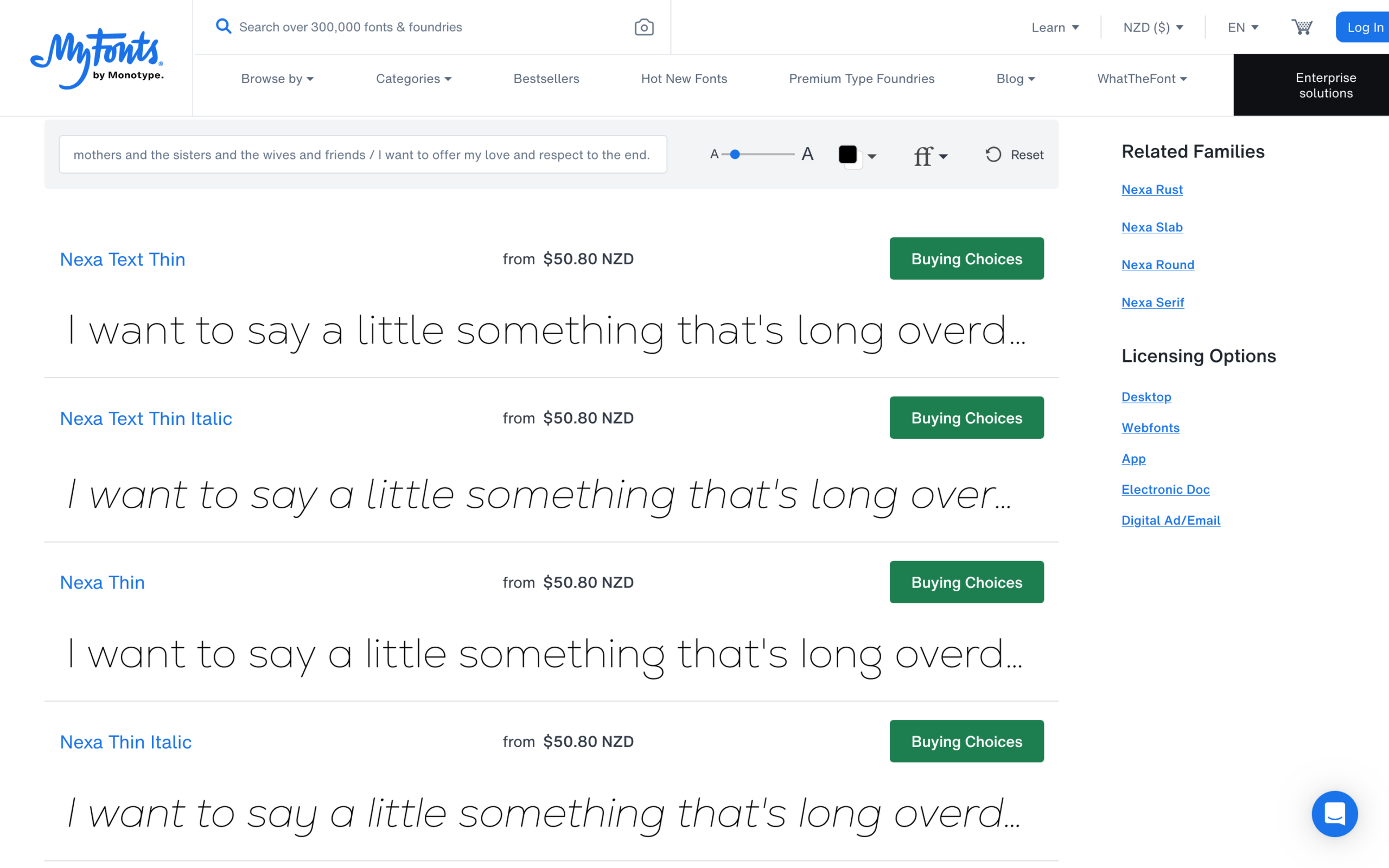
Nexa was designed by Svetoslav Simov and released by the Bulgarian foundry Fontfabric in 2012. It is a modern geometric sans-serif built on simple, clean lines with a contemporary warmth that keeps it from feeling cold or mechanical. Simov drew on his fascination with minimalism and basic geometric forms to create a typeface he described as “pure geometry balanced with human approachability.” It quickly became Fontfabric’s best-selling typeface and is widely used across branding, web design, editorial, and motion graphics. The full family spans 36 styles across nine weights.
Serif
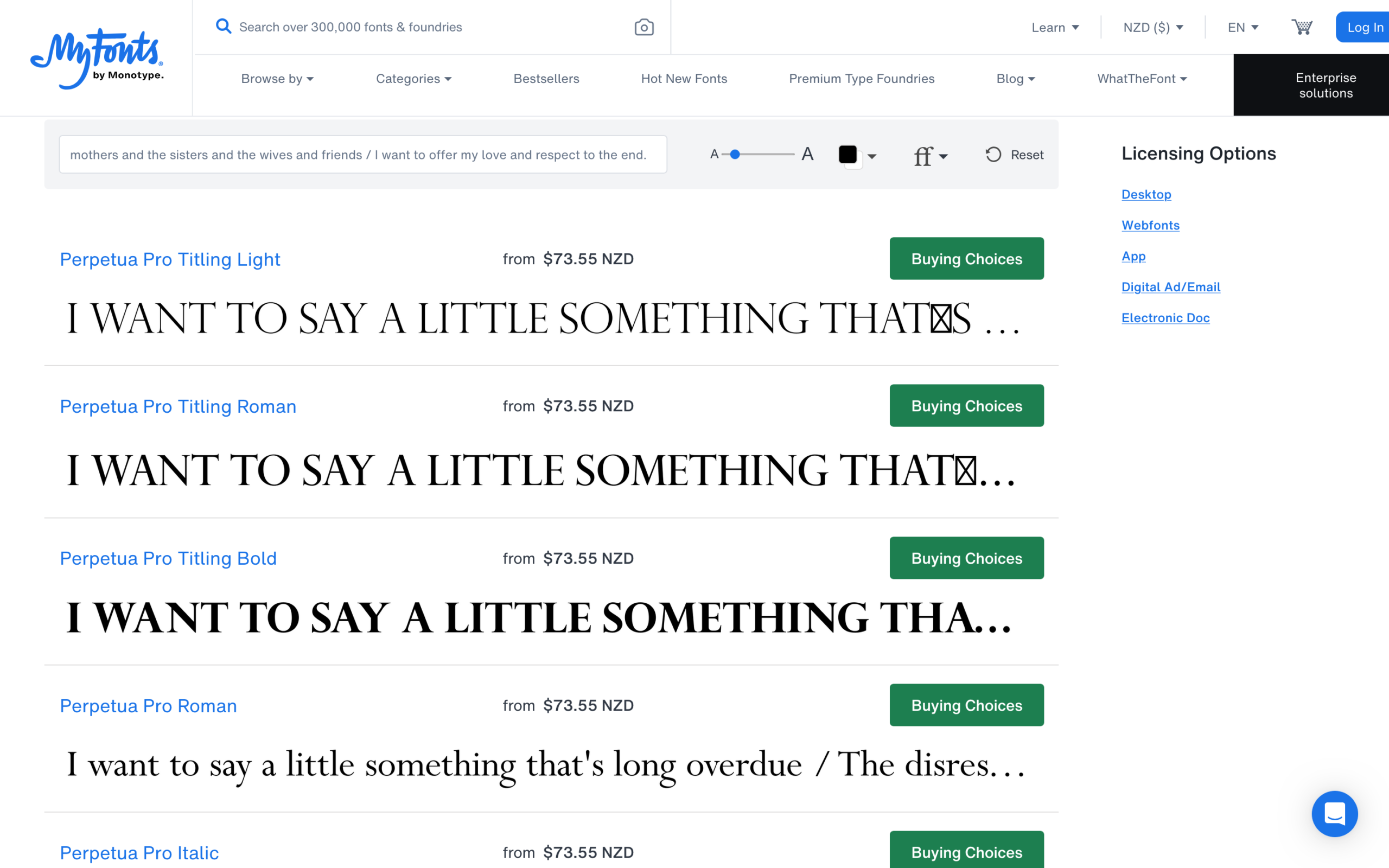
Perpetua was designed by Eric Gill and released by Monotype in 1932. The typeface was seven years in development, reflecting Gill’s characteristically independent approach to letterform design. The result is a transitional serif with an incised, almost lapidary quality, letterforms that feel as though they were cut from stone rather than drawn with a pen, reflecting Gill’s background as a sculptor and letter carver. It has long been associated with fine book printing and memorial inscriptions, and remains a typeface of considerable elegance and authority.
Sans Serif
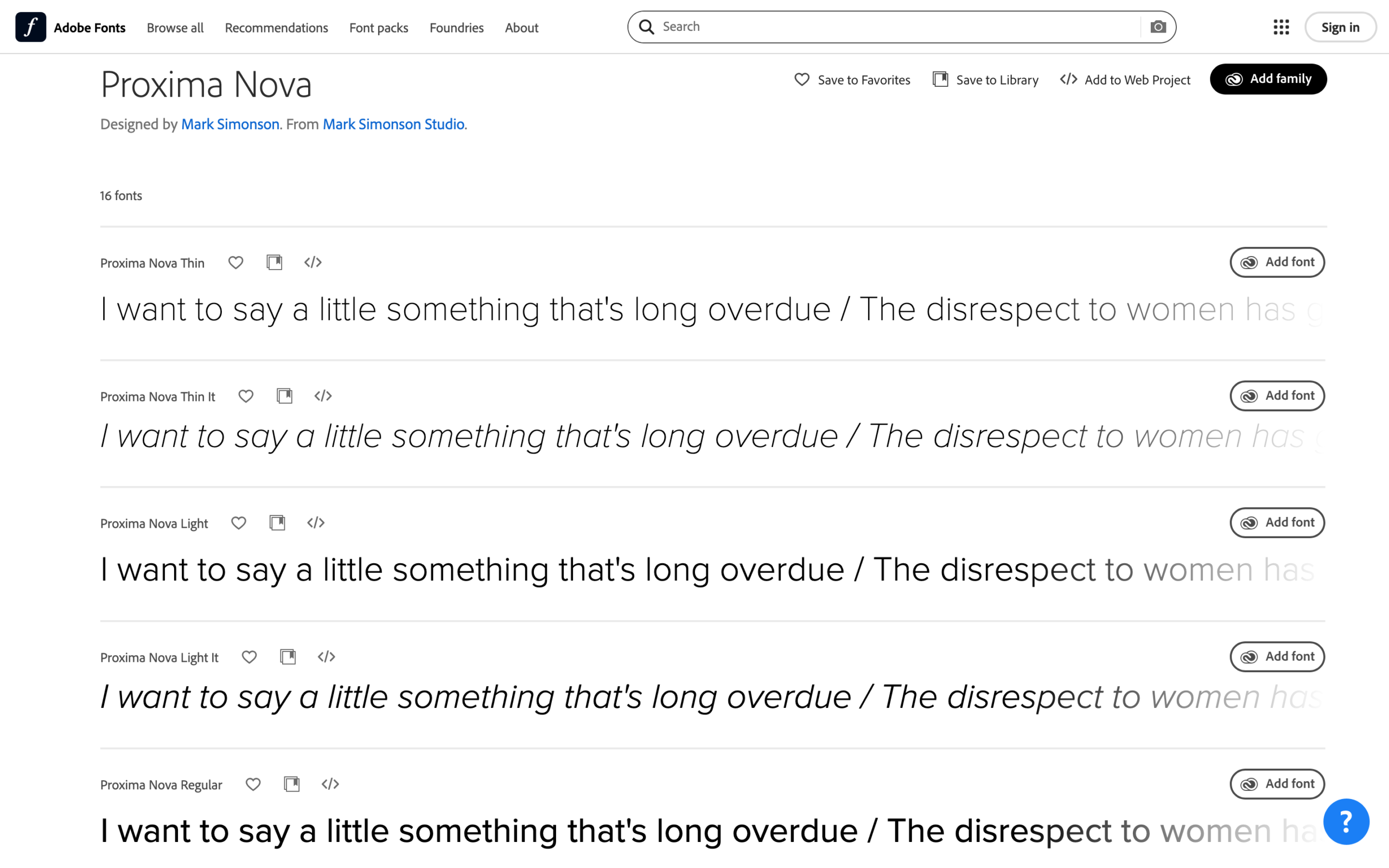
Proxima Nova was designed by Mark Simonson and released in 2005, a complete reworking of his earlier Proxima Sans from 1994. Simonson set out to bridge the gap between two very different traditions: the geometric clarity of Futura and the human proportions of Akzidenz Grotesk. The result is a hybrid that feels simultaneously modern and warm, geometric in structure but humanist in its spacing and weight distribution. With 48 styles across three widths it is one of the most comprehensive type families available, used by Buzzfeed, NBC, Wired, and TikTok among many others.
Sans Serif
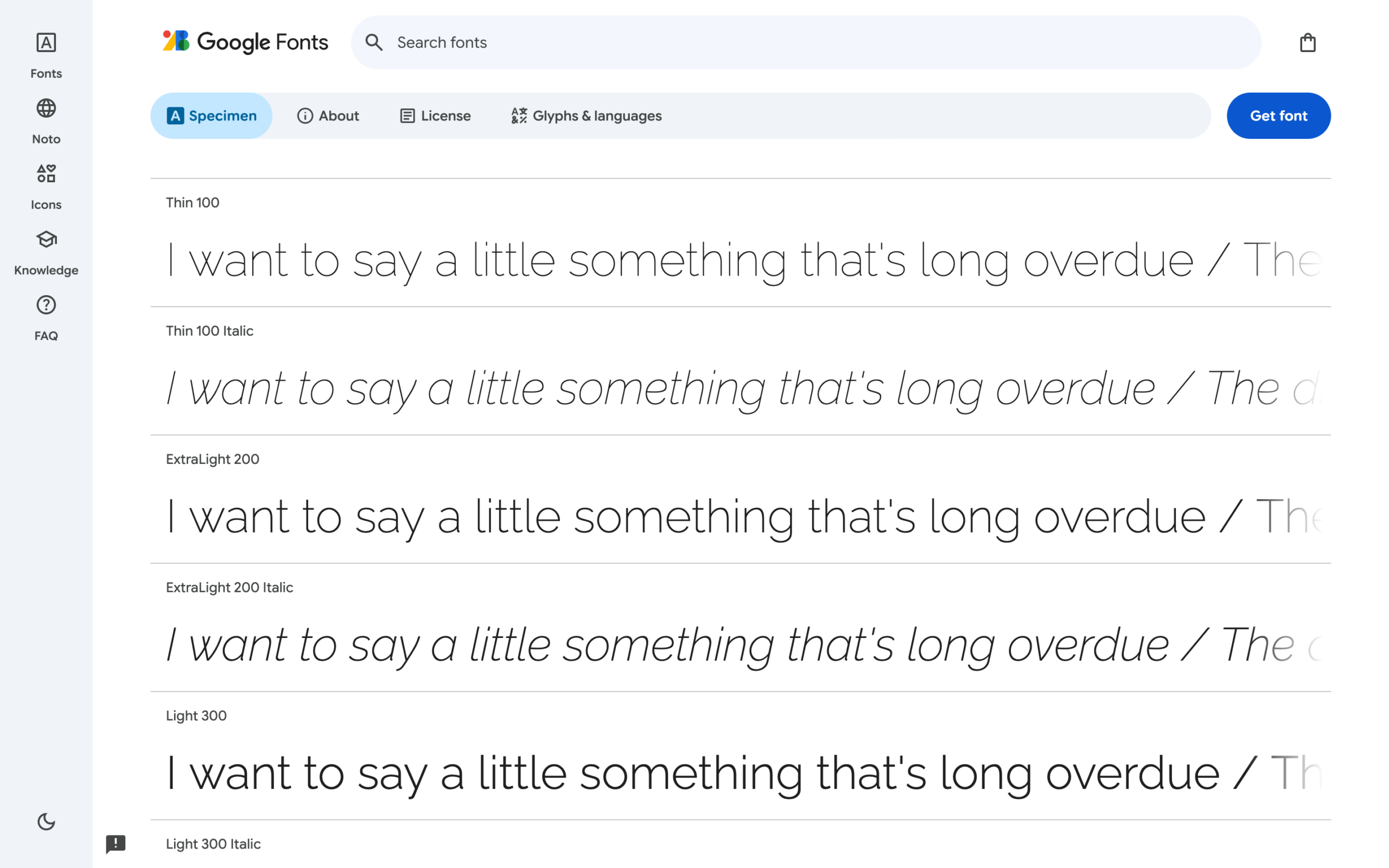
Raleway was originally designed by Matt McInerney in 2010 as a single thin weight, a delicate, elegantly geometric display face unlike anything else available at the time. It was expanded into a full nine-weight family with italics by Pablo Impallari and Rodrigo Fuenzalida in 2012. The result is a versatile open-source typeface that combines neo-grotesque and geometric influences, features both lining and old-style numerals, and supports over 100 languages. Released free via Google Fonts, it is a go-to choice for fashion sites, portfolio pages, and any design context where refined, airy typography is the goal.
Serif
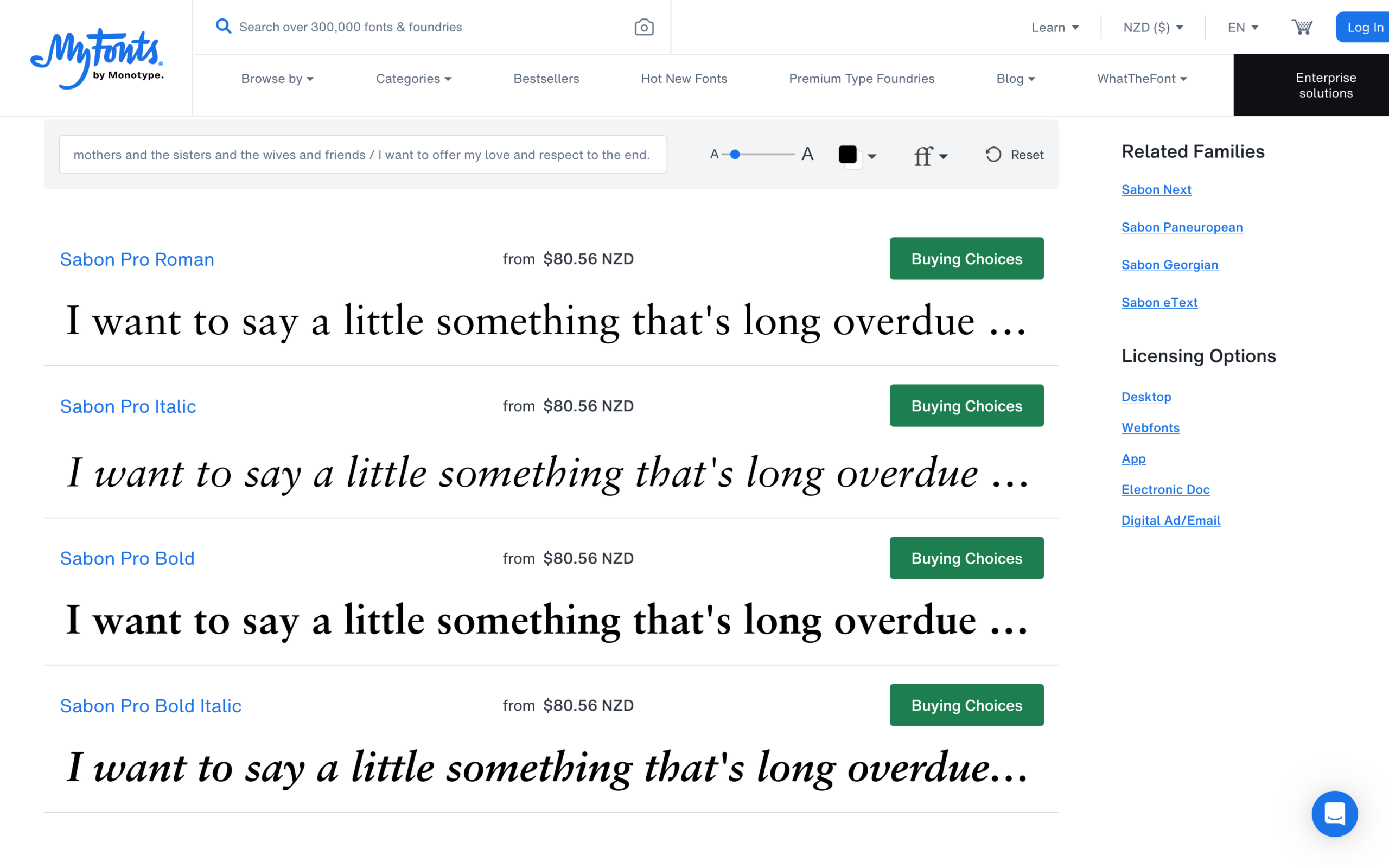
Sabon was designed by Jan Tschichold and released simultaneously by three German foundries in 1967, an unusual feat that required the typeface to work identically on Linotype, Monotype, and hand composition systems. Tschichold based the design on the typefaces of Claude Garamond, working from sixteenth-century specimens to produce a revival that is widely considered among the most faithful and beautiful ever made. The name comes from Jacques Sabon, a Frankfurt typefounder who had brought Garamond’s original punches to Germany. It is a warmly readable old-style serif, ideal for book typography and any context where classical refinement is the goal.
Sans Serif
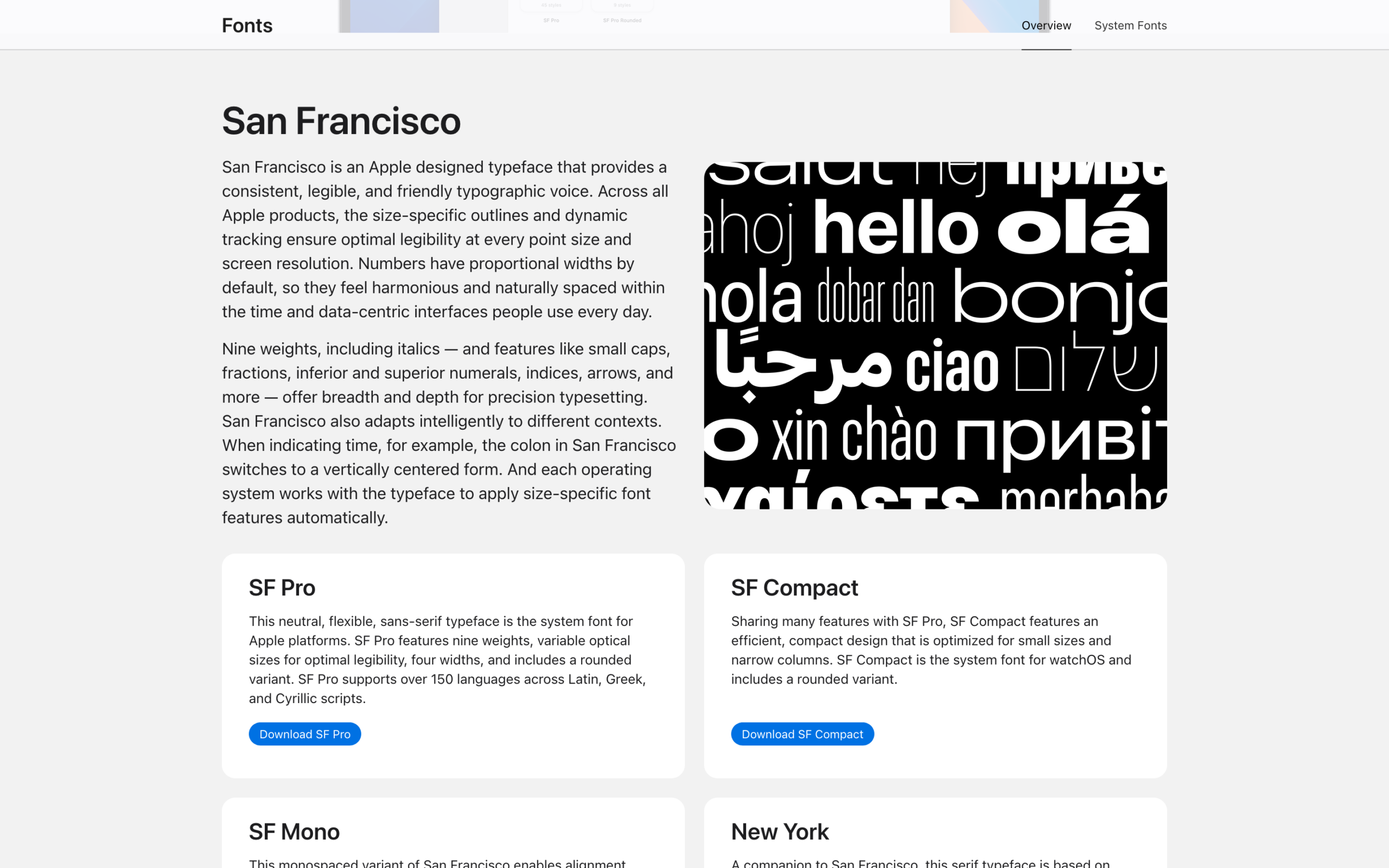
SF Pro is the system typeface for Apple’s platforms. It is the font you are reading on your iPhone, iPad, and Mac right now. Apple introduced San Francisco in 2015 to replace Helvetica Neue across all its operating systems, driven by the need for a typeface that would perform consistently across everything from a 38mm Apple Watch face to a 27-inch desktop display. Designed by Apple’s in-house type team, it is a neo-grotesque sans-serif built specifically for screen rendering, with optical size variants that automatically adjust letterform proportions and spacing depending on the point size. It is available free to download from Apple’s developer site for use in app design and Apple platform mock-ups.
Serif
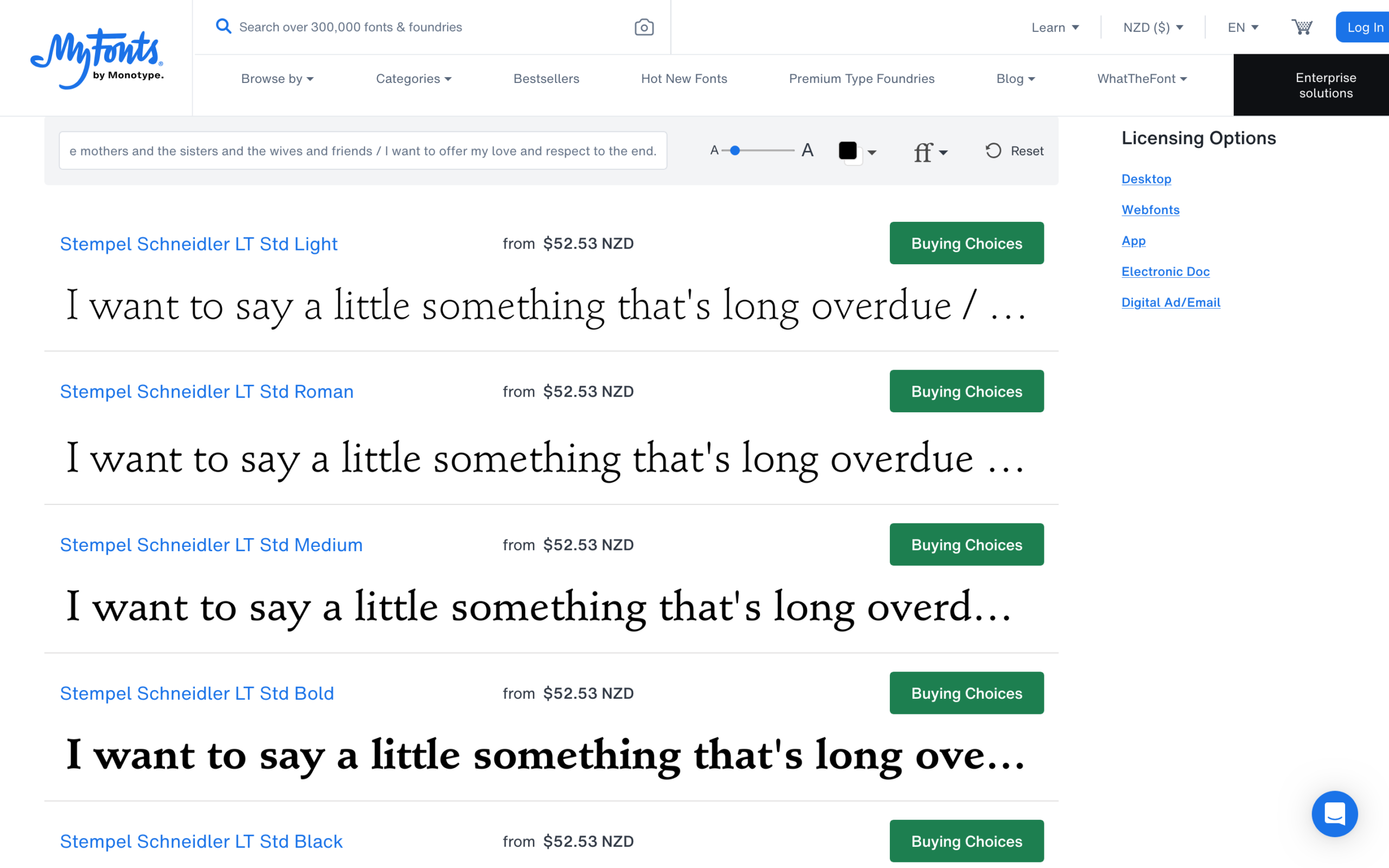
Stempel Schneidler was designed by F.H. Ernst Schneidler and originally released by the Bauer foundry in 1936 as Schneidler Old Style. Stempel later reworked it into the version carrying its name today. Schneidler was a German type designer and teacher of considerable influence, and this face reflects his deep interest in calligraphic letterforms and the tradition of Renaissance humanist type. It is a distinctive old-style serif with an expressive, almost hand-drawn quality, warmer and more idiosyncratic than many of its contemporaries, with a character that makes it particularly effective for display use, book jackets, and editorial contexts where a serif with personality is needed.
Serif
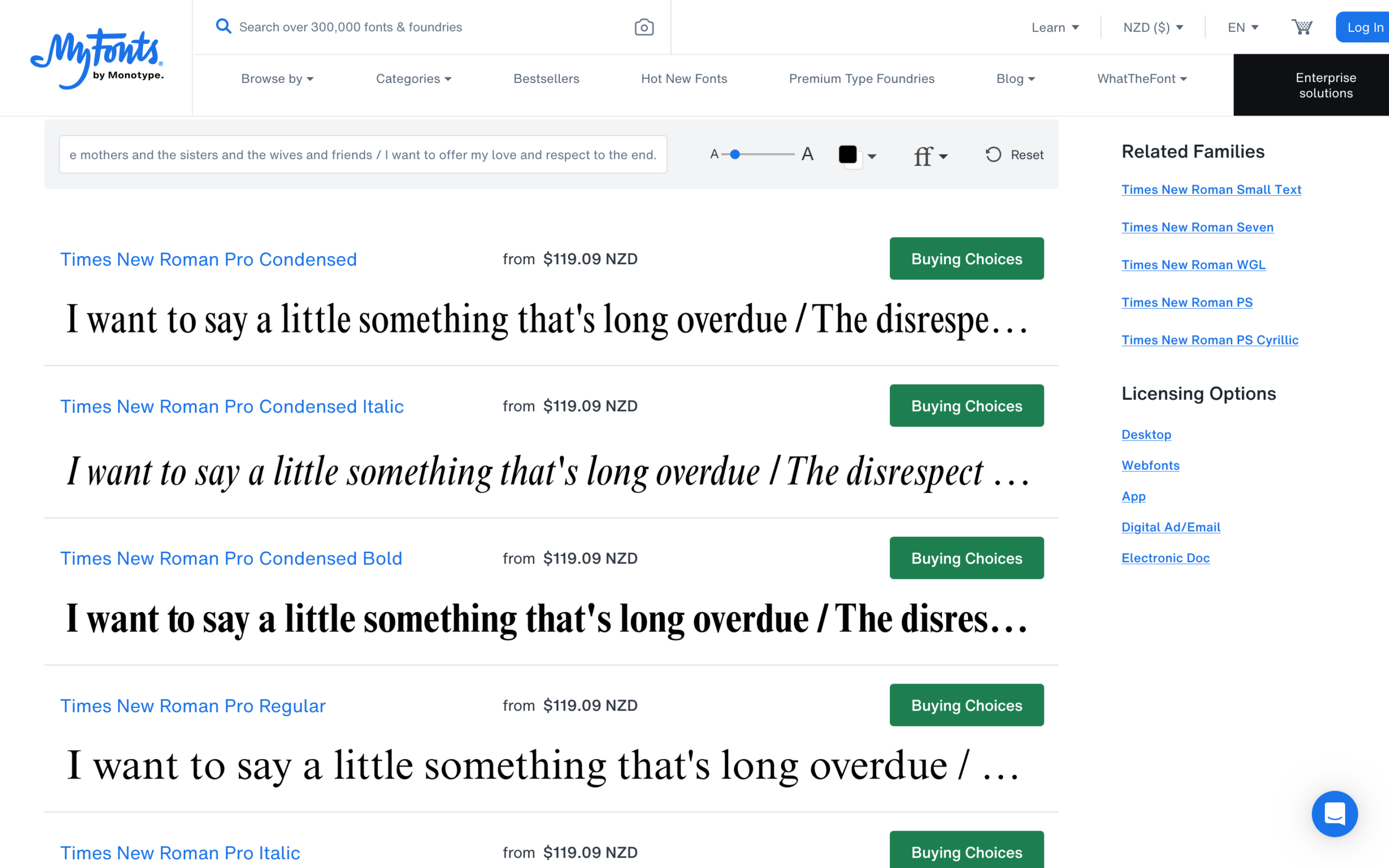
Times New Roman was commissioned in 1931 by The Times of London after typographer Stanley Morison wrote a critique of the newspaper’s typography. Morison and artist Victor Lardent redesigned the paper’s type using the sixteenth-century face Plantin as a starting point, optimising it for legibility, economy of space, and the demands of high-speed newspaper printing. It debuted in October 1932 and was released commercially the following year. Its combination of compact elegance and strong readability made it the most widely used serif in the world for decades, and it remains the default serif on countless operating systems and documents today.
Sans Serif
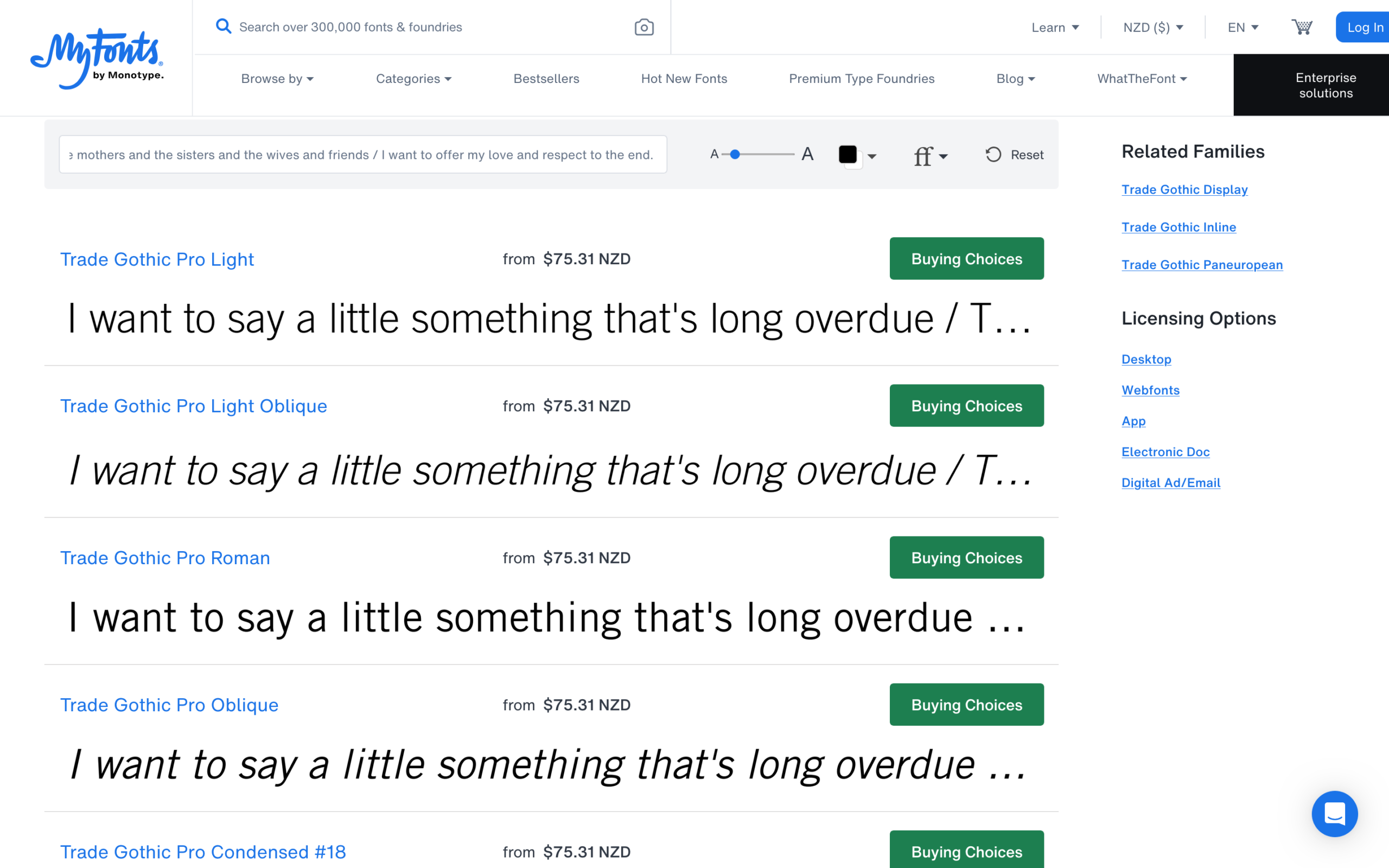
Trade Gothic was designed by Jackson Burke for Mergenthaler Linotype between 1948 and 1960, developed and extended incrementally over more than a decade. It is a grotesque sans-serif in the American tradition, robust, slightly condensed, and built for the practical demands of newspaper and editorial design. Its informal character gives it more personality than the Swiss grotesques, and its condensed variants in particular have become a staple of sports branding, magazine headlines, and advertising. It is one of those rare typefaces that manages to feel both utilitarian and genuinely characterful.
Serif
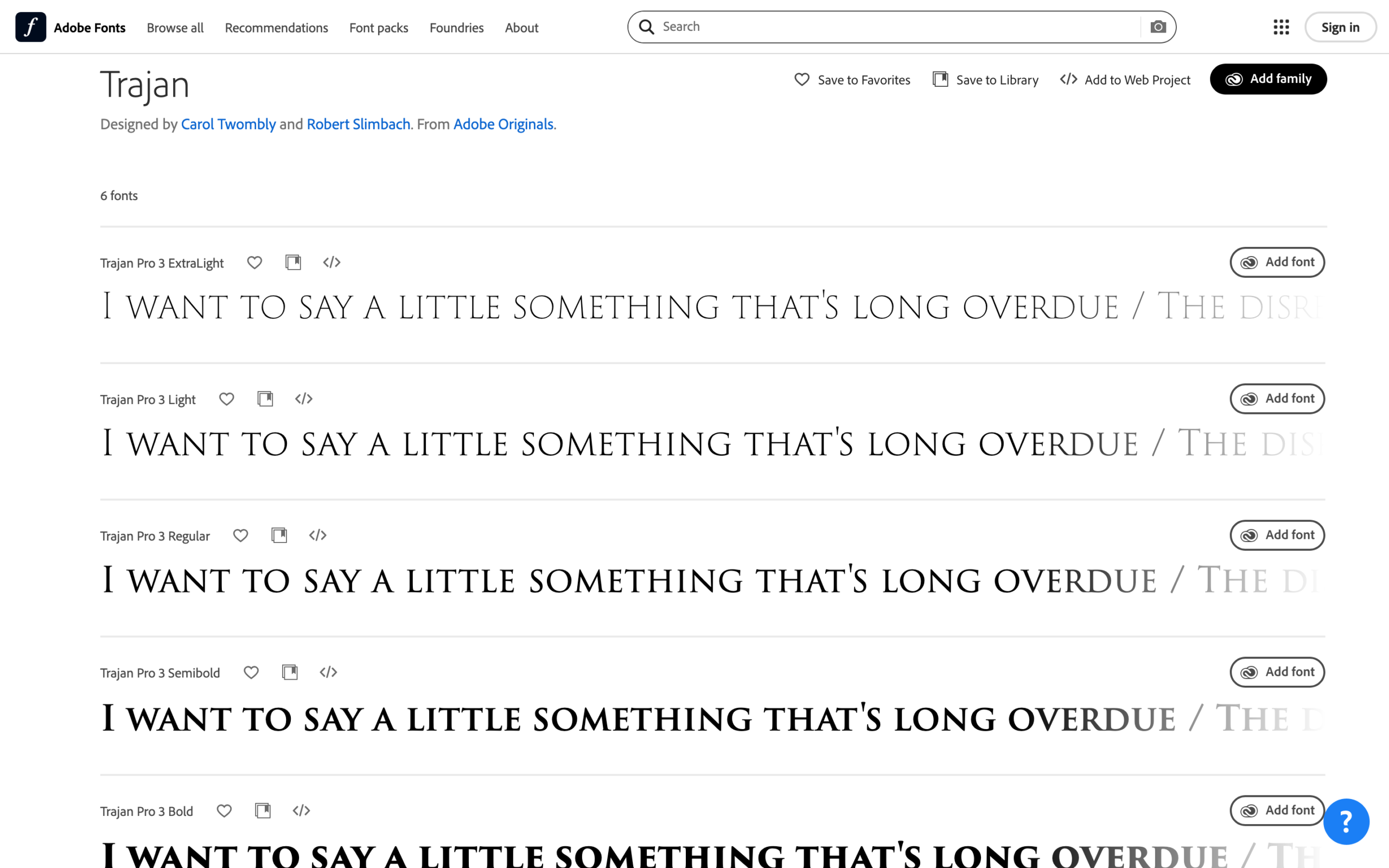
Trajan was designed by Carol Twombly for Adobe in 1989, based directly on the inscription carved into the base of Trajan’s Column in Rome, completed in 113 AD. The original inscription is considered one of the finest examples of Roman capital letterforms ever created, and Twombly’s digital revival translates those proportions into a practical all-capitals typeface. Its classical weight and authority have made it the default choice for film poster design, particularly in Hollywood, where it has appeared on countless blockbuster posters, giving it a simultaneously ancient and modern quality.
Sans Serif
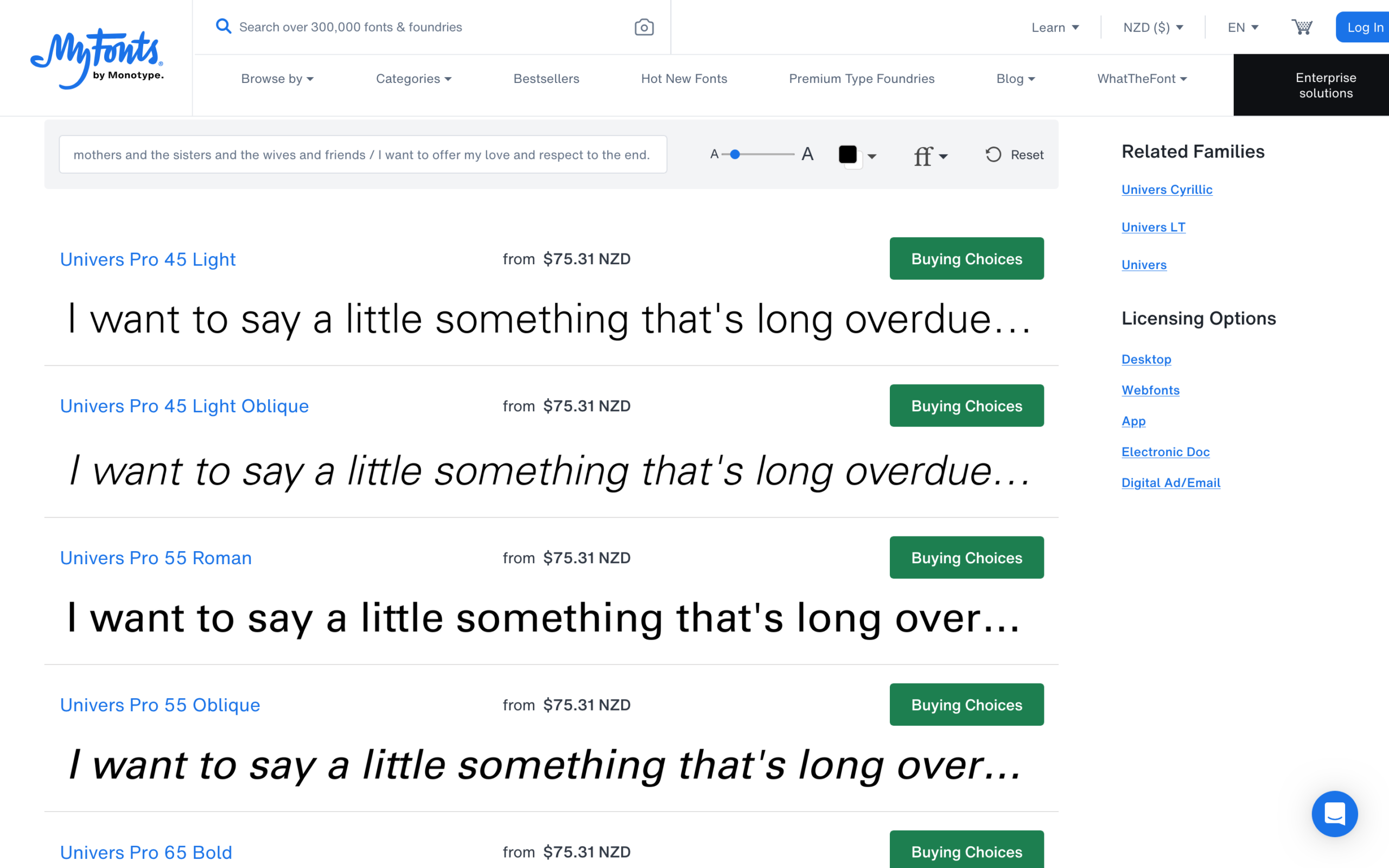
Univers was designed by Adrian Frutiger and released by Deberny & Peignot in 1957, the same year as Helvetica, and is widely considered its more rigorous, systematically designed sibling. Frutiger designed the entire family of 21 styles simultaneously, assigning each a numerical code based on weight and width to create a perfectly coherent system. This was a genuinely new approach to type family design at the time. Univers is slightly more open and legible than Helvetica at small sizes, and its systematic family structure has made it a favourite for large-scale corporate identity and wayfinding projects.
Sans Serif
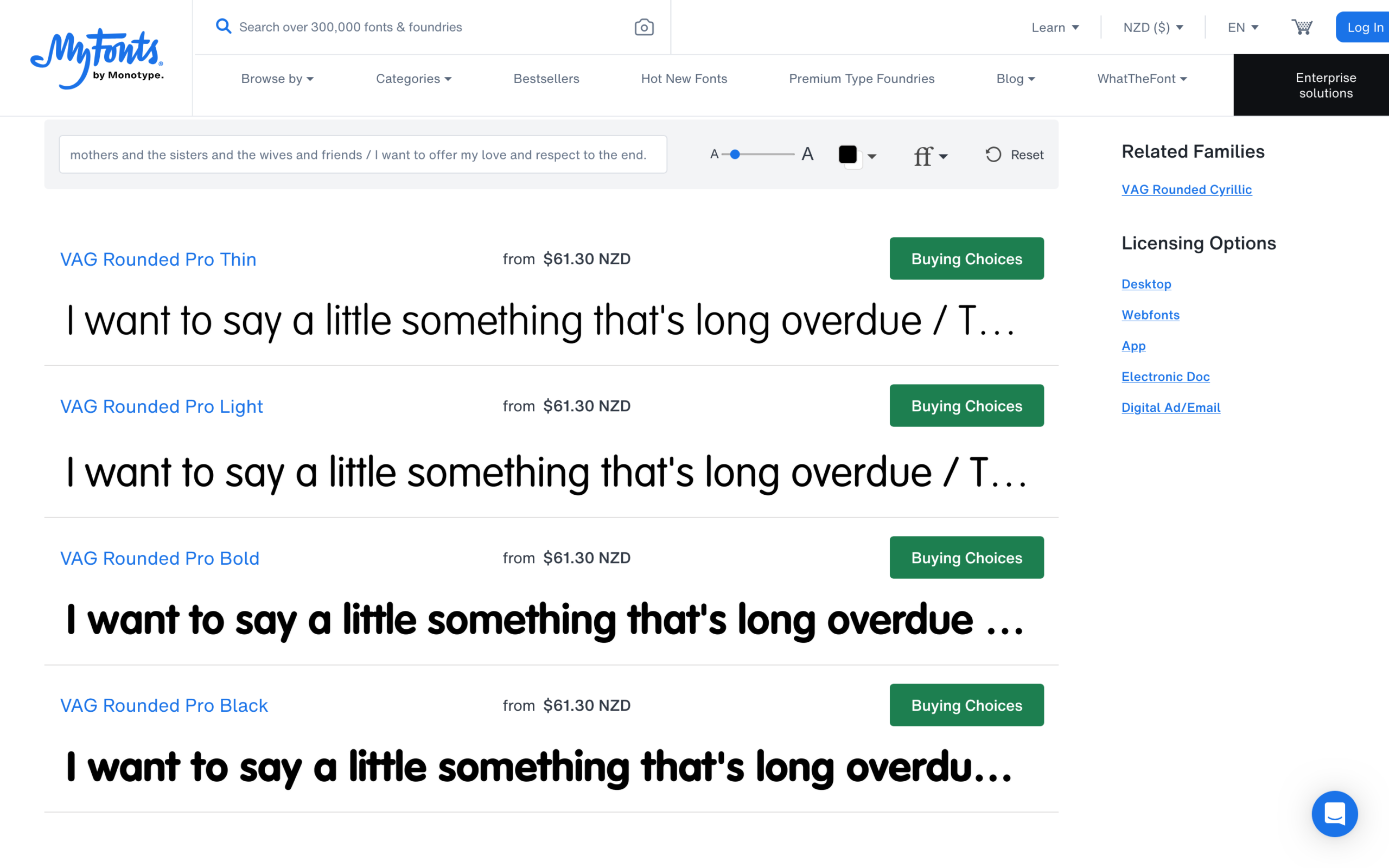
VAG Rounded was originally designed for Volkswagen Audi Group in the 1970s as a corporate typeface, though its exact origins are debated. The defining feature is in the name: every terminal and stroke end is rounded rather than flat, giving the type a friendly, approachable character that sits somewhere between a utility sans-serif and a consumer-facing friendly face. Released commercially by Linotype, it became widely recognised through its continued use in automotive design and through its adoption by Apple for its keyboard lettering from 1999 onward, starting with the iBook.
Serif
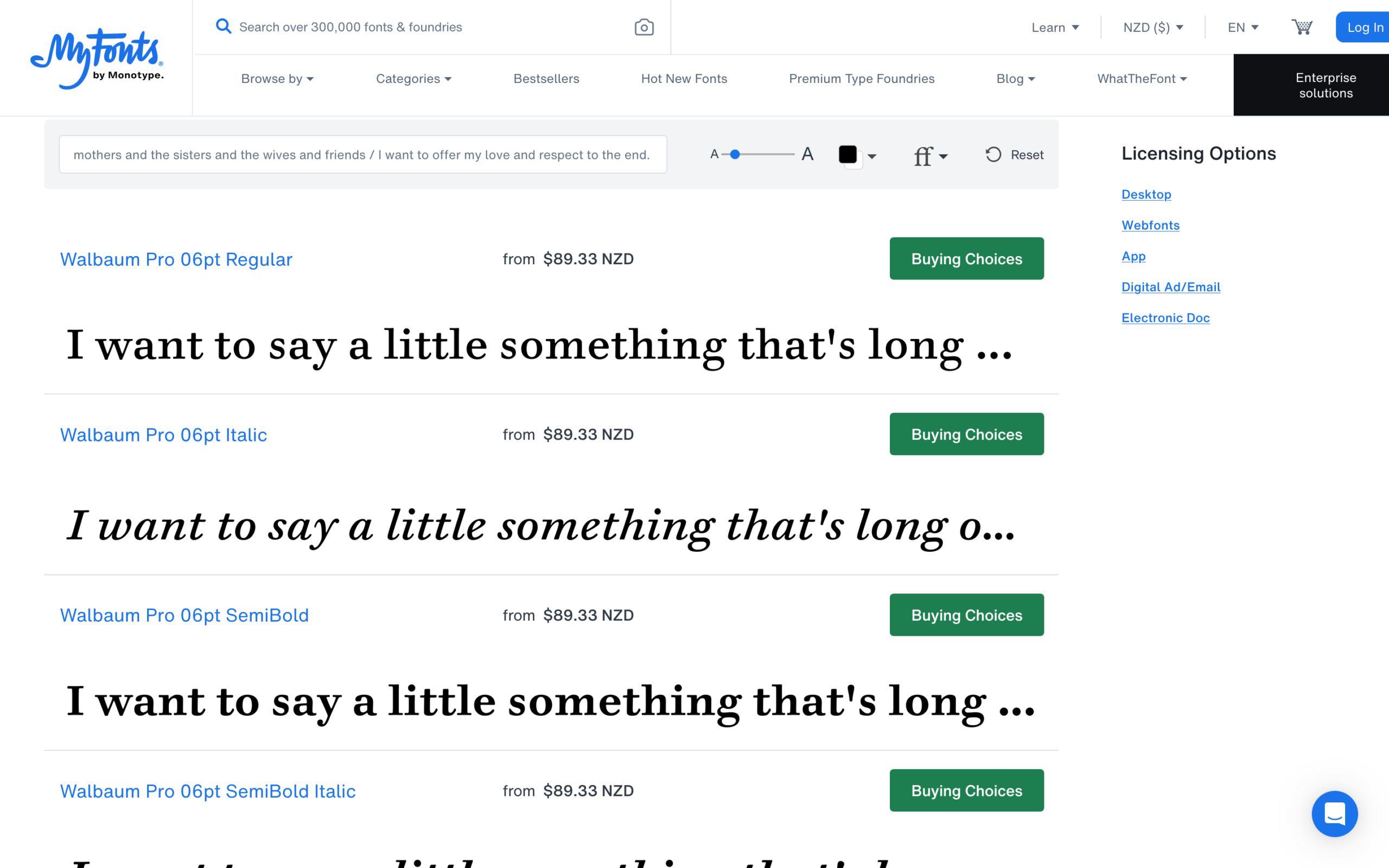
Justus Erich Walbaum created this typeface around 1800, working in the transitional period between old-style and modern serif design. Like Bodoni and Didot, his near-contemporaries, Walbaum features high contrast between thick and thin strokes and crisp horizontal serifs, but with slightly warmer proportions and less extreme contrast, giving it a refined elegance that many designers find more comfortable to read at length. The Monotype revival brings this classical face into contemporary use, and it works particularly well in editorial and literary contexts where a serif with quiet sophistication is needed.
None of these fonts are neutral, even the quiet, workhorse ones. Every choice sets a tone before a single word gets read, trustworthy, playful, or serious, decided in an instant. That’s why this list keeps growing rather than sitting finished. A typeface earns its place here through craft and history, not through being trendy, so it’s worth revisiting whenever you’re choosing type for something that matters. Type design itself pulled me in deep enough that I ended up building two free geometric fonts from scratch, worth a look if you’re curious what that process actually involves.